

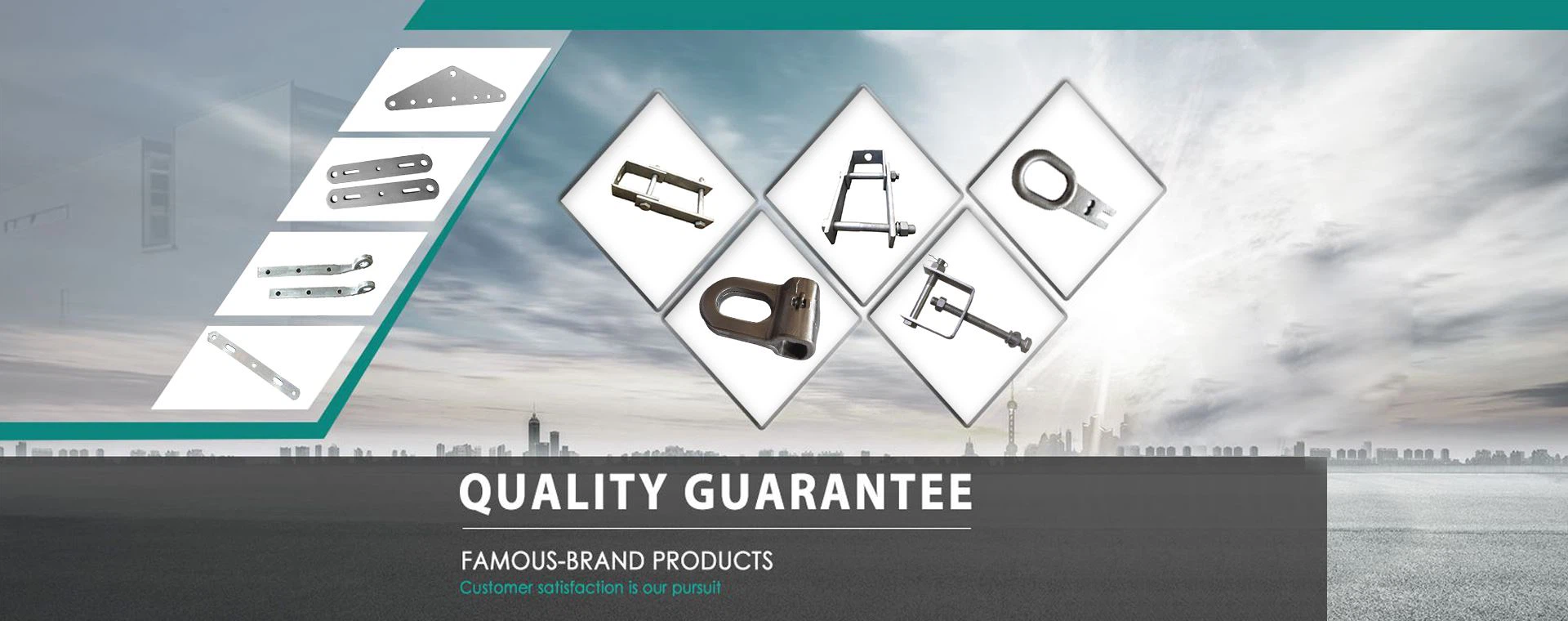
Power fittings are important metal parts used to connect and fix power lines. They play a vital role in the installation and maintenance of power equipment such as cable joints, cable tie straps, insulators, etc. In order to ensure the safe and stable operation of power equipment, the quality and manufacturing process requirements of power fittings are very strict.
The materials of power fittings are usually high-strength forged steel, malleable cast iron, aluminum alloy and copper alloy, etc. These materials have the advantages of corrosion resistance, wear resistance, high temperature resistance and high strength, and can meet the use requirements of power lines in complex environments. At the same time, the surface treatment of power fittings is also very important, and hot-dip galvanizing, electroplating or anodizing are often used to enhance their corrosion resistance and surface hardness.
The manufacturing process of power fittings generally adopts die forging, die casting, casting and cold heading, among which die forging is the main manufacturing process. The die forging process has the advantages of high efficiency, high precision and high quality. It can produce power fittings of different specifications and shapes at the same time, and the manufacturing cost is relatively low.
In addition to the importance of materials and manufacturing processes, the precision and durability of power fittings are also important indicators of their application performance. Manufacturers of power fittings need to use precision processing equipment and strict quality control standards to ensure the dimensional accuracy and quality stability of power fittings. At the same time, in order to ensure the durability of power fittings, it is also necessary to strengthen processes such as heat treatment and surface treatment during the manufacturing process.
Power fittings should be able to adapt to various climatic conditions, including extreme temperature, humidity, ultraviolet radiation, etc. For special environments, such as high salt fog and highly polluted areas, the surface treatment of fittings (such as hot-dip galvanizing, anodizing, etc.) should provide additional protection.
Power fittings should be able to withstand a certain overload current and short-circuit current without causing damage or failure. During the design and manufacturing process, the safety of fittings in the power system should be considered, such as preventing arcs, reducing hysteresis and eddy current losses, etc.
In short, power fittings are an indispensable and important component of power equipment, and their materials and manufacturing processes are very strict. Only under the background of high quality control and precision production processes can their safe and reliable use be ensured.


