

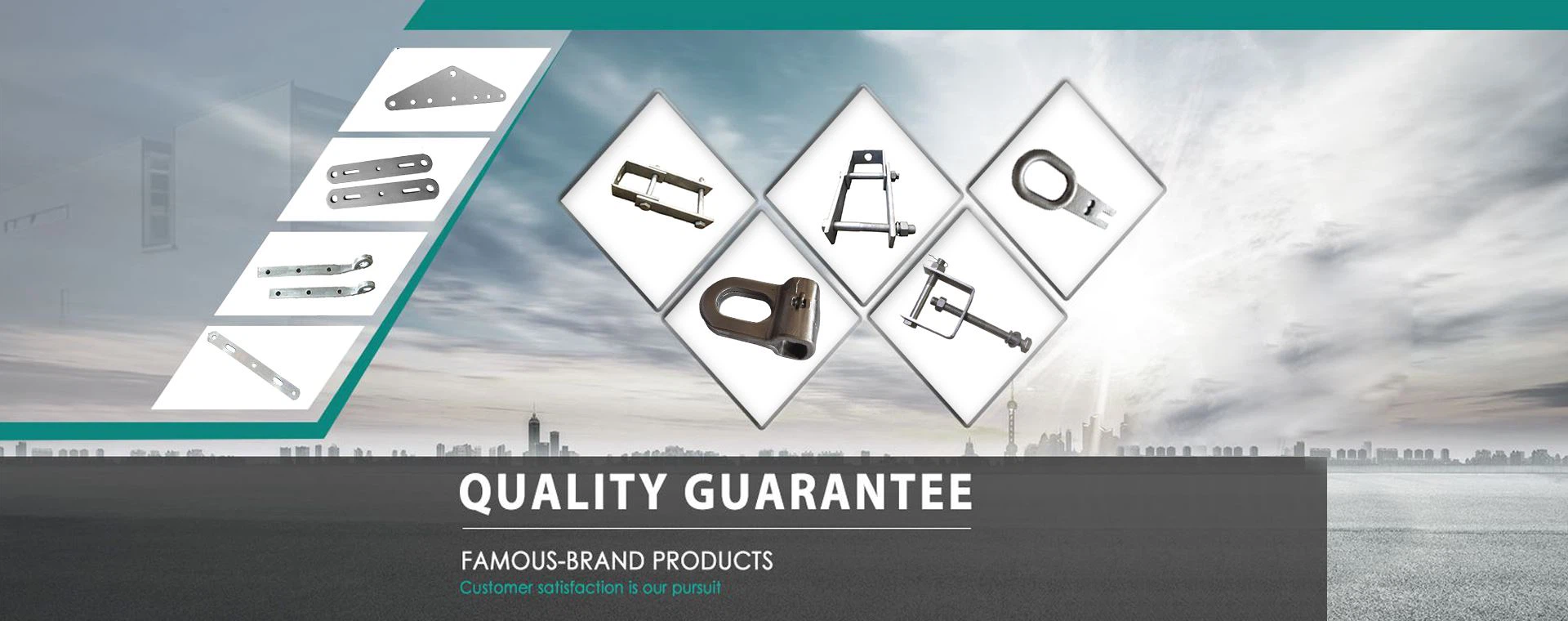
Safety precautions when installing power fittings:
It is necessary to ensure that the installation location of the power fittings can withstand the required loads and stresses, and can effectively support and protect the connected power equipment or lines. Some power fittings may have specific installation angles or direction requirements, and should be installed in accordance with the manufacturer's regulations or relevant standards. Use appropriate materials and accessories, such as bolts, nuts, washers, fasteners, etc., to ensure the corrosion resistance, durability and reliability of the fittings. Correctly adjust the tightening force of bolts and nuts, and use appropriate torque in accordance with the manufacturer's regulations or relevant standards to ensure its stability and reliability. Before installation, the installation location should be cleaned and necessary anti-corrosion treatment should be carried out to extend the service life of the fittings and improve their performance. Ensure that the installed power fittings meet the applicable standards and specifications and are installed in accordance with relevant requirements.
During the process of concrete pole assembly and fitting installation, there should be detailed safety technical briefings to ensure that the staff understands and complies with all safety regulations. After the pole is hoisted, the pole erection and pole fixing operations should be carried out. The staff should pay attention to prevent the pole from tilting to ensure the safety of the operators and related equipment. After the pole is hoisted, the pole should be erected and fixed. The staff should pay attention to prevent the pole from tilting to ensure the safety of the operators and related equipment. When working at height, the operators must wear safety belts, and the safety belts should be hung high and used low to reduce the impact distance when falling. Ensure that the installed power fittings meet the applicable standards and specifications and are installed in accordance with relevant requirements.
These safety measures help prevent accidents, ensure the safety of operators and the stable operation of the power system. In actual operation, appropriate safety measures should be taken according to the specific working environment and conditions.


