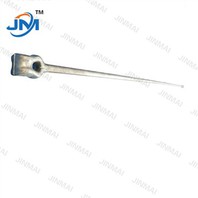
As a trusted supplier of forged eye bolts, I often encounter inquiries regarding their compatibility with other hardware. In this blog post, I'll delve into the details of this topic, exploring the factors that determine compatibility and providing practical insights based on my experience in the industry.
Understanding Forged Eye Bolts
Forged eye bolts are essential components in various industries, known for their strength and durability. They are typically made from high - quality steel and forged under high pressure, which enhances their structural integrity. These eye bolts feature a circular eye at one end, which can be used for attaching ropes, cables, chains, or other lifting and securing devices.
The design of forged eye bolts is well - thought - out. The forged process aligns the grain structure of the metal, making it more resistant to fatigue and impact. This is crucial in applications where the eye bolts will be subjected to heavy loads or dynamic forces.
Compatibility Factors
1. Size and Thread Compatibility
One of the most fundamental aspects of compatibility is the size and thread of the forged eye bolt. The diameter of the bolt and the pitch of the thread must match the corresponding hardware. For example, if you are using a forged eye bolt to connect with a nut, the nut's thread must be of the same size and pitch as the bolt. In industrial settings, standard thread sizes such as UNC (Unified National Coarse) and UNF (Unified National Fine) are commonly used. It's essential to refer to industry standards or engineering specifications to ensure a proper fit.
2. Load - Bearing Capacity
Another critical factor is the load - bearing capacity. Different hardware components have different load ratings. When combining forged eye bolts with other hardware, the overall load - bearing capacity of the assembly is determined by the weakest link. For instance, if you pair a high - strength forged eye bolt with a low - strength chain, the chain may fail under a load that the eye bolt can handle. Therefore, it's vital to match the load - bearing capacities of all the components in the system.
3. Material Compatibility
The materials of the forged eye bolt and the other hardware also play a significant role in compatibility. Different metals have different corrosion resistances, coefficients of thermal expansion, and mechanical properties. For example, if you use a forged steel eye bolt with a copper - based hardware component, there is a risk of galvanic corrosion, which can weaken the connection over time. It's advisable to use hardware made from similar or compatible materials to avoid such issues.
4. Design and Function
The design and function of the hardware also affect compatibility. Some hardware components are designed for specific applications, and their shapes and features may not be suitable for connection with forged eye bolts. For example, a Pig tail Bolt has a unique shape that may require special considerations when connecting it to a forged eye bolt. Similarly, an Extension Ring or an Eye Bolt Eye Bolt Hook has its own design requirements for proper connection.
Compatibility in Different Applications
1. Lifting and Hoisting
In lifting and hoisting applications, forged eye bolts are often used in combination with slings, shackles, and hoist hooks. The compatibility of these components is crucial for safety. The eye bolt must be able to withstand the load exerted by the lifting equipment and the attached load. The shackles and hoist hooks must be properly sized and rated to match the eye bolt. For example, a forged eye bolt with a 1 - ton load rating should be paired with shackles and hoist hooks that also have a 1 - ton or higher load rating.
2. Structural Applications
In structural applications, forged eye bolts may be used to connect beams, columns, or other structural elements. Compatibility in this context involves ensuring that the eye bolt can transfer the forces between the components effectively. The size and strength of the eye bolt must be appropriate for the structural loads. Additionally, the connection method, such as welding or bolting, must be compatible with the materials and design of the structure.
3. Marine Applications
In marine environments, the compatibility of forged eye bolts with other hardware is even more critical due to the harsh conditions. The hardware must be corrosion - resistant, as saltwater can cause rapid deterioration. Stainless steel or hot - dip galvanized forged eye bolts are commonly used in marine applications. When connecting them with other hardware, such as cleats or fairleads, it's important to use materials that can withstand the corrosive effects of saltwater.


Tips for Ensuring Compatibility
1. Consult with Experts
If you are unsure about the compatibility of forged eye bolts with other hardware, it's advisable to consult with engineers or industry experts. They can provide professional advice based on your specific application requirements.
2. Conduct Testing
Before using a new combination of hardware in a critical application, it's a good idea to conduct testing. This can involve load testing, corrosion testing, or other relevant tests to ensure that the components work together safely and effectively.
3. Follow Manufacturer's Recommendations
Always follow the manufacturer's recommendations for the forged eye bolts and other hardware. The manufacturers have in - depth knowledge of their products and can provide guidelines on proper use and compatibility.
Conclusion
In conclusion, the compatibility of forged eye bolts with other hardware depends on several factors, including size and thread, load - bearing capacity, material, and design. By carefully considering these factors and following the tips provided, you can ensure a safe and effective connection between forged eye bolts and other hardware components.
If you are in the market for high - quality forged eye bolts or need advice on hardware compatibility, I invite you to contact me for a detailed discussion. We can explore your specific requirements and find the best solutions for your applications. Whether it's for lifting, structural, or marine applications, I'm committed to providing you with the best products and support.
References
- Machinery's Handbook, 31st Edition, Industrial Press Inc.
- American Society of Mechanical Engineers (ASME) standards related to fasteners and lifting equipment.
- Corrosion Handbook, Second Edition, edited by Bruce D. Craig.