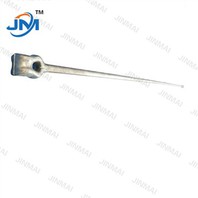
Hey there! As a supplier of Galvanized Cross Arms, I'm super stoked to dive into the materials used to make these nifty pieces of hardware. Galvanized cross arms are essential components in overhead power lines and telecommunications networks. They provide support for the conductors and other equipment, ensuring the stability and safety of the entire system. So, let's take a closer look at what goes into making them.
Steel: The Foundation of Galvanized Cross Arms
The primary material used in galvanized cross arms is steel. Steel is an alloy of iron and carbon, with small amounts of other elements like manganese, silicon, and sulfur. It's known for its strength, durability, and versatility, making it the perfect choice for this application.


There are different types of steel used in cross arm manufacturing, but the most common one is carbon steel. Carbon steel contains up to 2% carbon, which gives it its strength and hardness. It's also relatively inexpensive and easy to work with, making it a popular choice for mass production.
Another type of steel that's sometimes used is stainless steel. Stainless steel contains chromium, which makes it resistant to corrosion and rust. It's more expensive than carbon steel, but it's also more durable and requires less maintenance. Stainless steel cross arms are often used in coastal areas or other environments where corrosion is a major concern.
Galvanization: Protecting the Steel
Once the steel cross arms are formed, they undergo a process called galvanization. Galvanization is a method of coating the steel with a layer of zinc to protect it from corrosion. There are two main types of galvanization: hot-dip galvanizing and electro-galvanizing.
Hot-dip galvanizing is the most common method used for cross arms. In this process, the steel cross arms are dipped into a bath of molten zinc at a temperature of around 450°C. The zinc reacts with the steel to form a series of zinc-iron alloy layers, which provide a durable and protective coating. Hot-dip galvanizing is a cost-effective and reliable way to protect the steel from corrosion, and it can last for decades in harsh environments.
Electro-galvanizing is a less common method used for cross arms. In this process, the steel cross arms are placed in an electrolyte solution and an electric current is passed through them. The zinc ions in the solution are attracted to the steel and form a thin layer of zinc on the surface. Electro-galvanizing is a more precise method of coating the steel, but it's also more expensive and less durable than hot-dip galvanizing.
Other Materials
In addition to steel and zinc, there are other materials that may be used in the manufacturing of galvanized cross arms. These materials are used to add strength, durability, or other properties to the cross arms.
One such material is fiberglass. Fiberglass is a composite material made of glass fibers and a resin matrix. It's known for its high strength-to-weight ratio, corrosion resistance, and electrical insulation properties. Fiberglass cross arms are often used in areas where there is a risk of electrical interference or where the cross arms need to be lightweight.
Another material that may be used is aluminum. Aluminum is a lightweight and corrosion-resistant metal that's often used in the aerospace and automotive industries. Aluminum cross arms are less common than steel cross arms, but they're sometimes used in areas where weight is a major concern.
Applications of Galvanized Cross Arms
Galvanized cross arms are used in a variety of applications, including overhead power lines, telecommunications networks, and street lighting. Here are some of the specific applications where galvanized cross arms are commonly used:
- Overhead Power Lines: Galvanized cross arms are used to support the conductors in overhead power lines. They provide a stable platform for the conductors and help to prevent them from sagging or touching each other.
- Telecommunications Networks: Galvanized cross arms are used to support the cables in telecommunications networks. They provide a stable platform for the cables and help to prevent them from being damaged by wind, rain, or other environmental factors.
- Street Lighting: Galvanized cross arms are used to support the street lights in urban and rural areas. They provide a stable platform for the street lights and help to prevent them from being knocked down by wind, vehicles, or other objects.
Conclusion
In conclusion, galvanized cross arms are essential components in overhead power lines, telecommunications networks, and other applications. They're made primarily of steel and coated with a layer of zinc to protect them from corrosion. Other materials like fiberglass and aluminum may also be used to add strength, durability, or other properties to the cross arms.
As a supplier of Galvanized Cross Arms, I'm committed to providing high-quality products that meet the needs of my customers. If you're in the market for galvanized cross arms, I encourage you to check out our Galvanized Cross Arm page on our website. We offer a wide range of cross arms in different sizes and configurations to meet your specific requirements.
If you have any questions or need more information about our products, please don't hesitate to contact us. We're here to help you find the right cross arms for your project and to provide you with the best possible service.
References
- American Society for Testing and Materials (ASTM). (2019). Standard Specification for Zinc-Coated (Galvanized) Steel Bars, Plates, Shapes, and Sheet Piling. ASTM A123/A123M-19.
- International Electrotechnical Commission (IEC). (2017). Overhead lines - Part 1: General requirements and calculations. IEC 60826:2017.
- National Electrical Safety Code (NESC). (2017). National Electrical Safety Code. ANSI C2-2017.