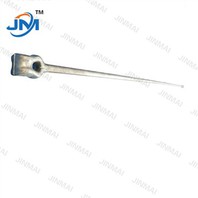
Lightning strikes pose a significant threat to overhead power lines, often leading to outages, equipment damage, and safety hazards. As an overhead line fitting supplier, we understand the critical importance of enhancing the lightning - protection performance of these fittings. In this blog, we will explore various strategies and solutions to improve the lightning - protection capabilities of overhead line fittings.


Understanding the Impact of Lightning on Overhead Line Fittings
Lightning is a natural electrical discharge that can carry extremely high currents and voltages. When a lightning strike hits an overhead power line, it can cause a sudden surge in electrical energy. This surge can damage overhead line fittings such as insulators, cross - arms, and connectors. For example, insulators may experience flashovers, which can lead to short - circuits and power outages. Cross - arms can be physically damaged by the high - energy shockwaves and heat generated during a lightning strike.
Key Factors Affecting Lightning - Protection Performance
Material Selection
The choice of materials for overhead line fittings plays a crucial role in their lightning - protection performance. For instance, using materials with high electrical conductivity can help to dissipate the lightning current more effectively. Metals like copper and aluminum are commonly used in overhead line fittings due to their good conductivity. Additionally, materials with high mechanical strength are needed to withstand the physical forces associated with a lightning strike. Galvanized steel is a popular choice for cross - arms and other structural fittings because it combines good mechanical properties with corrosion resistance. You can find high - quality Galvanized Cross Arm on our website, which are designed to withstand harsh environmental conditions and lightning strikes.
Design Considerations
The design of overhead line fittings also affects their lightning - protection capabilities. Fittings should be designed to minimize the risk of flashovers. For insulators, a proper shape and surface profile can help to increase the creepage distance, which is the shortest distance along the surface of an insulator between two conductive parts. This reduces the likelihood of a flashover occurring during a lightning strike. Moreover, the connection design between different fittings is crucial. Loose connections can increase the resistance, leading to heat generation and potential damage during a lightning - induced current surge.
Grounding Systems
A well - designed grounding system is essential for lightning protection. The grounding system provides a low - resistance path for the lightning current to flow into the ground, thus protecting the overhead line fittings and the power system. Grounding electrodes, such as copper rods or galvanized steel pipes, should be installed at regular intervals along the power line. The grounding resistance should be kept as low as possible, typically less than 10 ohms in most cases. The grounding system should also be properly connected to all relevant overhead line fittings, including towers, cross - arms, and insulators.
Strategies to Enhance Lightning - Protection Performance
Upgrading Fittings with Surge Arresters
Surge arresters are devices that can limit the voltage surge caused by a lightning strike. They work by diverting the excessive current to the ground while maintaining a safe voltage level across the protected equipment. Installing surge arresters on overhead line fittings, such as insulators and transformers, can significantly enhance their lightning - protection performance. Surge arresters should be selected based on the system voltage, lightning - protection requirements, and environmental conditions. Our Hot Dip Galvanized Overhead Line Hardware can be used in combination with surge arresters to provide a comprehensive lightning - protection solution.
Improving Insulator Performance
Insulators are critical components in overhead power lines, and their performance directly affects the lightning - protection of the system. Upgrading to high - performance insulators, such as composite insulators, can improve the flashover voltage and reduce the risk of lightning - induced outages. Composite insulators are made of materials like silicone rubber, which have excellent hydrophobic properties. This means that they can resist the formation of conductive paths on their surface, even in wet conditions. Regular inspection and maintenance of insulators are also necessary to ensure their proper functioning.
Strengthening Structural Fittings
Structural fittings, such as cross - arms and poles, need to be strong enough to withstand the mechanical forces associated with a lightning strike. Reinforcing these fittings can be achieved by using stronger materials or by improving their design. For example, adding additional bracing to cross - arms can increase their stability. Our Overhead Pole Line Hardware is designed to provide reliable support and withstand the impact of lightning strikes.
Importance of Regular Inspection and Maintenance
Regular inspection and maintenance of overhead line fittings are essential for ensuring their long - term lightning - protection performance. Inspections should be carried out to check for any signs of damage, such as cracks in insulators, corrosion of fittings, or loose connections. Any damaged or worn - out components should be replaced promptly. Maintenance activities, such as cleaning insulators and tightening connections, can also help to improve the overall performance of the overhead line system.
Case Studies
Let's take a look at some real - world examples of how enhancing lightning - protection performance has made a difference. In a rural area with a high incidence of lightning strikes, a power utility company upgraded its overhead line fittings. They installed surge arresters on all transformers and insulators, and replaced old porcelain insulators with composite insulators. As a result, the number of lightning - induced outages decreased by more than 50% in the following year. Another case involves a coastal region where the overhead line fittings were prone to corrosion. By using galvanized and corrosion - resistant materials, the utility was able to extend the lifespan of the fittings and reduce the frequency of maintenance and replacement.
Conclusion
Enhancing the lightning - protection performance of overhead line fittings is a complex but essential task. By considering factors such as material selection, design, grounding systems, and the use of surge arresters, we can significantly improve the reliability and safety of overhead power lines. As an overhead line fitting supplier, we are committed to providing high - quality products and solutions to meet the lightning - protection needs of our customers.
If you are interested in improving the lightning - protection performance of your overhead power lines, we invite you to contact us for more information and to discuss your specific requirements. Our team of experts is ready to assist you in selecting the most suitable overhead line fittings and lightning - protection solutions.
References
- IEEE Std 1243-2016, IEEE Guide for Improving the Lightning Performance of Electric Power Overhead Distribution Lines
- CIGRE TB 646, Lightning Protection of Overhead Distribution Networks
- National Electrical Safety Code (NESC), which provides standards for the installation and maintenance of overhead power lines