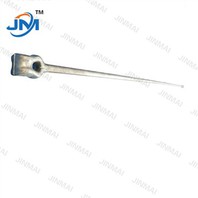
Can an insulator spindle be used in aerospace applications? This question has intrigued many in the engineering and aerospace communities. As a supplier of insulator spindles, I'm well - versed in their properties and potential applications, and I'm excited to delve into this topic.
Understanding Insulator Spindles
Insulator spindles are components designed to provide electrical insulation while maintaining mechanical stability. They are typically made from materials such as ceramics, polymers, or composite materials, each with unique properties. Ceramics, for example, offer high dielectric strength and excellent thermal stability. Polymers, on the other hand, are lightweight and can be easily molded into various shapes.
The Voltage Insulator Spindle is one type of insulator spindle that is specifically designed to handle high - voltage applications. It is often used in power transmission and distribution systems to prevent electrical leakage. The POLE TOP insulator spindles are usually found on utility poles, providing both mechanical support and electrical insulation for overhead lines. And the Pin Insulator Spindle is a commonly used type in low - and medium - voltage power systems, which is installed on pins and supports conductors.
Requirements in Aerospace Applications
Aerospace applications have extremely stringent requirements. The environment in aerospace is far more challenging than most terrestrial applications. Temperatures can range from extremely cold in the upper atmosphere to very hot during re - entry (in the case of spacecraft). There are also high levels of radiation, both from solar flares and cosmic rays.
Mechanical stresses are another significant factor. Aircraft and spacecraft experience vibrations during takeoff, landing, and flight. They also face aerodynamic forces that can cause significant mechanical strain on components. In addition, aerospace systems often require high - precision components to ensure the proper functioning of complex electronic and electrical systems.
Potential Suitability of Insulator Spindles in Aerospace
Electrical Insulation
One of the primary functions of an insulator spindle is electrical insulation. In aerospace applications, electrical systems are critical for communication, navigation, and control. Insulator spindles can prevent short - circuits and electrical leakage, which could lead to system failures. For example, in an aircraft's avionics bay, insulator spindles can be used to isolate electrical components and protect them from interference.
The high dielectric strength of insulator spindles makes them suitable for handling the high - voltage requirements in some aerospace electrical systems. For instance, in satellite power systems, the ability to insulate high - voltage components is crucial to ensure the proper functioning of solar panels and power distribution units.
Lightweight Design
Many aerospace applications demand lightweight components to improve fuel efficiency and payload capacity. As mentioned earlier, polymer - based insulator spindles are lightweight. Their low weight can contribute to overall weight savings in an aerospace vehicle. This is especially important for small satellites, where every gram of weight reduction can have a significant impact on mission cost and performance.
Temperature and Radiation Resistance
Some insulator spindle materials, such as certain ceramics and high - performance polymers, can offer good temperature and radiation resistance. Ceramics can withstand high temperatures without significant degradation of their electrical and mechanical properties. This is essential for applications near heat - generating components, such as engines or power systems in aerospace vehicles.
Regarding radiation resistance, radiation - hardened polymers can be used to manufacture insulator spindles. These polymers can maintain their structural integrity and electrical insulation properties even when exposed to high levels of radiation, protecting the sensitive electronics in aerospace applications.
Challenges and Limitations
Cost and Manufacturing Complexity
Aerospace - grade components often require strict quality control and high - precision manufacturing processes. Producing insulator spindles that meet aerospace standards can be costly and time - consuming. Specialized manufacturing facilities and testing equipment may be required to ensure that the components meet the stringent requirements of aerospace applications.
Validation and Certification
Before an insulator spindle can be used in aerospace applications, it needs to go through a rigorous validation and certification process. This involves extensive testing under simulated aerospace conditions, including thermal cycling, vibration testing, and radiation exposure tests. Meeting the standards set by regulatory bodies such as the Federal Aviation Administration (FAA) in the United States or the European Union Aviation Safety Agency (EASA) is a complex and costly process.
Real - World Examples of Possible Use
Although the use of insulator spindles in aerospace is not as widespread as in other industries, there are potential applications. For example, in unmanned aerial vehicles (UAVs), which are becoming increasingly popular for various aerospace missions such as surveillance and delivery, insulator spindles can be used in the electrical systems to ensure reliable performance.
In satellites, insulator spindles can be used in the power management systems. The solar panels on a satellite generate electricity at high voltages, and insulator spindles can help in isolating and distributing this power safely. The lightweight and radiation - resistant properties of suitable insulator spindle materials make them a potential choice for these applications.


Conclusion
In conclusion, while there are challenges and limitations, an insulator spindle can indeed be used in aerospace applications. Their electrical insulation properties, potential for lightweight design, and ability to withstand harsh conditions make them a viable option. However, to fully realize their potential in the aerospace industry, suppliers need to address the cost, manufacturing complexity, and certification issues.
If you are in the aerospace industry and are interested in exploring the use of insulator spindles for your applications, I encourage you to reach out for a detailed discussion. We can work together to understand your specific requirements and develop customized insulator spindle solutions.
References
- "Aerospace Materials Handbook", edited by a group of aerospace material experts.
- Research papers on electrical insulation in aerospace applications from various academic journals.
- Technical reports from aerospace regulatory bodies on component requirements and certification processes.