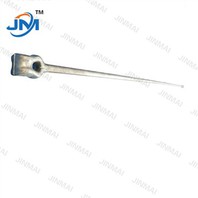
As a supplier of galvanized pole hooks, I understand the critical importance of ensuring the quality of our products. Galvanized pole hooks are widely used in various industries, including electrical, construction, and telecommunications. Their durability and reliability are essential for the safety and efficiency of the systems they support. In this blog post, I will share some key methods and considerations for checking the quality of a galvanized pole hook.
Visual Inspection
The first step in assessing the quality of a galvanized pole hook is a thorough visual inspection. This can reveal many obvious issues that may affect the hook's performance.
- Surface Finish: A high - quality galvanized pole hook should have a smooth and uniform surface. Any signs of roughness, pitting, or uneven coating may indicate problems with the galvanizing process. Pitting can expose the underlying metal to corrosion, reducing the hook's lifespan. The coating should also be free of blisters, cracks, or peeling. Blisters can form due to improper cleaning of the base metal before galvanizing, and cracks or peeling may occur if the coating is too thick or if there is stress on the hook during handling.
- Color Consistency: The color of the galvanized coating should be consistent across the entire hook. A significant variation in color may suggest inconsistent zinc deposition. For example, a darker area could indicate a higher concentration of zinc, which might be due to local over - dipping during the galvanizing process. On the other hand, lighter areas may have less zinc, leaving the metal more vulnerable to rust.
- Edge and Corner Condition: Pay close attention to the edges and corners of the pole hook. These areas are often more prone to damage during the manufacturing and galvanizing processes. A well - made hook will have smooth, rounded edges and corners with an intact galvanized coating. Sharp edges or chipped corners can not only pose a safety hazard but also be a sign of poor quality control.
Coating Thickness Measurement
The thickness of the galvanized coating is a crucial factor in determining the hook's corrosion resistance. A thicker coating generally provides better protection against rust and other forms of corrosion.
- Measurement Tools: There are several tools available for measuring the coating thickness, such as magnetic induction gauges and eddy - current gauges. Magnetic induction gauges are suitable for measuring the thickness of non - magnetic coatings (like zinc) on magnetic substrates (like steel). Eddy - current gauges, on the other hand, can be used for non - magnetic substrates. These tools are relatively easy to use and can provide accurate measurements.
- Industry Standards: Different industries may have specific requirements for the minimum coating thickness of galvanized products. For example, in the electrical industry, a galvanized pole hook used in outdoor applications may need to have a coating thickness of at least 50 - 80 microns. It is important to ensure that the measured coating thickness meets or exceeds the relevant industry standards.
Adhesion Testing
The adhesion of the galvanized coating to the base metal is another important aspect of quality. A coating that does not adhere well to the metal will quickly flake off, exposing the metal to corrosion.
- Cross - Cut Test: One common method for testing adhesion is the cross - cut test. This involves making a series of parallel cuts in the coating, followed by a perpendicular set of cuts to form a grid pattern. Then, a piece of adhesive tape is applied over the grid and quickly pulled off. If the coating comes off with the tape, it indicates poor adhesion.
- Bend Test: Another way to test adhesion is the bend test. A small section of the pole hook can be bent at a specific angle. If the coating cracks or peels during the bending process, it suggests that the adhesion is not sufficient. However, this test should be carried out carefully to avoid damaging the hook beyond usability.
Mechanical Property Testing
Galvanized pole hooks need to have adequate mechanical properties to withstand the loads and stresses they will encounter in service.
- Tensile Strength: Tensile strength testing can be performed to determine the maximum amount of pulling force the hook can withstand before breaking. This is especially important for hooks that will be used to support heavy loads. A sample of the pole hook is placed in a tensile testing machine, and a gradually increasing force is applied until the hook fails. The results are then compared with the specified minimum tensile strength requirements.
- Hardness Testing: Hardness testing can provide information about the hook's resistance to wear, deformation, and indentation. There are several methods for hardness testing, such as the Brinell, Rockwell, and Vickers tests. These tests involve applying a specific load to an indenter and measuring the size of the indentation. A hook with the appropriate hardness will be more durable and less likely to deform under normal use.
Chemical Composition Analysis
The chemical composition of the base metal and the galvanized coating can also affect the quality of the pole hook.
- Base Metal Composition: Analyzing the chemical composition of the base metal can ensure that it meets the required standards for strength, ductility, and other properties. For example, the carbon content in steel can significantly affect its strength and hardness. Too much carbon can make the steel brittle, while too little can result in low strength.
- Zinc Purity: The purity of the zinc used in the galvanizing process is also important. High - purity zinc will provide better corrosion protection. Chemical analysis methods, such as spectroscopy, can be used to determine the zinc purity and the presence of any impurities.
Compatibility with Other Components
Galvanized pole hooks are often used in conjunction with other components, such as Hot Dip Galvanized Strand Ground Clamps, Stay Rod Stay Plate, and High Voltage Line Insulator. It is essential to ensure that the pole hook is compatible with these components.
- Size and Fit: The hook should have the correct dimensions to fit properly with other parts. For example, if it is used in an electrical installation, it should be able to connect securely to the ground clamps and other hardware.
- Corrosion Compatibility: Different metals can have different corrosion rates when in contact with each other. It is important to ensure that the galvanized pole hook and the other components are made of materials that are compatible in terms of corrosion. Otherwise, galvanic corrosion may occur, which can significantly reduce the lifespan of the entire system.
Conclusion
Checking the quality of a galvanized pole hook involves a comprehensive approach that includes visual inspection, coating thickness measurement, adhesion testing, mechanical property testing, chemical composition analysis, and compatibility assessment. By carefully evaluating these aspects, you can ensure that the pole hooks you purchase or supply meet the highest quality standards.


If you are in the market for high - quality galvanized pole hooks or have any questions about our products, please feel free to contact us for a detailed discussion. We are committed to providing you with the best products and services to meet your specific needs.
References
- ASTM International. (2023). ASTM standards related to galvanized products.
- Corrosion Doctors. (2023). Galvanizing and corrosion protection.
- Machinery's Handbook. (2023). Mechanical properties and testing of metals.