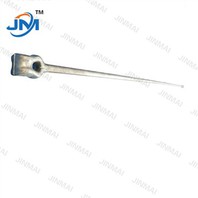
Forged eye bolts are essential components in various industries, including construction, manufacturing, and transportation. They are used to secure and lift heavy loads, making their fatigue resistance a critical factor in ensuring safety and reliability. As a trusted supplier of forged eye bolts, I understand the importance of providing high-quality products that can withstand the rigors of continuous use. In this blog post, I will share some insights on how to improve the fatigue resistance of forged eye bolts.
Understanding Fatigue in Forged Eye Bolts
Before delving into the strategies for improving fatigue resistance, it's crucial to understand what fatigue is and how it affects forged eye bolts. Fatigue is the progressive and localized structural damage that occurs when a material is subjected to cyclic loading. In the case of forged eye bolts, cyclic loading can result from repeated lifting, tension, or vibration. Over time, these cyclic loads can cause microscopic cracks to form in the bolt, which can eventually lead to failure.
The fatigue life of a forged eye bolt is influenced by several factors, including the material properties, the design of the bolt, the loading conditions, and the environment in which it operates. By addressing these factors, we can enhance the fatigue resistance of the bolts and extend their service life.
Material Selection
The choice of material is one of the most critical factors in determining the fatigue resistance of forged eye bolts. High-strength steels are commonly used for forged eye bolts due to their excellent mechanical properties. However, not all high-strength steels are created equal. When selecting a material, it's important to consider its fatigue strength, toughness, and corrosion resistance.
- Alloy Steels: Alloy steels are a popular choice for forged eye bolts because they offer a good combination of strength and toughness. By adding alloying elements such as chromium, nickel, and molybdenum, the fatigue strength of the steel can be significantly improved. For example, 4140 alloy steel is known for its high fatigue resistance and is commonly used in applications where cyclic loading is expected.
- Heat Treatment: Heat treatment is another important aspect of material selection. Proper heat treatment can enhance the mechanical properties of the steel, including its fatigue strength. Processes such as quenching and tempering can refine the grain structure of the steel, making it more resistant to crack initiation and propagation.
Design Optimization
The design of the forged eye bolt also plays a crucial role in its fatigue resistance. A well-designed bolt can distribute the load evenly and minimize stress concentrations, which are the primary causes of fatigue failure.
- Thread Design: The thread design of the eye bolt can have a significant impact on its fatigue resistance. Fine threads generally have a higher fatigue strength than coarse threads because they distribute the load more evenly. Additionally, the root radius of the thread should be optimized to reduce stress concentrations.
- Eye Shape: The shape of the eye in the bolt is another important design consideration. A smooth and rounded eye shape can help to reduce stress concentrations and improve the fatigue resistance of the bolt. Avoid sharp corners or edges in the eye, as these can act as stress risers and initiate cracks.
- Fillets and Radii: Adding fillets and radii to the critical areas of the bolt, such as the transition between the shank and the eye, can help to reduce stress concentrations and improve fatigue resistance. Fillets and radii smooth out the stress distribution and prevent the formation of cracks.
Manufacturing Processes
The manufacturing processes used to produce forged eye bolts can also affect their fatigue resistance. High-quality manufacturing processes can ensure that the bolts have a uniform microstructure and minimal defects, which are essential for good fatigue performance.


- Forging: Forging is the preferred manufacturing process for eye bolts because it can produce a dense and homogeneous microstructure. During forging, the steel is heated and shaped under high pressure, which helps to align the grain structure and improve the mechanical properties of the bolt.
- Machining: After forging, the eye bolts are usually machined to achieve the desired dimensions and surface finish. Proper machining techniques can minimize surface roughness and prevent the introduction of defects that could act as crack initiation sites.
- Surface Treatment: Surface treatment can also improve the fatigue resistance of forged eye bolts. Processes such as shot peening can introduce compressive stresses on the surface of the bolt, which can help to prevent crack initiation and propagation. Additionally, coatings such as zinc plating or hot-dip galvanizing can provide corrosion protection, which is important for maintaining the integrity of the bolt in harsh environments.
Loading Conditions and Environment
The loading conditions and the environment in which the forged eye bolts operate can also have a significant impact on their fatigue resistance.
- Load Magnitude and Frequency: The magnitude and frequency of the cyclic load are important factors to consider. Higher loads and frequencies can increase the rate of fatigue damage, so it's important to ensure that the bolts are designed to handle the expected loads. Additionally, avoiding sudden or shock loads can help to reduce the risk of fatigue failure.
- Environmental Factors: The environment in which the bolts operate can also affect their fatigue resistance. Corrosive environments, such as those with high humidity or exposure to chemicals, can accelerate the corrosion process and reduce the fatigue life of the bolts. Using corrosion-resistant materials and coatings can help to mitigate the effects of the environment.
Quality Control and Testing
Implementing a rigorous quality control program is essential for ensuring the fatigue resistance of forged eye bolts. Quality control measures should include material testing, dimensional inspection, and non-destructive testing to detect any defects or inconsistencies in the bolts.
- Material Testing: Material testing can include chemical analysis, tensile testing, and hardness testing to ensure that the bolts meet the specified material requirements. These tests can help to identify any variations in the material properties that could affect the fatigue resistance of the bolts.
- Dimensional Inspection: Dimensional inspection is important to ensure that the bolts have the correct dimensions and tolerances. Any deviations from the specified dimensions can affect the fit and performance of the bolts, which could lead to increased stress concentrations and fatigue failure.
- Non-Destructive Testing: Non-destructive testing techniques, such as ultrasonic testing or magnetic particle testing, can be used to detect any internal or surface defects in the bolts. These tests can help to identify potential crack initiation sites before they become a problem.
Conclusion
Improving the fatigue resistance of forged eye bolts is a multi-faceted process that involves material selection, design optimization, manufacturing processes, and quality control. By addressing these factors, we can produce high-quality eye bolts that can withstand the rigors of continuous use and provide reliable performance in various applications.
As a [Forged Eye Bolts Supplier], we are committed to providing our customers with the highest quality forged eye bolts. Our products are designed and manufactured using the latest technologies and best practices to ensure excellent fatigue resistance and long service life. If you are in need of forged eye bolts for your project, we invite you to [Contact Us] to discuss your requirements and explore our product offerings. We look forward to working with you to find the best solutions for your needs.
References
- ASME B18.2.1 - Square and Hex Bolts and Screws (Inch Series)
- ASTM A325 - Standard Specification for Structural Bolts, Steel, Heat Treated, 120/105 ksi Minimum Tensile Strength
- ISO 898-1 - Mechanical properties of fasteners made of carbon steel and alloy steel - Part 1: Bolts, screws and studs