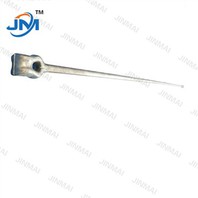
Pin type insulators are a fundamental component in electrical power systems, widely used for supporting and insulating conductors on overhead transmission and distribution lines. As a supplier of Pin Type Insulator, I often encounter inquiries regarding their resistance to chemical corrosion. This blog post aims to explore this critical aspect in detail, providing insights based on scientific knowledge and practical experience.
Understanding Pin Type Insulators
Pin type insulators are typically made of materials such as porcelain or polymer. Porcelain insulators have been used for decades due to their excellent electrical insulation properties, mechanical strength, and resistance to environmental factors. Polymer insulators, on the other hand, have gained popularity in recent years because of their lightweight, high hydrophobicity, and good performance in polluted environments.
The main function of a pin type insulator is to prevent the flow of current from the conductor to the supporting structure, ensuring the safety and reliability of the electrical system. However, in real - world applications, these insulators are exposed to various chemical substances, which may pose a threat to their integrity.
Chemical Corrosion Mechanisms
Chemical corrosion is a process in which a material deteriorates due to a chemical reaction with its environment. In the case of pin type insulators, several types of chemical corrosion can occur:
Acidic and Alkaline Environments
In industrial areas, the atmosphere may contain acidic pollutants such as sulfur dioxide (SO₂) and nitrogen oxides (NOₓ). These gases can dissolve in water to form acids, which can react with the surface of the insulator. For porcelain insulators, the acid can react with the ceramic matrix, gradually eroding the surface and reducing its mechanical strength. Polymer insulators may also be affected by acidic environments, as some polymers can be hydrolyzed in the presence of acids, leading to a decrease in their hydrophobicity and electrical performance.
Alkaline substances can also cause corrosion. For example, in some soil environments, high - pH solutions may be present. If the insulator comes into contact with these alkaline solutions, it can lead to chemical reactions that damage the insulator material.
Salt Deposits
In coastal areas, salt spray can deposit on the surface of pin type insulators. The salt can absorb moisture from the air, forming a conductive layer on the insulator surface. This conductive layer can cause leakage current, which may lead to dry - band arcing and further damage to the insulator. Moreover, the salt can also react with the insulator material over time, especially in the presence of oxygen and moisture, accelerating the corrosion process.
Resistance of Pin Type Insulators to Chemical Corrosion
Porcelain Pin Type Insulators
Porcelain is a relatively stable material with good chemical resistance. It can withstand a certain degree of acidic and alkaline environments. However, long - term exposure to strong acids or alkalis can still cause damage. The surface of porcelain insulators is often glazed to provide an additional protective layer. The glaze can resist the penetration of most chemical substances, but if the glaze is damaged, the underlying ceramic matrix may be exposed to corrosion.
To enhance the corrosion resistance of porcelain pin type insulators, some manufacturers may use special formulations or surface treatments. For example, adding certain additives to the porcelain body can improve its chemical stability. However, even with these measures, porcelain insulators still need to be regularly inspected in corrosive environments to ensure their performance.
Polymer Pin Type Insulators
Polymer insulators are generally more resistant to chemical corrosion compared to porcelain insulators. Many polymers used in insulator manufacturing, such as silicone rubber, have excellent chemical stability. Silicone rubber is highly resistant to oxidation, ozone, and most chemicals. It has a low surface energy, which makes it difficult for contaminants to adhere to its surface.
In addition, polymer insulators can maintain their hydrophobicity in harsh chemical environments. Hydrophobicity is an important property that helps to prevent the formation of a continuous conductive layer on the insulator surface, reducing the risk of leakage current and arcing. However, some polymers may be sensitive to certain solvents or strong oxidizing agents. Therefore, it is important to select the appropriate polymer material based on the specific chemical environment where the insulator will be used.
Role of Accessories in Chemical Corrosion Resistance
Pin type insulators are often used in combination with accessories such as Hot - dip Galvanizing Bolt and Insulated Wedge Clamp. These accessories also play a role in the overall corrosion resistance of the system.
Hot - dip galvanizing bolts are coated with a layer of zinc, which provides a sacrificial anode protection for the steel substrate. The zinc coating can react with the environment to form a protective oxide layer, preventing the steel from rusting. This is particularly important in corrosive environments, as the bolts need to maintain their mechanical strength to ensure the proper installation and operation of the insulator.
Insulated wedge clamps are used to secure the conductor to the insulator. They are usually made of insulating materials that are resistant to chemical corrosion. A well - designed insulated wedge clamp can prevent the ingress of moisture and chemicals, protecting the conductor and the insulator from damage.
Case Studies
In a coastal power distribution network, a utility company replaced some of its old porcelain pin type insulators with polymer pin type insulators. After several years of operation, it was found that the polymer insulators showed better performance in terms of chemical corrosion resistance. The porcelain insulators had visible signs of surface erosion and salt deposits, while the polymer insulators remained in good condition, with minimal damage from the salt spray environment.
In an industrial area with high levels of sulfur dioxide pollution, a power transmission line using porcelain pin type insulators with special surface treatments showed relatively good resistance to acid corrosion. The surface treatment helped to slow down the rate of corrosion, although some minor surface degradation was still observed after long - term exposure.
Conclusion
Pin type insulators can have varying degrees of resistance to chemical corrosion depending on the material used and the specific chemical environment. Porcelain insulators offer good general resistance but may be vulnerable to long - term exposure to strong acids or alkalis. Polymer insulators, especially those made of silicone rubber, generally have better chemical corrosion resistance and hydrophobicity.
Accessories such as hot - dip galvanizing bolts and insulated wedge clamps also contribute to the overall corrosion resistance of the insulator system. Regular inspection and maintenance are essential to ensure the long - term performance of pin type insulators in corrosive environments.


If you are in the market for high - quality pin type insulators with excellent chemical corrosion resistance, please feel free to contact us for more information and to discuss your specific requirements. Our team of experts is ready to assist you in finding the best solutions for your electrical power systems.
References
- Grover, I. K., & Swaminathan, M. (2013). High Voltage Engineering: Fundamentals and Applications. Wiley.
- CIGRE Brochure 668. (2016). Polymer Insulators for Overhead Lines: State - of - the - Art and Future Challenges.
- IEEE Std 1562 - 2007. IEEE Guide for the Application of Polymer Insulators on Overhead Transmission Lines.