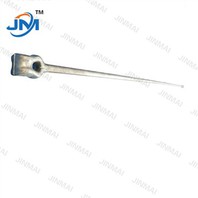
As a supplier of Insulated Wedge Clamps, I've often been asked whether there are alternatives to this product. In the electrical and power distribution industries, the choice of hardware is crucial for safety, efficiency, and long - term performance. Let's delve into this topic and explore some possible alternatives to Insulated Wedge Clamps.
1. Function and Importance of Insulated Wedge Clamps
Insulated Wedge Clamps are designed to securely hold electrical cables in place while providing electrical insulation. They are commonly used in overhead power lines, distribution networks, and other electrical installations. The wedge - shaped design ensures a tight grip on the cable, reducing the risk of slippage and electrical arcing. This not only enhances the safety of the electrical system but also improves its reliability. You can learn more about Insulated Wedge Clamp on our website.
2. Pin Type Insulator as an Alternative
One possible alternative to Insulated Wedge Clamps is the Pin Type Insulator. Pin Type Insulators are used to support and insulate electrical conductors on poles or towers. They are typically made of porcelain or composite materials and are suitable for low - to medium - voltage applications.
Advantages of Pin Type Insulators
- Simple Design: Pin Type Insulators have a relatively simple design, which makes them easy to install and maintain. They consist of a pin that is fixed to the pole or tower and an insulator body that supports the conductor.
- Cost - Effective: Compared to some other types of insulators and clamps, Pin Type Insulators are generally more cost - effective. This makes them a popular choice for large - scale electrical distribution projects where cost is a major consideration.
- Good Insulation Properties: They provide good electrical insulation, protecting the conductor from electrical leakage and reducing the risk of short - circuits.
Disadvantages of Pin Type Insulators
- Limited Mechanical Strength: Pin Type Insulators may have limited mechanical strength compared to Insulated Wedge Clamps. They may not be suitable for applications where the conductor is subject to high mechanical stress, such as in areas with strong winds or heavy ice loads.
- Single - Point Support: They provide single - point support for the conductor, which may not be sufficient in some cases. This can lead to increased stress on the conductor at the support point and may result in premature failure.
3. High Voltage Line Insulator as an Alternative
Another alternative is the High Voltage Line Insulator. High Voltage Line Insulators are designed for use in high - voltage power transmission and distribution systems. They are available in various types, including suspension insulators, post insulators, and strain insulators.
Advantages of High Voltage Line Insulators
- High Voltage Capability: As the name suggests, High Voltage Line Insulators are capable of withstanding high voltages. They are designed to provide reliable insulation in high - voltage applications, ensuring the safety and stability of the electrical system.
- Multiple - Point Support: Some types of High Voltage Line Insulators, such as suspension insulators, provide multiple - point support for the conductor. This helps to distribute the mechanical stress evenly along the conductor, reducing the risk of damage.
- Durability: They are typically made of high - quality materials and are designed to withstand harsh environmental conditions, such as extreme temperatures, pollution, and UV radiation.
Disadvantages of High Voltage Line Insulators
- Complex Installation: High Voltage Line Insulators are often more complex to install compared to Insulated Wedge Clamps. They may require specialized tools and skills, which can increase the installation cost and time.
- Higher Cost: Due to their high - voltage capability and advanced design, High Voltage Line Insulators are generally more expensive than Insulated Wedge Clamps. This may make them less suitable for low - voltage or small - scale applications.
4. Factors to Consider When Choosing an Alternative
When considering alternatives to Insulated Wedge Clamps, several factors need to be taken into account:


Electrical Requirements
- Voltage Rating: The voltage rating of the alternative product must be compatible with the electrical system. Using a product with a lower voltage rating can lead to electrical breakdown and safety hazards.
- Insulation Resistance: The insulation resistance of the alternative product should be sufficient to prevent electrical leakage and ensure the safety of the system.
Mechanical Requirements
- Mechanical Strength: The alternative product must be able to withstand the mechanical stress exerted on the conductor, such as tension, compression, and bending.
- Vibration and Shock Resistance: It should also be able to resist vibration and shock, especially in areas with high wind speeds or seismic activity.
Environmental Conditions
- Temperature and Humidity: The alternative product should be able to operate effectively in the expected temperature and humidity range. Extreme temperatures and high humidity can affect the performance and lifespan of the product.
- Pollution and Corrosion: In areas with high levels of pollution or corrosion, the alternative product should be made of materials that are resistant to these environmental factors.
5. Conclusion
In conclusion, while there are alternatives to Insulated Wedge Clamps, such as Pin Type Insulators and High Voltage Line Insulators, each alternative has its own advantages and disadvantages. The choice of the most suitable product depends on various factors, including electrical requirements, mechanical requirements, and environmental conditions.
As a supplier of Insulated Wedge Clamps, we understand the importance of providing high - quality products and solutions to our customers. We are committed to helping our customers make the right choice based on their specific needs. If you are interested in learning more about our Insulated Wedge Clamps or need assistance in choosing the most suitable product for your application, please feel free to contact us for further discussion and procurement negotiation.
References
- Electrical Insulation Handbook, Second Edition, McGraw - Hill Professional
- Power System Engineering, John Wiley & Sons