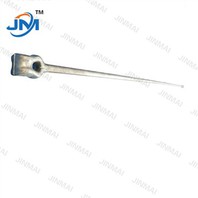
Mounting Clamp Adapters are essential components in various industries, offering a convenient and efficient way to secure and attach different equipment. As a supplier of Mounting Clamp Adapters, I have witnessed firsthand their numerous benefits. However, like any product, they also have some potential disadvantages. In this blog, we will explore these drawbacks to provide a balanced view for potential customers.
1. Compatibility Issues
One of the primary disadvantages of using a Mounting Clamp Adapter is compatibility. These adapters are designed to connect two different pieces of equipment, and ensuring a perfect fit can be challenging. Different manufacturers may have variations in their product dimensions, shapes, and connection mechanisms. For example, if you are trying to connect a piece of machinery from one company to another using a Mounting Clamp Adapter, the adapter may not precisely match the specifications of both devices.
This can lead to improper installation, which may result in a loose connection. A loose connection not only affects the stability of the equipment but can also cause vibrations and noise during operation. Over time, these vibrations can damage the equipment and the adapter itself. Additionally, if the adapter is not properly compatible, it may not be able to provide the required strength and support, potentially leading to equipment failure.
2. Limited Durability
Another disadvantage is the potential for limited durability. Mounting Clamp Adapters are often made from materials such as plastic, aluminum, or steel. While these materials are chosen for their specific properties, they all have their limitations. Plastic adapters, for instance, may be lightweight and inexpensive, but they are more prone to cracking and breaking under stress. Aluminum adapters are corrosion-resistant and relatively strong, but they can be damaged by impacts or excessive torque. Steel adapters are generally the most durable, but they are also heavier and more expensive.
In harsh environments, such as those exposed to extreme temperatures, moisture, or chemicals, the durability of the adapter can be further compromised. For example, in a marine environment, the constant exposure to saltwater can cause corrosion, weakening the adapter over time. Similarly, in high-temperature industrial settings, the adapter may expand and contract, leading to fatigue and eventual failure.
3. Installation Complexity
Installing a Mounting Clamp Adapter can sometimes be a complex process, especially for non - technical users. Some adapters require precise measurements and alignment to ensure a proper fit. If the installation is not done correctly, it can lead to a host of problems, as mentioned earlier.
Moreover, certain Mounting Clamp Adapters may require specialized tools for installation. For example, some adapters need a torque wrench to tighten the bolts to the correct specifications. If the user does not have access to the appropriate tools or does not have the necessary skills, the installation may be sub - par, resulting in an unstable connection.
4. Cost - effectiveness
In some cases, the cost of using a Mounting Clamp Adapter may not be justifiable. While these adapters can provide a practical solution for connecting different equipment, they can also add to the overall cost of a project. Not only do you have to purchase the adapter itself, but you may also incur additional costs for installation, such as the cost of tools and labor.
If the equipment is relatively new or can be easily modified to connect directly without an adapter, it may be more cost - effective to make those modifications rather than using an adapter. Additionally, if you need to replace the adapter frequently due to issues such as compatibility or durability, the long - term cost can be significant.
5. Safety Risks
Improperly installed or low - quality Mounting Clamp Adapters can pose safety risks. A loose or faulty adapter can cause the equipment it is connecting to become unstable. This is particularly dangerous in industries such as construction, manufacturing, and power generation, where equipment failure can lead to serious accidents.
For example, in the power industry, a loose adapter on a Bow type anchor rod or Anchoring Clamp Suspension can cause power lines to become unstable, potentially leading to power outages or electrical hazards. Similarly, in construction, a faulty adapter on a Cross Arm of Power Fittings can compromise the integrity of the entire structure.
Mitigating the Disadvantages
While there are disadvantages to using Mounting Clamp Adapters, there are also ways to mitigate these issues. As a supplier, we offer high - quality adapters made from durable materials and conduct rigorous quality control checks to ensure compatibility and reliability. We also provide detailed installation instructions and offer technical support to our customers to help them with the installation process.
In addition, we work closely with our customers to understand their specific needs and recommend the most suitable adapter for their application. By choosing the right adapter and following the installation guidelines carefully, many of the potential disadvantages can be minimized.
Conclusion
In conclusion, while Mounting Clamp Adapters offer many benefits in terms of convenience and functionality, they also have some potential disadvantages. Compatibility issues, limited durability, installation complexity, cost - effectiveness, and safety risks are all factors that need to be considered when using these adapters.


However, with proper selection, installation, and maintenance, these drawbacks can be managed effectively. As a leading supplier of Mounting Clamp Adapters, we are committed to providing our customers with high - quality products and excellent service. If you are considering using Mounting Clamp Adapters for your project, we encourage you to contact us for more information and to discuss your specific requirements. Our team of experts is ready to assist you in making the best choice for your application.
References
- Industry standards for Mounting Clamp Adapters
- Technical literature on materials used in Mounting Clamp Adapters
- Case studies on equipment failures related to Mounting Clamp Adapters