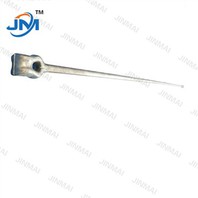
In the textile industry, the selection of appropriate hardware components is crucial for ensuring the efficiency, safety, and quality of production processes. Among these components, forged eye bolts are often considered for various applications. As a trusted forged eye bolts supplier, I am frequently asked whether forged eye bolts can be used in the textile industry. In this blog, I will delve into this question, exploring the potential uses, advantages, and considerations of using forged eye bolts in textile manufacturing.
Understanding Forged Eye Bolts
Forged eye bolts are a type of fastener characterized by a loop or "eye" at one end and a threaded shaft at the other. They are typically made by forging, a manufacturing process that involves shaping metal under high pressure. This process results in a stronger and more durable product compared to other methods, such as casting. Forged eye bolts are available in various sizes, materials, and finishes to suit different applications.
Potential Uses in the Textile Industry
The textile industry encompasses a wide range of processes, from fiber production to fabric manufacturing and garment assembly. Forged eye bolts can play a significant role in several aspects of these processes:


Equipment Installation and Support
In textile factories, large machinery such as looms, spinning frames, and dyeing machines need to be securely installed and supported. Forged eye bolts can be used to anchor these machines to the floor or other structural elements, preventing movement and ensuring stable operation. They can also be used to support overhead conveyors, pipes, and cables, helping to organize the factory layout and improve safety.
Material Handling
Moving heavy rolls of fabric, bales of fiber, and other materials is a common task in the textile industry. Forged eye bolts can be attached to lifting equipment, such as cranes, hoists, and forklifts, to facilitate the safe and efficient handling of these materials. The strong and reliable construction of forged eye bolts ensures that they can withstand the weight and stress of lifting operations, reducing the risk of accidents and damage to the materials.
Tensioning and Securing
In some textile processes, such as fabric stretching and dyeing, it is necessary to apply tension to the fabric to achieve the desired results. Forged eye bolts can be used to create a secure attachment point for tensioning devices, such as pulleys and winches, allowing for precise control of the tension applied to the fabric. They can also be used to secure fabric during sewing, printing, and other finishing operations, ensuring that the fabric remains in place and does not shift or distort.
Advantages of Using Forged Eye Bolts in the Textile Industry
There are several advantages to using forged eye bolts in the textile industry:
Strength and Durability
Forged eye bolts are known for their high strength and durability. The forging process aligns the grain structure of the metal, making it more resistant to fatigue, corrosion, and impact. This means that forged eye bolts can withstand the harsh operating conditions in textile factories, including high temperatures, humidity, and chemical exposure, without losing their strength or integrity.
Safety
Safety is a top priority in the textile industry, and forged eye bolts can help to ensure a safe working environment. Their strong construction and reliable performance reduce the risk of equipment failure and accidents, protecting workers and preventing damage to the machinery and materials. Additionally, forged eye bolts are often designed with safety features, such as rounded edges and smooth surfaces, to minimize the risk of injury.
Versatility
Forged eye bolts are available in a wide range of sizes, materials, and finishes, making them suitable for a variety of applications in the textile industry. Whether you need to anchor a large machine, lift a heavy roll of fabric, or tension a piece of fabric, there is a forged eye bolt that can meet your needs. This versatility allows textile manufacturers to use a single type of fastener for multiple applications, reducing the need for inventory management and simplifying the procurement process.
Considerations When Using Forged Eye Bolts in the Textile Industry
While forged eye bolts offer many advantages, there are also some considerations to keep in mind when using them in the textile industry:
Material Selection
The choice of material for forged eye bolts is crucial, as it can affect their performance and durability. In the textile industry, where exposure to moisture, chemicals, and abrasion is common, it is important to select a material that is resistant to corrosion and wear. Stainless steel, for example, is a popular choice for forged eye bolts in textile applications due to its high corrosion resistance and strength.
Load Capacity
It is essential to ensure that the forged eye bolts you use have a sufficient load capacity for the intended application. Overloading a forged eye bolt can cause it to fail, leading to equipment damage, accidents, and injuries. Before selecting a forged eye bolt, you should calculate the maximum load it will need to support and choose a bolt with a load capacity that exceeds this value.
Installation and Maintenance
Proper installation and maintenance of forged eye bolts are essential for ensuring their safe and reliable performance. When installing forged eye bolts, it is important to follow the manufacturer's instructions carefully and use the appropriate tools and techniques. Regular inspection and maintenance of the forged eye bolts can help to detect any signs of wear, damage, or corrosion and prevent potential problems before they occur.
Related Products
In addition to forged eye bolts, there are several other products that can be used in conjunction with them in the textile industry. These include Hot-dip Galvanizing U-type Shackle Ring, Cross Arm Connector, and Anchor Expanding. These products can provide additional support, stability, and flexibility in textile manufacturing processes.
Conclusion
In conclusion, forged eye bolts can be a valuable addition to the textile industry. Their strength, durability, safety, and versatility make them suitable for a variety of applications, from equipment installation and support to material handling and tensioning. However, it is important to consider the material selection, load capacity, installation, and maintenance of forged eye bolts to ensure their safe and reliable performance. If you are interested in learning more about forged eye bolts or other products for the textile industry, please feel free to contact us for more information and to discuss your specific requirements. We look forward to working with you to find the best solutions for your textile manufacturing needs.
References
- ASME B18.15 - Standard for Forged Eye Bolts
- ASTM A193 - Standard Specification for Alloy-Steel and Stainless Steel Bolting Materials for High-Temperature Service
- OSHA Regulations for Lifting and Material Handling Equipment