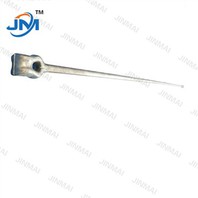
Can pigtail eye bolts be used in automotive applications? Well, that's a question I get asked a lot as a pigtail eye bolt supplier. In this blog, I'll dig into this topic, sharing the ins and outs to help you decide if these bolts are a good fit for automotive use.
First off, let's talk about what pigtail eye bolts are. They're a type of fastener with a loop or "eye" at one end and a threaded shaft. The pigtail part usually refers to a bend or curve in the bolt, which can be useful in various applications. These bolts are commonly used in industries like construction, rigging, and electrical work for tasks such as attaching cables, ropes, or other components.
When it comes to automotive applications, there are several factors to consider. One of the most important is strength and durability. Cars are constantly in motion, facing vibrations, shocks, and varying loads. So, any component used in an automotive setting needs to be able to withstand these conditions. Pigtail eye bolts are typically made from materials like steel or stainless steel, which offer good strength. However, the specific grade and quality of the material matter a lot. For high - stress automotive applications, such as suspension systems or engine mounts, you'd need bolts with high tensile strength and good fatigue resistance.
Another aspect is corrosion resistance. Cars are exposed to all sorts of elements, including water, salt (especially in winter on roads treated with de - icing salts), and chemicals. If pigtail eye bolts are used in an automotive environment, they need to resist corrosion to prevent failure over time. Stainless steel pigtail eye bolts are a great option here as they have inherent corrosion - resistant properties. But even with stainless steel, the finish and the specific alloy can affect how well it stands up to corrosion.
Now, let's look at some potential automotive uses for pigtail eye bolts. In the interior of a car, they could be used for mounting accessories. For example, you might use them to attach a custom - made cargo net in the trunk. The eye part of the bolt can easily hold the loops of the net, and the threaded end can be screwed into a pre - drilled hole in the car's body. This is a relatively low - stress application, so the requirements for the bolt's strength are not as extreme as in other parts of the vehicle.


In the engine compartment, pigtail eye bolts could potentially be used for minor components. Maybe for attaching a small wire harness or a bracket. But in this area, the bolts need to be able to handle high temperatures and vibrations. The heat from the engine can affect the material properties of the bolt, so it's crucial to choose a bolt that can maintain its strength at elevated temperatures.
On the exterior of the car, pigtail eye bolts could be used for attaching things like a tow hook (although for tow hooks, you'd need to ensure they meet strict safety standards). The bend in the pigtail can be useful for getting the right angle of attachment. However, this is a high - stress application, and you'd need to make sure the bolt is properly rated for the forces involved in towing.
But there are also some challenges when using pigtail eye bolts in automotive applications. One is the issue of standardization. The automotive industry has very strict standards and regulations. Many automotive components need to be certified to meet specific safety and performance criteria. Pigtail eye bolts may not always come with the necessary certifications for automotive use right out of the box. You might need to work with a manufacturer who can provide bolts that are tested and certified for automotive applications.
Another challenge is the fit. Cars are designed with precise tolerances. The size and shape of the pigtail eye bolt need to match the available space and the mating components. A bolt that's too large or too small can cause problems, such as improper installation or interference with other parts.
If you're thinking about using Pigtail Hook Bolts in your automotive project, it's important to do your research. Look at the specifications of the bolts carefully, including the material, size, and strength ratings. You might also want to consult with an automotive engineer or a professional mechanic. They can give you valuable insights based on their experience and knowledge of automotive systems.
Now, let's touch on some related products that you might find useful in conjunction with pigtail eye bolts in automotive applications. Hardware Pole Line Hook can be used for cable management in the car. They can help organize wires and cables in the engine compartment or other areas, ensuring that everything stays in place and doesn't get tangled. Similarly, Cable Pole Hook can be used for routing and securing cables. These hooks can be used in combination with pigtail eye bolts to create a more organized and efficient cable management system in your vehicle.
In conclusion, pigtail eye bolts can be used in automotive applications, but it depends on the specific use case. For low - stress applications like interior accessory mounting, they can be a great choice. However, for high - stress and safety - critical applications, you need to be extremely careful and make sure the bolts meet all the necessary standards. If you're interested in purchasing pigtail eye bolts for your automotive needs, or if you have any questions about their suitability for your project, don't hesitate to reach out. I'm here to help you find the right bolts for your specific requirements. Let's start a conversation about how we can work together to get the best solution for your automotive applications.
References
- Automotive Engineering Handbook
- Fastener Standards and Guidelines Publications