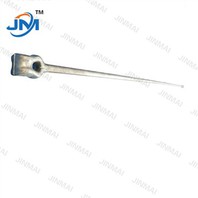
Hey there! As a supplier of overhead line fittings, I've seen firsthand how crucial these components are, especially in windy areas. Today, I wanna chat about how our overhead line fittings perform in those blustery conditions.
First off, let's understand the challenges that windy areas pose to overhead power lines. Strong winds can cause the lines to sway, vibrate, and even gallop. These movements put a lot of stress on the fittings that hold the lines in place. If the fittings aren't up to the task, it can lead to line failures, power outages, and costly repairs.
One of the key factors in ensuring the performance of overhead line fittings in windy areas is the material they're made from. Our fittings are crafted from high - quality materials like steel and aluminum. Steel is known for its strength and durability. It can withstand the high tensile forces generated by the swaying lines in windy conditions. For example, our Steel Angle Cross Arm is made from robust steel. The angle design provides excellent support for the power lines, preventing them from sagging too much even in strong winds. The cross - arm's structure distributes the load evenly, reducing the stress on individual points and minimizing the risk of breakage.
Aluminum, on the other hand, is lightweight yet strong. It's resistant to corrosion, which is important in outdoor environments where the fittings are exposed to the elements. Our aluminum fittings can handle the dynamic forces caused by wind - induced vibrations without adding excessive weight to the power line system. This helps in maintaining the stability of the entire setup.
Another important aspect is the design of the fittings. We've put a lot of thought into creating designs that can adapt to the unique challenges of windy areas. For instance, our Hot Dip Galvanized Secondary Clevis has a clever design that allows for a certain degree of flexibility. This flexibility enables the fitting to move slightly with the power line as it sways in the wind, rather than resisting the movement rigidly. By doing so, it reduces the stress on the connection points and the line itself. The hot - dip galvanized coating further protects the clevis from rust and corrosion, ensuring its long - term performance in harsh weather conditions.
Vibration dampening is also a critical feature of our overhead line fittings. Wind can cause the power lines to vibrate at high frequencies, which can lead to fatigue and eventual failure of the fittings. To combat this, we've incorporated vibration - dampening mechanisms into many of our products. Some of our fittings are equipped with rubber or silicone components that absorb the energy from the vibrations. This reduces the amplitude of the vibrations and protects the fittings and the power lines from damage.
Our Hot Dip Galvanized Overhead Line Hardware is a prime example of a comprehensive solution for windy areas. The hot - dip galvanized finish not only provides corrosion resistance but also adds an extra layer of strength to the hardware. The hardware includes various components such as clamps, bolts, and nuts that work together to secure the power lines and maintain the integrity of the entire system. The design of these components is optimized to handle the forces exerted by the wind, ensuring that the power lines stay in place even during severe storms.
In addition to the material, design, and vibration - dampening features, proper installation is essential for the optimal performance of our overhead line fittings in windy areas. Our team of experts can provide guidance on the correct installation procedures. We recommend using specialized tools and following strict safety protocols during installation. This ensures that the fittings are securely attached to the power lines and the support structures, minimizing the risk of loosening or detachment in windy conditions.


Maintenance is another crucial factor. Regular inspections of the overhead line fittings are necessary to detect any signs of wear, damage, or corrosion. We offer maintenance services and can provide replacement parts if needed. By keeping the fittings in good condition, we can extend their lifespan and ensure the continuous and reliable operation of the power lines in windy areas.
Now, if you're in charge of a power distribution project in a windy area, you need overhead line fittings that you can trust. Our products have been tested and proven to perform well in challenging wind conditions. Whether it's a small - scale rural project or a large - scale urban power grid, we have the right fittings for you.
If you're interested in learning more about our overhead line fittings or have a specific project in mind, don't hesitate to reach out. We're here to help you find the best solutions for your power line needs. Let's work together to ensure that your power lines stay up and running, even when the wind blows hard.
References:
- Electrical Power Systems Engineering Handbook, McGraw - Hill
- Power System Overhead Line Design and Construction Manual, IEEE Press