Hey there! As a supplier of steel cross arms, I've been diving deep into the world of these essential components. One question that often pops up is how the torsional strength of steel cross arms affects their performance. Let's break it down and explore this topic together.
First off, what exactly is torsional strength? Well, it's the ability of a material to resist twisting forces. In the case of steel cross arms, they're subjected to all sorts of twists and turns in real - world applications. Whether it's due to strong winds, uneven loading from attached equipment, or even seismic activity, torsional forces can put a serious strain on these cross arms.
When a steel cross arm has high torsional strength, it can handle these twisting forces without deforming or failing. This is crucial because a deformed cross arm can lead to a whole host of problems. For example, if it starts to twist, the equipment attached to it, like power lines or communication cables, may not be properly supported. This can cause sagging lines, which not only look bad but also pose a safety risk. Sagging power lines can come into contact with other objects, leading to short - circuits or even electrical outages.
On the other hand, if the torsional strength of the steel cross arm is low, it's more likely to give in to the twisting forces. This can result in cracks or fractures in the cross arm. Once a crack forms, it weakens the structure even further, making it more susceptible to complete failure. And when a cross arm fails, it can bring down all the equipment attached to it, causing significant damage and disruption.
Now, let's talk about how we, as a steel cross arm supplier, ensure that our products have the right torsional strength. We start with high - quality steel. The type of steel we use plays a huge role in determining the torsional strength. We source our steel from reliable suppliers who adhere to strict quality standards. This ensures that the base material has good inherent strength.
After getting the right steel, the manufacturing process is key. We use advanced fabrication techniques to shape the steel into cross arms. During this process, we pay close attention to details like the thickness of the steel, the shape of the cross - section, and the welding quality. A well - designed cross - section can distribute the torsional forces more evenly across the cross arm, reducing the stress concentration at any one point. And high - quality welding ensures that the different parts of the cross arm are firmly joined together, enhancing its overall strength.
Once the cross arms are manufactured, we put them through rigorous testing. We use specialized equipment to apply controlled torsional forces to the cross arms and measure how they respond. This allows us to verify that they meet or exceed the required torsional strength standards. Only after passing these tests are our cross arms ready to be shipped to our customers.
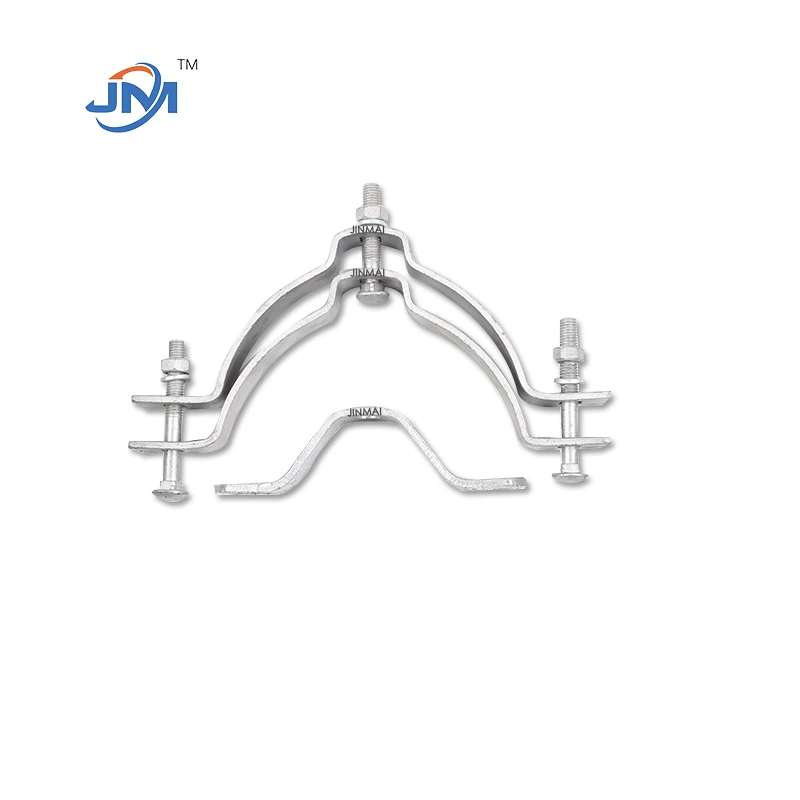
In addition to ensuring high torsional strength for performance, our steel cross arms also come with other great features. For example, we offer a Hot Dip Galvanized Pole Band Mounting Clamp which provides a secure and durable way to mount the cross arms on poles. This clamp is hot - dip galvanized, which means it has excellent corrosion resistance, ensuring a long service life even in harsh environments.
Another great accessory we have is the High Temperature Resistant Insulator Bracket. This bracket is designed to hold insulators in place on the cross arms. Its high - temperature resistance makes it suitable for use in areas where there are high - power electrical systems that generate a lot of heat.
And if you're in need of a place to store optical cables on your towers, our Tower Optical Cable Rack is a perfect solution. It's designed to be sturdy and can hold a large number of cables, keeping them organized and protected.
When it comes to the performance of steel cross arms in different industries, the importance of torsional strength varies. In the power transmission industry, for instance, the consequences of a cross arm failure can be extremely severe. A single failed cross arm can disrupt the power supply to a large area, causing economic losses and inconvenience to thousands of people. So, in this industry, high torsional strength is non - negotiable.
In the telecommunications industry, while the impact of a cross arm failure may not be as immediately life - threatening as in the power industry, it can still cause significant disruptions. Downed communication cables can lead to loss of service for mobile phones, internet, and other communication devices. So, here too, having cross arms with good torsional strength is essential.
We understand that every customer's needs are different. That's why we offer customizable steel cross arms. Whether you need a specific size, shape, or have special requirements for the torsional strength, we can work with you to develop a solution that meets your exact needs. Our team of experts is always on hand to provide technical support and advice to ensure that you get the best - performing cross arms for your application.
If you're in the market for high - quality steel cross arms or any of our related accessories, we'd love to hear from you. Whether you're a large utility company, a small telecommunications provider, or an individual in need of a reliable cross arm for a DIY project, we can offer you the products and services you need. Don't hesitate to reach out to us for a quote or to discuss your requirements. We're confident that our steel cross arms, with their excellent torsional strength and other great features, will be a valuable addition to your projects.
References

- "Materials Science and Engineering: An Introduction" by William D. Callister Jr. and David G. Rethwisch
- Industry standards and guidelines related to steel cross arms and electrical equipment