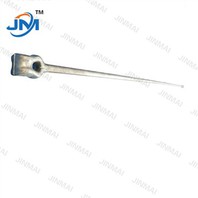
As a supplier of Mounting Clamp Adapters, I understand the importance of correctly aligning these essential components. Proper alignment not only ensures the efficient and safe operation of the equipment but also extends the lifespan of the Mounting Clamp Adapter and the connected parts. In this blog, I will share some professional insights and practical steps on how to align a Mounting Clamp Adapter correctly.
Understanding the Mounting Clamp Adapter
Before we delve into the alignment process, it's crucial to have a basic understanding of what a Mounting Clamp Adapter is. A Mounting Clamp Adapter is a device used to connect different components securely. It plays a vital role in various industries, such as electrical power, mechanical engineering, and construction. It provides a stable connection between parts, allowing them to work together effectively.


Preparation Before Alignment
- Inspect the Mounting Clamp Adapter: Before installation, carefully examine the Mounting Clamp Adapter for any visible damage, such as cracks, burrs, or deformities. If any issues are found, replace the adapter immediately to avoid potential safety hazards.
- Clean the Surfaces: Ensure that the surfaces where the Mounting Clamp Adapter will be installed are clean and free of dirt, grease, and debris. This will help to achieve a better grip and prevent slippage.
- Gather the Necessary Tools: You will need tools such as wrenches, screwdrivers, and measuring devices. Make sure these tools are in good condition and the right size for the job.
Step-by-Step Alignment Process
Step 1: Determine the Correct Position
The first step in aligning a Mounting Clamp Adapter is to determine the correct position for installation. This depends on the specific application and the requirements of the equipment. Refer to the manufacturer's instructions or the equipment's technical documentation for guidance. In some cases, you may need to use a measuring device to ensure accurate positioning.
Step 2: Align the Holes
Once you have determined the correct position, align the holes in the Mounting Clamp Adapter with the corresponding holes in the components to be connected. This is a critical step, as misaligned holes can lead to improper installation and reduced performance. Use a pin or a small rod to check if the holes are perfectly aligned. If necessary, make minor adjustments to the position of the adapter.
Step 3: Insert the Fasteners
After the holes are aligned, insert the appropriate fasteners, such as bolts or screws, through the holes. Make sure the fasteners are the correct size and type for the Mounting Clamp Adapter and the connected components. Do not overtighten the fasteners at this stage, as this can cause damage to the adapter or the components.
Step 4: Check the Alignment Again
Once the fasteners are inserted, check the alignment of the Mounting Clamp Adapter again. Use a level or a straightedge to ensure that the adapter is perfectly horizontal or vertical, depending on the requirements. Make any necessary adjustments by loosening the fasteners slightly and repositioning the adapter.
Step 5: Tighten the Fasteners
After confirming the alignment, tighten the fasteners gradually and evenly. Use a torque wrench to ensure that the fasteners are tightened to the recommended torque specification. Overtightening can lead to stress on the adapter and the components, while undertightening can result in a loose connection.
Common Alignment Issues and Solutions
Issue 1: Misaligned Holes
If the holes in the Mounting Clamp Adapter and the connected components are misaligned, it can be difficult to insert the fasteners. This may be due to manufacturing tolerances or improper positioning. To solve this problem, you can try using a reamer to enlarge the holes slightly or use shims to adjust the position of the adapter.
Issue 2: Uneven Tightening
Uneven tightening of the fasteners can cause the Mounting Clamp Adapter to be tilted or misaligned. This can lead to stress concentration and premature failure of the adapter. To avoid this, always use a torque wrench and tighten the fasteners gradually and evenly in a criss - cross pattern.
Issue 3: Vibration and Movement
In some applications, vibration and movement can cause the Mounting Clamp Adapter to become loose over time. To prevent this, you can use locking washers or thread - locking compounds to secure the fasteners. Additionally, you may need to perform regular inspections and tighten the fasteners if necessary.
Related Products and Their Importance
In addition to Mounting Clamp Adapters, there are other related products that are often used in conjunction with them. For example, Hot Dipped Galvanized U Bolts are commonly used to provide a strong and secure connection. They are made of high - quality steel and coated with hot - dipped galvanizing, which provides excellent corrosion resistance.
Bolt Wire Clamps are another important product. They are used to secure wires and cables, ensuring that they are properly connected and protected. These clamps are designed to be easy to install and provide a reliable connection.
Pole Top Brackets are also essential in electrical power applications. They are used to support and secure equipment at the top of poles, providing a stable and safe installation.
Conclusion
Correctly aligning a Mounting Clamp Adapter is a crucial process that requires attention to detail and the use of proper techniques. By following the steps outlined in this blog and being aware of the common alignment issues and solutions, you can ensure that your Mounting Clamp Adapter is installed correctly and functions effectively.
If you are in the market for high - quality Mounting Clamp Adapters or any of the related products mentioned above, we are here to assist you. Our products are designed to meet the highest standards of quality and performance. We invite you to contact us for more information and to discuss your specific requirements. We look forward to the opportunity to work with you and provide you with the best solutions for your projects.
References
- Manufacturer's instructions for Mounting Clamp Adapters
- Technical documentation of related equipment
- Industry standards for installation and alignment of electrical and mechanical components