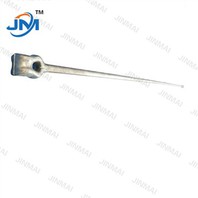
Forged eye bolts are essential components in various industries, including construction, manufacturing, and transportation. They are used to secure and lift heavy loads, making it crucial to accurately calculate their load capacity to ensure safety and efficiency. As a leading supplier of forged eye bolts, I understand the importance of providing accurate information on load capacity calculations. In this blog post, I will guide you through the process of calculating the load capacity of forged eye bolts, ensuring that you can make informed decisions when selecting the right bolt for your application.
Understanding Forged Eye Bolts
Before delving into load capacity calculations, it's important to understand what forged eye bolts are and how they are used. Forged eye bolts are made by heating a piece of metal and then shaping it using a forging process. This process creates a stronger and more durable bolt compared to other manufacturing methods. The eye of the bolt is a circular loop at one end, which is used to attach a cable, chain, or other lifting device.
Forged eye bolts are commonly used in applications where heavy loads need to be lifted or secured. They are often used in construction for lifting building materials, in manufacturing for moving heavy machinery, and in transportation for securing cargo. Due to their critical role in these applications, it's essential to ensure that the load capacity of the eye bolt is sufficient for the intended use.
Factors Affecting Load Capacity
Several factors can affect the load capacity of forged eye bolts. Understanding these factors is crucial for accurate load capacity calculations. Here are the main factors to consider:
- Material Grade: The material grade of the forged eye bolt plays a significant role in determining its load capacity. Higher-grade materials, such as alloy steel, generally have a higher load capacity compared to lower-grade materials, such as carbon steel.
- Bolt Size: The size of the bolt, including the diameter and length, also affects its load capacity. Larger bolts typically have a higher load capacity than smaller bolts.
- Eye Design: The design of the eye, such as the shape and size, can impact the load capacity. A well-designed eye can distribute the load more evenly, reducing stress on the bolt and increasing its load capacity.
- Installation Method: The way the eye bolt is installed can also affect its load capacity. Proper installation, including using the correct torque and ensuring a secure fit, is essential for maximizing the load capacity of the bolt.
- Load Angle: The angle at which the load is applied to the eye bolt can significantly affect its load capacity. A vertical load (0 degrees) typically results in the highest load capacity, while an angled load can reduce the load capacity.
Calculating Load Capacity
To calculate the load capacity of a forged eye bolt, you need to consider the factors mentioned above and use the appropriate formulas. Here is a step-by-step guide to calculating the load capacity:
Step 1: Determine the Material Grade
The first step is to determine the material grade of the forged eye bolt. This information is usually provided by the manufacturer. Different material grades have different minimum yield strengths and ultimate tensile strengths, which are used in the load capacity calculations.
Step 2: Measure the Bolt Size
Measure the diameter and length of the bolt. The diameter is the most critical dimension for load capacity calculations. Make sure to measure the bolt accurately to ensure accurate results.
Step 3: Consider the Eye Design
Evaluate the design of the eye, including the shape and size. A well-designed eye can distribute the load more evenly, reducing stress on the bolt. If the eye design is not standard, you may need to consult with the manufacturer or an engineer for specific load capacity calculations.
Step 4: Determine the Installation Method
Ensure that the eye bolt is installed correctly. This includes using the correct torque and ensuring a secure fit. Improper installation can significantly reduce the load capacity of the bolt.
Step 5: Calculate the Load Angle
Determine the angle at which the load will be applied to the eye bolt. This angle can range from 0 degrees (vertical load) to 90 degrees (horizontal load). The load angle affects the load capacity of the bolt, and you need to adjust the calculations accordingly.
Step 6: Use the Appropriate Formula
Once you have gathered all the necessary information, you can use the appropriate formula to calculate the load capacity of the forged eye bolt. The formula for calculating the load capacity depends on the type of load (static or dynamic) and the load angle. Here is a general formula for calculating the static load capacity of a forged eye bolt:


Load Capacity = (Minimum Yield Strength x Cross-Sectional Area) / Factor of Safety
The minimum yield strength is the stress at which the material begins to deform permanently. The cross-sectional area is the area of the bolt's shank. The factor of safety is a number that accounts for uncertainties in the load, material properties, and installation. A typical factor of safety for forged eye bolts is 4 to 6.
For dynamic loads, such as those encountered in lifting applications, you may need to use a more complex formula that takes into account the acceleration and deceleration of the load. In these cases, it's recommended to consult with an engineer or a professional in the field.
Example Calculation
Let's say you have a forged eye bolt made of alloy steel with a diameter of 1 inch and a minimum yield strength of 80,000 psi. The cross-sectional area of a 1-inch diameter bolt is approximately 0.785 square inches. Using a factor of safety of 5, the static load capacity of the bolt can be calculated as follows:
Load Capacity = (80,000 psi x 0.785 sq. in.) / 5
Load Capacity = 12,560 pounds
This means that the forged eye bolt can safely support a static load of up to 12,560 pounds. However, if the load is applied at an angle other than 0 degrees, you need to adjust the load capacity accordingly.
Importance of Accurate Load Capacity Calculations
Accurate load capacity calculations are essential for ensuring the safety and efficiency of forged eye bolts. Using a bolt with a load capacity that is too low can result in bolt failure, which can lead to serious accidents and injuries. On the other hand, using a bolt with a load capacity that is too high can be unnecessary and costly.
By accurately calculating the load capacity of forged eye bolts, you can select the right bolt for your application, ensuring that it can safely support the intended load. This not only improves safety but also reduces the risk of equipment damage and downtime.
Other Related Products
In addition to forged eye bolts, we also offer a range of other products that are commonly used in lifting and securing applications. These products include Cable Hook, Pig Tail Bolts, and Hot-dip Galvanizing U-type Shackle Ring. These products are made from high-quality materials and are designed to meet the highest standards of safety and performance.
Contact Us for Purchase and Consultation
If you have any questions about calculating the load capacity of forged eye bolts or need assistance in selecting the right bolt for your application, please don't hesitate to contact us. Our team of experts is available to provide you with the information and support you need. We also offer a wide range of forged eye bolts and other related products at competitive prices. Whether you are a small business or a large corporation, we can provide you with the products and services you need to meet your lifting and securing needs. Contact us today to discuss your requirements and start the purchasing process.
References
- Machinery's Handbook, 31st Edition
- American Society of Mechanical Engineers (ASME) B18.15 - Eye Bolts
- International Organization for Standardization (ISO) 3266 - Eye Bolts