Estimating the quantity of cable components needed for a project is a crucial step that can significantly impact the project's success, cost - effectiveness, and overall efficiency. As a cable components supplier, I have witnessed firsthand the challenges that project managers and contractors face when trying to accurately determine these quantities. In this blog post, I will share some key strategies and considerations to help you make more precise estimations.
1. Understand the Project Scope
The first and most fundamental step in estimating cable component quantities is to have a comprehensive understanding of the project scope. This includes the type of project (residential, commercial, industrial), its size, layout, and the specific requirements of the cable installation. For example, a large - scale industrial project will likely require more heavy - duty cable components compared to a small residential installation.
- Project Type and Size: Different project types have different cable component needs. A high - rise commercial building may need a complex network of cables for power, data, and communication, while a single - family home may only require basic electrical cables. The size of the project, measured in square footage or the number of floors, also directly affects the quantity of cable components. Larger projects generally need more cables, connectors, and support structures.
- Layout and Design: The layout of the project site is another crucial factor. A project with a complex layout, such as a multi - wing building or a large - scale campus, may require more cable runs and additional components to navigate around obstacles. Understanding the design plans, including the location of rooms, equipment, and access points, will help you estimate the length of cables and the number of connection points accurately.
2. Identify Cable Types and Specifications
Once you have a clear understanding of the project scope, the next step is to identify the specific cable types and specifications required. Different applications demand different types of cables, such as power cables, data cables, or coaxial cables.


- Power Cables: Power cables are used to transmit electrical energy. The quantity of power cables needed depends on the power requirements of the project, the distance between the power source and the load, and the voltage level. For example, a high - power industrial facility may require thick, high - voltage power cables, while a small office may only need low - voltage cables.
- Data Cables: Data cables are used for transmitting data signals, such as Ethernet cables for local area networks (LANs) or fiber optic cables for high - speed data transmission. The number of data cables depends on the number of devices that need to be connected and the desired network speed. For instance, a modern office with a large number of computers, printers, and servers will require a significant amount of Ethernet cables.
- Coaxial Cables: Coaxial cables are commonly used for cable television (CATV), satellite TV, and some radio frequency (RF) applications. The quantity of coaxial cables needed is determined by the number of TV sets, satellite receivers, and other RF devices in the project.
3. Calculate Cable Length
Accurately calculating the length of cables is essential for estimating the quantity of cable components. This involves measuring the distance between the source and the destination of each cable run, taking into account any bends, turns, and vertical rises.
- Direct Measurement: In some cases, you can directly measure the length of the cable runs on the project site. This is often possible in smaller projects or during the construction phase when the layout is clearly defined. Use a measuring tape or a laser distance meter to obtain accurate measurements.
- Using Design Plans: For larger projects, design plans are a valuable resource for calculating cable lengths. The plans typically show the dimensions of the building or the site, as well as the location of cable routes. You can use scale rulers to measure the lengths on the plans and then convert them to actual distances based on the scale.
- Adding Extra Length: It is always a good practice to add some extra length to the calculated cable lengths to account for unforeseen circumstances, such as future expansions, cable management, and installation errors. A common rule of thumb is to add 10% - 15% extra length to the total calculated cable length.
4. Determine the Number of Connectors and Terminations
In addition to cables, you also need to estimate the number of connectors and terminations required for the project. Connectors are used to join cables together or to connect cables to devices, while terminations are used to end a cable run.
- Connectors: The number of connectors depends on the number of cable runs and the type of connections. For example, if you have multiple Ethernet cables that need to be connected to a network switch, you will need an appropriate number of Ethernet connectors. Different types of cables require different types of connectors, such as RJ45 connectors for Ethernet cables or BNC connectors for coaxial cables.
- Terminations: Terminations are necessary at the end of each cable run. The number of terminations is equal to the number of cable runs. For power cables, terminations may include cable lugs or terminal blocks, while data cables may require patch panels or wall jacks.
5. Account for Support Structures and Accessories
Cable components also include support structures and accessories, such as cable trays, conduit, and cable hangers. These items are essential for organizing and protecting the cables.
- Cable Trays: Cable trays are used to support and route cables in a structured manner. The length and width of the cable trays depend on the number and size of the cables. You can estimate the quantity of cable trays by calculating the total length of cable runs and dividing it by the standard length of the cable trays.
- Conduit: Conduit is a protective tube used to enclose cables, especially in areas where the cables need to be protected from physical damage or environmental factors. The quantity of conduit depends on the length of the cable runs and the type of conduit required. For example, rigid conduit may be used in industrial settings, while flexible conduit may be used in residential or commercial applications.
- Cable Hangers and Clamps: Cable hangers and clamps are used to secure the cables to the support structures. The number of cable hangers and clamps depends on the length of the cable runs and the spacing requirements. Generally, cable hangers and clamps are installed at regular intervals along the cable runs.
6. Consider Redundancy and Spares
It is important to consider redundancy and spares when estimating the quantity of cable components. Redundancy is crucial for ensuring the reliability of the cable system, especially in critical applications such as data centers or hospitals.
- Redundancy: In some projects, it may be necessary to install redundant cables or components to prevent system failures. For example, in a data center, redundant power cables and network cables are often installed to ensure continuous operation in case of a cable failure. The level of redundancy depends on the criticality of the application and the risk tolerance of the project owner.
- Spares: Keeping spare cable components on hand is also a good practice. Spares can be used to replace damaged or faulty components during the installation or maintenance process. A common approach is to keep 5% - 10% of the total estimated quantity of cable components as spares.
7. Consult with Experts
If you are unsure about any aspect of estimating the quantity of cable components, it is always a good idea to consult with experts. This may include electrical engineers, cable installers, or other professionals with experience in cable installation projects.
- Electrical Engineers: Electrical engineers can provide valuable insights into the electrical requirements of the project and help you select the appropriate cable types and specifications. They can also review the design plans and ensure that the cable component estimates are accurate.
- Cable Installers: Cable installers have practical experience in installing cable components and can offer advice on the installation process, potential challenges, and any additional components that may be required. They can also provide feedback on the estimated quantities based on their past projects.
Specific Cable Components and Their Estimation
Let's take a look at some specific cable components and how to estimate their quantities.
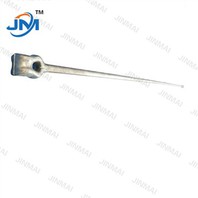
- Cable Pole Hook: Cable pole hooks are used to support cables on poles. The number of cable pole hooks depends on the number of poles and the number of cable runs on each pole. If you have a long cable run along a row of poles, you can estimate the number of hooks by dividing the total length of the cable run by the spacing between the hooks.
- Hardware Pole Line Hook: Hardware pole line hooks are similar to cable pole hooks but are typically used for heavier - duty applications. The quantity of hardware pole line hooks is estimated in the same way as cable pole hooks, taking into account the weight and size of the cables being supported.
- Pigtail Hook Bolts: Pigtail hook bolts are used for connecting cables to structures or other components. The number of pigtail hook bolts depends on the number of connection points. For example, if you have a cable that needs to be connected to a bracket at multiple points, you will need an appropriate number of pigtail hook bolts.
Conclusion
Estimating the quantity of cable components needed for a project is a complex but essential task. By following the strategies and considerations outlined in this blog post, you can make more accurate estimations, reduce costs, and ensure the successful completion of your project.
If you are in need of high - quality cable components for your project, we are here to help. Our company offers a wide range of cable components, including cables, connectors, support structures, and accessories. We have the expertise and experience to assist you in selecting the right components and estimating the quantities accurately. Contact us today to start a procurement discussion and take the first step towards a successful cable installation project.
References
- Electrical Installation Handbook, Schneider Electric
- National Electrical Code (NEC)
- Telecommunications Cabling Installation Manual, BICSI