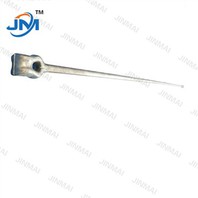
What are the electrical properties of ADSS cable hardware?
Hey there! I'm super excited to share some insights with you today about the electrical properties of ADSS cable hardware. As a supplier of ADSS cable hardware, I've had the chance to see these nifty components up close and personal and understand how they work in real - world scenarios.
First off, let's talk about what ADSS cable hardware is for those who might not be in the know. ADSS, or All - Dielectric Self - Supporting cable hardware, is used in the installation and support of ADSS cables. These cables are commonly used in power transmission and distribution systems, as well as in telecommunications. The hardware plays a crucial role in ensuring the proper functioning and longevity of the ADSS cables.
One of the most important electrical properties of ADSS cable hardware is its insulation performance. The hardware needs to provide excellent insulation to prevent electrical leakage and short - circuits. This is especially important in high - voltage environments where even a small amount of leakage can lead to significant problems. For example, Pin Type Insulator is a key piece of hardware that offers great insulation. It's designed to hold the ADSS cable in place while keeping it electrically isolated from the supporting structure. The materials used in pin - type insulators are carefully selected for their high dielectric strength, which means they can withstand high voltages without breaking down.
Another vital electrical property is the hardware's ability to handle electrical stress. When an ADSS cable is in operation, it experiences various forms of electrical stress, such as voltage surges and electromagnetic interference. The hardware must be able to endure these stresses without degrading its performance. Hot Dip Galvanized Strand Ground Clamps are a great example here. These clamps are used to ground the ADSS cable, which helps in dissipating electrical charges safely. The hot - dip galvanizing process not only provides corrosion resistance but also enhances the clamp's ability to withstand electrical stress.
The conductivity of some ADSS cable hardware is also a significant factor. While most of the hardware is designed to insulate, there are certain components where conductivity is required. For example, some grounding components need to have good electrical conductivity to ensure effective grounding. Hot - dip Galvanizing Bolt is often used in the assembly of the hardware. Although its primary function might seem mechanical, in some cases, it also needs to conduct electricity to complete the grounding circuit. The hot - dip galvanizing on the bolt not only protects it from rust but also maintains its conductivity over time.
The capacitance of the ADSS cable hardware is another aspect to consider. Capacitance can affect the electrical performance of the entire system. In a well - designed ADSS cable installation, the capacitance of the hardware should be carefully controlled. If the capacitance is too high, it can cause issues such as signal distortion in telecommunications applications or increased power losses in power systems. The design of the hardware, including its shape and the materials used, can have a significant impact on its capacitance.
The dielectric constant of the materials used in the hardware is closely related to the capacitance. A lower dielectric constant generally results in lower capacitance. Manufacturers of ADSS cable hardware pay close attention to selecting materials with appropriate dielectric constants to optimize the electrical performance of the hardware.


When it comes to the electrical properties of ADSS cable hardware in different environmental conditions, things get a bit more complex. Temperature, humidity, and pollution can all affect the electrical performance of the hardware. For instance, high humidity can reduce the insulation resistance of the hardware, increasing the risk of electrical leakage. To combat this, the hardware is often designed with special coatings or materials that are resistant to environmental factors.
In areas with high levels of pollution, such as industrial regions, the hardware can be coated with hydrophobic materials. These materials prevent the accumulation of pollutants on the surface of the hardware, which could otherwise lead to electrical breakdowns.
Now, I want to emphasize that these electrical properties are not just theoretical concepts. They have real - world implications for the performance and reliability of ADSS cable systems. Whether you're running a power grid or a telecommunications network, having high - quality ADSS cable hardware with the right electrical properties is crucial.
If you're in the market for ADSS cable hardware, you need to make sure that the products you choose meet the required electrical standards. As a supplier, I've seen the difference that high - quality hardware can make. It can reduce maintenance costs, improve system efficiency, and enhance overall reliability.
So, if you're interested in learning more about our ADSS cable hardware or if you're looking to make a purchase, don't hesitate to reach out. We're here to help you find the right solutions for your specific needs. Whether you need pin - type insulators, hot - dip galvanized strand ground clamps, or hot - dip galvanizing bolts, we've got you covered. Let's have a chat and see how we can work together to ensure your ADSS cable system runs smoothly.
References
- Electrical Engineering Handbook for Power Systems
- Telecommunications Cable Installation Guide
- Standards for ADSS Cable Hardware by Industry Associations