In high-power applications, the heat-dissipation performance of metal stamping parts is a critical factor that directly impacts the efficiency, reliability, and lifespan of the entire system. As a professional metal stamping parts supplier, I understand the significance of meeting the stringent requirements for heat dissipation in these demanding environments. This blog post will delve into the key requirements for the heat-dissipation performance of metal stamping parts in high-power applications and how our products are designed to meet these challenges.
Understanding the Heat Generation in High-Power Applications
High-power applications, such as power electronics, automotive engines, and industrial machinery, generate a substantial amount of heat during operation. This heat is primarily produced by the electrical resistance of components, mechanical friction, and the conversion of energy. If not dissipated effectively, the excessive heat can lead to a series of problems, including reduced performance, premature component failure, and even safety hazards.
For instance, in power electronics, the heat generated by high-power transistors, diodes, and integrated circuits can cause the temperature of the components to rise significantly. This can result in a decrease in the electrical conductivity of the materials, an increase in the leakage current, and a reduction in the overall efficiency of the circuit. In automotive engines, the heat generated by the combustion process can cause the engine components to expand, leading to increased wear and tear, reduced performance, and potential engine failure.
Key Requirements for Heat Dissipation in Metal Stamping Parts
To ensure the reliable operation of high-power applications, metal stamping parts must meet several key requirements for heat dissipation. These requirements include high thermal conductivity, large surface area, efficient heat transfer mechanisms, and compatibility with the surrounding environment.
High Thermal Conductivity
Thermal conductivity is a measure of a material's ability to conduct heat. In high-power applications, metal stamping parts with high thermal conductivity are essential for efficient heat dissipation. Metals such as copper and aluminum are commonly used in metal stamping parts due to their excellent thermal conductivity. Copper has a thermal conductivity of approximately 401 W/(m·K), while aluminum has a thermal conductivity of approximately 237 W/(m·K). These high thermal conductivity values allow the metal stamping parts to quickly transfer heat away from the heat source and dissipate it into the surrounding environment.
Large Surface Area
The surface area of a metal stamping part plays a crucial role in heat dissipation. A larger surface area provides more area for heat transfer to occur, allowing the heat to be dissipated more efficiently. To increase the surface area of metal stamping parts, various techniques can be employed, such as adding fins, ribs, or grooves to the surface of the part. These features increase the effective surface area of the part without significantly increasing its volume or weight.
Efficient Heat Transfer Mechanisms
In addition to high thermal conductivity and large surface area, metal stamping parts must also have efficient heat transfer mechanisms to ensure effective heat dissipation. There are three main modes of heat transfer: conduction, convection, and radiation.
- Conduction: Conduction is the transfer of heat through a material by direct contact. In metal stamping parts, conduction is the primary mode of heat transfer within the part itself. To enhance conduction, the metal stamping parts should be made of materials with high thermal conductivity and have a continuous and uniform structure to minimize thermal resistance.
- Convection: Convection is the transfer of heat by the movement of a fluid, such as air or liquid. In high-power applications, convection is often used to enhance heat dissipation by using fans, heat sinks, or liquid cooling systems. Metal stamping parts can be designed to optimize convection by providing channels or passages for the fluid to flow through, increasing the contact area between the part and the fluid, and promoting turbulence to enhance heat transfer.
- Radiation: Radiation is the transfer of heat through electromagnetic waves. While radiation is generally less significant than conduction and convection in most high-power applications, it can still contribute to heat dissipation, especially at high temperatures. Metal stamping parts can be designed to enhance radiation by using materials with high emissivity, which is a measure of a material's ability to emit radiation.
Compatibility with the Surrounding Environment
Metal stamping parts must also be compatible with the surrounding environment to ensure reliable heat dissipation. This includes considerations such as corrosion resistance, chemical stability, and mechanical strength. In harsh environments, such as those with high humidity, high temperatures, or exposure to chemicals, the metal stamping parts must be able to withstand the environmental conditions without deteriorating or losing their heat-dissipation performance.
Our Solutions for Meeting Heat Dissipation Requirements
As a metal stamping parts supplier, we are committed to providing high-quality products that meet the stringent requirements for heat dissipation in high-power applications. Our products are designed and manufactured using advanced technologies and materials to ensure optimal heat-dissipation performance.

Material Selection
We carefully select the materials for our metal stamping parts based on their thermal conductivity, mechanical properties, and compatibility with the surrounding environment. Copper and aluminum are our primary materials of choice due to their excellent thermal conductivity and relatively low cost. We also offer a range of other materials, such as stainless steel and titanium, for applications that require higher corrosion resistance or mechanical strength.
Design Optimization
Our experienced design team uses advanced computer-aided design (CAD) and simulation tools to optimize the design of our metal stamping parts for heat dissipation. We consider factors such as the shape, size, and surface area of the part, as well as the heat transfer mechanisms and the surrounding environment. By optimizing the design, we can ensure that our metal stamping parts provide efficient heat dissipation while minimizing the weight and cost of the part.
Manufacturing Processes
We use state-of-the-art manufacturing processes to produce our metal stamping parts with high precision and quality. Our manufacturing processes include stamping, machining, welding, and surface treatment. We also have a strict quality control system in place to ensure that our products meet the highest standards of quality and performance.
Examples of Our Heat-Dissipating Metal Stamping Parts
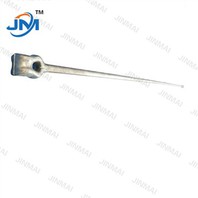
We offer a wide range of metal stamping parts for high-power applications, including Dead End Grip, Way Anchor Expanding, and Eye Pull Plate Connecting Hardware. These parts are designed to provide efficient heat dissipation and reliable performance in various high-power applications.
Dead End Grip
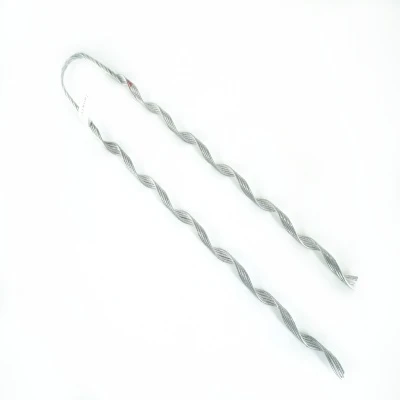
Our Dead End Grip is a metal stamping part used in electrical power transmission and distribution systems. It is designed to provide a secure connection between the electrical conductor and the support structure while dissipating the heat generated by the electrical current. The Dead End Grip is made of high-quality copper or aluminum, which has excellent thermal conductivity and electrical conductivity. It also has a unique design that increases the surface area for heat transfer and enhances the mechanical strength of the part.
Way Anchor Expanding
The Way Anchor Expanding is a metal stamping part used in railway tracks to secure the rails to the sleepers. It is designed to withstand the high loads and vibrations generated by the passing trains while dissipating the heat generated by the friction between the rails and the wheels. The Way Anchor Expanding is made of high-strength steel or stainless steel, which has excellent mechanical properties and corrosion resistance. It also has a special surface treatment that enhances the heat transfer and reduces the wear and tear of the part.
Eye Pull Plate Connecting Hardware
Our Eye Pull Plate Connecting Hardware is a metal stamping part used in various industrial applications to connect different components together. It is designed to provide a strong and reliable connection while dissipating the heat generated by the mechanical forces and friction. The Eye Pull Plate Connecting Hardware is made of high-quality steel or aluminum, which has excellent mechanical properties and thermal conductivity. It also has a unique design that increases the surface area for heat transfer and enhances the ease of installation and maintenance of the part.
Contact Us for Your Heat Dissipation Needs
If you are looking for high-quality metal stamping parts with excellent heat-dissipation performance for your high-power applications, we would be delighted to hear from you. Our team of experts can provide you with customized solutions based on your specific requirements and help you select the most suitable products for your application. Contact us today to start a discussion about your metal stamping part needs and explore how we can work together to meet your heat dissipation challenges.
References
- Incropera, F. P., & DeWitt, D. P. (2002). Fundamentals of Heat and Mass Transfer. Wiley.
- Holman, J. P. (2010). Heat Transfer. McGraw-Hill.
- Ashby, M. F. (2005). Materials Selection in Mechanical Design. Butterworth-Heinemann.