Hey there! As a supplier of metal stamping parts, I've been deeply involved in the automotive industry for quite some time. Today, I want to chat about the requirements for the impact absorption capacity of metal stamping parts in automotive safety components.
First off, let's understand why impact absorption capacity is such a big deal in automotive safety. When a car gets into an accident, whether it's a minor fender - bender or a serious collision, the metal stamping parts in safety components play a crucial role. They're like the unsung heroes that protect the passengers inside the vehicle.
One of the key requirements for impact absorption is energy dissipation. Metal stamping parts need to be able to convert the kinetic energy from the impact into other forms of energy, like heat and deformation energy. This way, the force that reaches the passengers is significantly reduced. For example, in the case of a front - end collision, the metal stamping parts in the car's bumper system should crumple in a controlled manner. This crumpling process absorbs a large amount of the impact energy, preventing it from being transferred directly to the vehicle's cabin.
Material selection is also super important when it comes to achieving the right impact absorption capacity. High - strength steels are often the go - to choice for many automotive safety components. These steels have a good balance between strength and ductility. Strength allows the parts to withstand the initial impact forces without breaking immediately, while ductility enables them to deform plastically and absorb energy. For instance, some advanced high - strength steels can absorb a large amount of energy through processes like strain hardening during deformation.
The design of the metal stamping parts is another factor that affects their impact absorption capacity. Complex geometries can be designed to enhance energy absorption. For example, parts with corrugated or honeycomb - like structures are very effective at absorbing impact. These structures can collapse in a progressive manner, providing a more consistent and controlled absorption of energy.

In addition to the front - end and bumper systems, other automotive safety components also rely on metal stamping parts with good impact absorption. Take the side - impact protection bars. When a car is hit from the side, these bars need to absorb as much energy as possible to protect the passengers in the affected seats. The metal stamping parts used in these bars are designed to resist the lateral forces and deform in a way that dissipates the energy.
Now, let's talk about some of the products we offer as a metal stamping parts supplier. We have the ABC Cable Tension Suspension Clamp. This clamp is made with high - quality metal stamping techniques, ensuring it can withstand various forces and impacts. It's an important part in many automotive wiring and suspension systems, and its impact absorption capacity is carefully engineered to meet industry standards.
Another product is the MESSENGER GROUND CLAMP. In automotive electrical systems, this clamp needs to be stable and reliable. It has to be able to handle any vibrations or impacts that might occur during the vehicle's operation. Our stamping process for this clamp ensures that it has good impact resistance and can protect the electrical connections effectively.
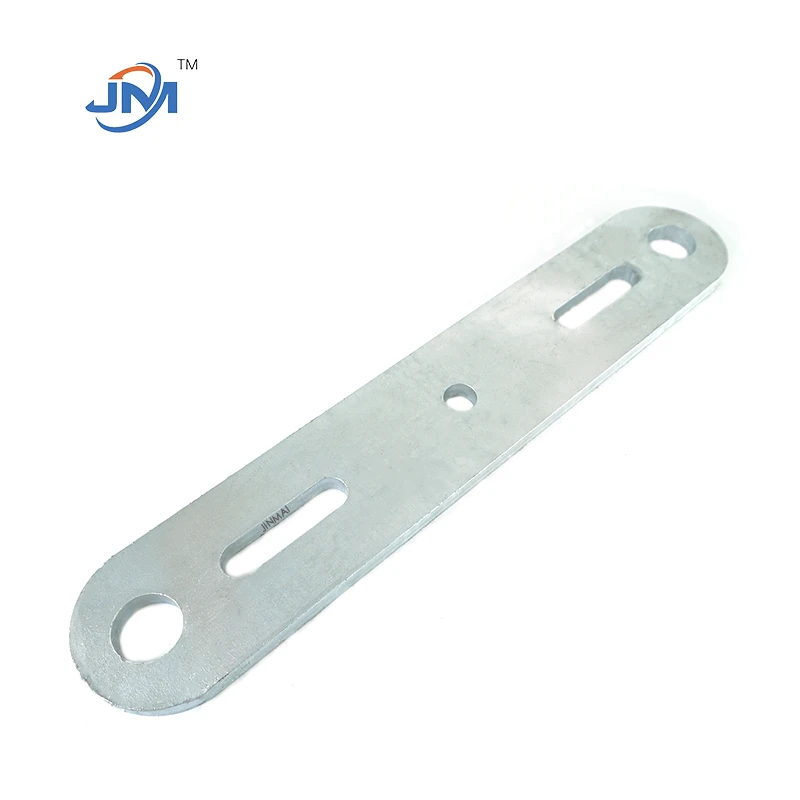
We also offer the Hot Dip Galvanized Five Hole Joint Plate, Adjustment Plate, Cross Arm Connecting Plate, Power Fittings Iron Accessories. These parts are used in different structural and connection aspects of the vehicle. The hot - dip galvanization not only provides corrosion resistance but also contributes to the overall strength and impact absorption capacity of the parts.
To meet the strict requirements for impact absorption in automotive safety components, we follow a series of quality control measures. First, we conduct thorough material testing. Every batch of raw materials is tested for its mechanical properties, such as tensile strength, yield strength, and elongation. This ensures that the materials we use are up to the mark.
During the stamping process, we use advanced stamping equipment and techniques. Our stamping dies are carefully designed and maintained to ensure accurate forming of the parts. We also perform in - process inspections to detect any defects early on. After the parts are stamped, we carry out impact testing. We use specialized testing machines to simulate different types of impacts and measure the energy absorption of the parts. Only the parts that meet our strict impact absorption criteria are allowed to leave our factory.
The automotive industry is constantly evolving, and so are the requirements for the impact absorption capacity of metal stamping parts. New safety regulations are being introduced all the time, which means we need to keep improving our products. For example, with the increasing popularity of electric vehicles, the requirements for impact absorption may change due to the different weight distribution and battery placement in these vehicles.
We're always on the lookout for new materials and technologies to enhance the impact absorption capacity of our metal stamping parts. We're researching new alloys and composite materials that could offer better performance. We're also exploring new manufacturing processes, like hydroforming, which can create more complex and precise part geometries for improved energy absorption.
If you're in the automotive industry and looking for high - quality metal stamping parts with excellent impact absorption capacity, we'd love to have a chat with you. Whether you're an automaker, a parts manufacturer, or a distributor, we can provide you with the right solutions for your needs. Contact us for a detailed discussion about our products and how they can fit into your automotive safety component designs.
References
- "Automotive Materials Handbook: Metals and Composites" by ASM International
- "Design and Analysis of Automotive Structures" by Mahmood Fard and Saeed Taheri
- Industry standards and regulations related to automotive safety components.