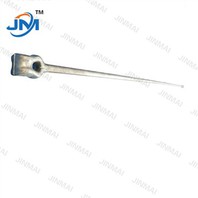
As a supplier of Steel Angle Cross Arms, I am frequently asked about the anti - slip performance of these essential components in overhead power line systems. In this blog, I will delve into the details of what the anti - slip performance of a steel angle cross arm entails, its importance, and the factors that influence it.
Understanding the Role of Steel Angle Cross Arms
Steel angle cross arms are crucial parts of overhead power line infrastructure. They are used to support conductors, insulators, and other equipment on utility poles. Their stability and reliability are fundamental to the safe and efficient operation of the entire power distribution network. The anti - slip performance of a steel angle cross arm is directly related to its ability to securely hold these components in place, preventing them from shifting or falling off due to various external forces.
Importance of Anti - Slip Performance
The anti - slip performance of a steel angle cross arm is of utmost importance for several reasons. Firstly, it ensures the safety of the power line system. If the cross arm fails to hold the conductors and other equipment firmly, it can lead to short circuits, power outages, and even pose a significant risk to public safety. For example, a loose conductor can come into contact with other objects or the ground, causing electrical shocks or fires.
Secondly, good anti - slip performance contributes to the longevity of the power line infrastructure. When the components are held securely, there is less wear and tear on the cross arm and the attached equipment. This reduces the frequency of maintenance and replacement, resulting in cost savings for the power utilities.


Factors Affecting Anti - Slip Performance
Surface Roughness
The surface roughness of the steel angle cross arm plays a vital role in its anti - slip performance. A rougher surface provides more friction between the cross arm and the components it supports. During the manufacturing process, specific treatments can be applied to increase the surface roughness. For instance, sandblasting can be used to create a textured surface that enhances the grip. This is especially important in areas with high wind speeds or where the conductors are subject to vibration.
Coating
The type of coating on the steel angle cross arm also affects its anti - slip properties. A well - applied coating can not only protect the steel from corrosion but also improve the friction coefficient. Hot Dip Galvanized Overhead Line Hardware is a common choice for steel angle cross arms. The zinc coating formed during the hot - dip galvanizing process provides a hard and slightly rough surface, which helps in preventing slippage. Additionally, some specialized coatings can be applied to further enhance the anti - slip performance, such as rubber - like coatings that offer high friction.
Design and Installation
The design of the steel angle cross arm itself can influence its anti - slip performance. Properly designed cross arms have features that ensure a tight fit with the insulators and conductors. For example, the shape and size of the grooves or brackets on the cross arm should be precisely engineered to match the components they support. Moreover, correct installation is crucial. If the cross arm is not installed at the right angle or with the proper tightening torque, it can lead to slippage over time.
Environmental Conditions
Environmental factors such as temperature, humidity, and the presence of contaminants can impact the anti - slip performance of a steel angle cross arm. In high - humidity environments, moisture can reduce the friction between the cross arm and the components. Similarly, the accumulation of dirt, dust, or ice on the surface of the cross arm can also decrease its anti - slip capabilities. Regular inspection and cleaning are necessary to maintain the anti - slip performance under such conditions.
Testing the Anti - Slip Performance
To ensure that our steel angle cross arms meet the required anti - slip standards, we conduct a series of tests. One of the common tests is the friction coefficient test. In this test, a sample of the cross arm is placed in contact with a representative component (such as an insulator), and a gradually increasing force is applied to measure the force required to initiate slippage. This test helps us to accurately determine the anti - slip performance of the cross arm.
Another important test is the vibration test. Power lines are often subject to vibration caused by wind or the flow of electricity. By subjecting the cross arm to simulated vibration conditions, we can assess its ability to maintain a secure hold on the components over time.
Applications and Compatibility
Steel angle cross arms with good anti - slip performance are suitable for a wide range of applications in the power industry. They are commonly used in Overhead Pole Line Hardware systems, where they support conductors of different sizes and types. Whether it is a low - voltage distribution line or a high - voltage transmission line, our cross arms can provide reliable support.
Moreover, our steel angle cross arms are designed to be compatible with various insulators and other accessories used in Electric Power Stringing. This compatibility ensures that the entire power line system can be assembled smoothly and function effectively.
Conclusion
In conclusion, the anti - slip performance of a steel angle cross arm is a critical factor in the safety, reliability, and longevity of overhead power line systems. It is influenced by multiple factors such as surface roughness, coating, design, installation, and environmental conditions. As a supplier, we are committed to providing high - quality steel angle cross arms with excellent anti - slip performance. Through strict testing and continuous improvement, we ensure that our products meet the highest industry standards.
If you are in the market for steel angle cross arms or have any questions about their anti - slip performance, please feel free to contact us for further discussion and procurement. We look forward to working with you to build a more reliable and efficient power infrastructure.
References
- "Handbook of Overhead Power Line Engineering"
- Industry standards related to overhead line hardware and anti - slip performance