Hey there! As a supplier of Pigtail Eye Bolts, I often get asked about the bending strength of these nifty little hardware pieces. So, I thought I'd take a deep dive into what bending strength means for pigtail eye bolts and why it matters to you.


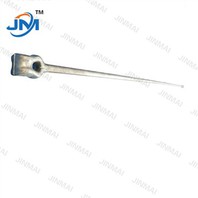
First off, let's talk about what a pigtail eye bolt is. It's a type of bolt with a loop or "eye" at one end and a threaded shaft at the other. The pigtail part usually refers to a small, coiled or curved section near the eye, which can serve various purposes like attaching cables or ropes. You can check out our Pig tail ball head for a better idea of what I'm talking about.
Now, bending strength is a crucial factor when it comes to pigtail eye bolts. It's all about how much force the bolt can withstand before it starts to bend or deform. In practical terms, this is super important because if a pigtail eye bolt can't handle the load it's supposed to carry, it could lead to all sorts of problems. For example, in applications where the bolt is used to support heavy objects or in situations where there's a lot of tension on the attached cables, a weak bending strength could result in the bolt bending or even breaking, which is definitely not something you want.
There are a few things that affect the bending strength of a pigtail eye bolt. One of the main factors is the material it's made from. Different metals have different levels of strength and flexibility. For instance, stainless steel is known for its high strength and corrosion resistance, making it a popular choice for pigtail eye bolts in outdoor or harsh environments. On the other hand, mild steel is more affordable but may not have the same level of strength as stainless steel.
The size and shape of the bolt also play a big role. A thicker and shorter bolt generally has a higher bending strength than a thinner and longer one. This is because the cross - sectional area of the bolt affects how much force it can distribute. A larger cross - sectional area means the force is spread out over a greater area, reducing the stress on any one part of the bolt.
The design of the pigtail itself can also impact the bending strength. A well - designed pigtail that distributes the load evenly along the bolt will be more resistant to bending. For example, if the pigtail is too tight or too loose, it could cause uneven stress on the bolt, which might lead to premature bending.
To determine the bending strength of a pigtail eye bolt, engineers use a combination of theoretical calculations and real - world testing. Theoretical calculations involve using equations based on the material properties and the geometry of the bolt. However, these calculations are often just estimates, and real - world testing is necessary to get an accurate measure of the bending strength.
In real - world testing, the bolt is subjected to a controlled bending force until it starts to deform. The amount of force at which this occurs is recorded as the bending strength of the bolt. This testing is usually done in a laboratory setting using specialized equipment.
Let's talk about some common applications where the bending strength of pigtail eye bolts is crucial. One such application is in the electrical industry. Pigtail eye bolts are often used to attach cables to poles or other structures. In this case, the bolts need to be able to withstand the tension from the cables, as well as any external forces like wind or ice. You can find related products like Hardware Pole Line Hook which are often used in conjunction with pigtail eye bolts in these applications.
Another application is in the marine industry. Pigtail eye bolts are used on boats and ships to secure ropes, cables, and other equipment. The harsh marine environment, with its saltwater and high winds, means that the bolts need to have a high bending strength and good corrosion resistance.
In the construction industry, pigtail eye bolts are used for lifting and securing heavy objects. The bending strength of these bolts is critical to ensure the safety of the workers and the integrity of the structure.
As a supplier, we take the bending strength of our pigtail eye bolts very seriously. We source high - quality materials and use advanced manufacturing processes to ensure that our bolts meet or exceed industry standards. We also conduct regular testing to make sure that each bolt we produce has the required bending strength.
If you're in the market for pigtail eye bolts, it's important to consider the bending strength based on your specific application. Don't just go for the cheapest option, as a low - quality bolt with poor bending strength could end up costing you more in the long run due to potential failures.
We also offer a variety of pigtail eye bolts, including Pigtail Hook Bolts, which are designed for different applications and load requirements. Our team of experts is always available to help you choose the right bolt for your needs.
So, if you're looking for reliable pigtail eye bolts with excellent bending strength, don't hesitate to get in touch with us. We're here to provide you with the best products and service. Whether you're in the electrical, marine, or construction industry, we've got the right pigtail eye bolt for you. Let's start a conversation about your requirements and find the perfect solution together.
References:
- Engineering Mechanics textbooks on material strength and stress analysis
- Industry standards for pigtail eye bolts and related hardware components