Hey there! As a supplier of Insulator Spindles, I often get asked about the chemical stability of these nifty little things. So, I thought I'd take a moment to break it down for you.
First off, let's talk about what an insulator spindle is. It's a crucial component in electrical systems, used to support and insulate conductors. You can find them in various forms, like the Pin Insulator Spindle and the Hardware Galvanized Pole Top Pin Spindle. They're used in places like POLE TOP applications, where they need to withstand different environmental conditions.
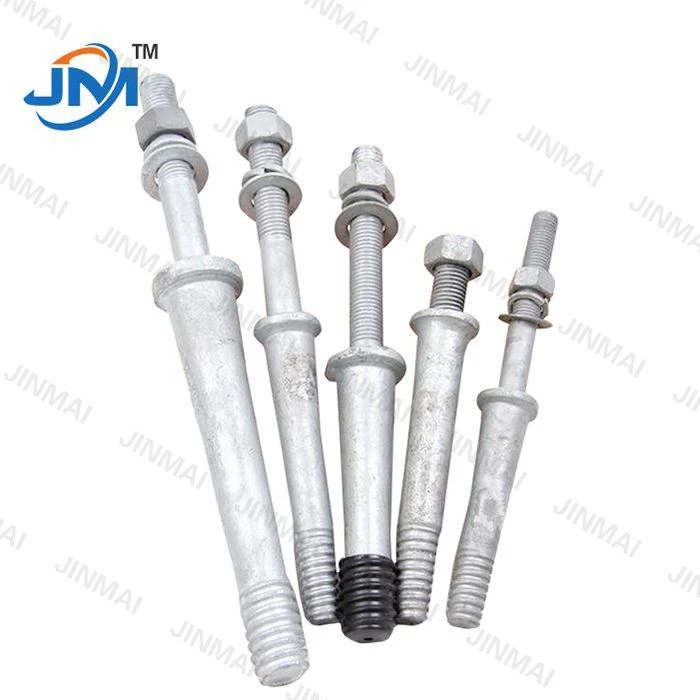

Now, chemical stability is all about how well a material can resist chemical reactions under different circumstances. For an insulator spindle, this is super important because it has to work in all sorts of places, from industrial areas with lots of pollutants to rural areas with just the normal elements.
One of the main factors that affect the chemical stability of an insulator spindle is the material it's made of. Most insulator spindles are made from materials like porcelain, glass, or composite polymers. Each of these materials has its own unique chemical properties.
Porcelain is a classic choice for insulator spindles. It's been used for ages because it's got some great advantages. Porcelain is highly resistant to chemical corrosion. It can handle exposure to acids, alkalis, and other chemicals without breaking down easily. This is because of its dense and non - porous structure. When you expose porcelain to chemicals, the molecules in the porcelain don't react readily with the chemicals in the environment. So, it can keep doing its job as an insulator for a long time, even in harsh chemical environments.
Glass is another option. Glass insulator spindles are known for their high dielectric strength, which is important for electrical insulation. In terms of chemical stability, glass is also quite good. It's resistant to most chemicals, especially in normal environmental conditions. However, glass can be a bit more brittle than porcelain. If it gets hit by something hard or experiences extreme temperature changes, it might crack. And once it cracks, the chemical stability can be compromised because the crack can allow chemicals to penetrate the inside of the glass and start causing problems.
Composite polymers are a more modern choice for insulator spindles. These materials are made by combining different polymers and additives. The great thing about composite polymers is that they can be engineered to have specific chemical properties. For example, manufacturers can add additives to make the polymer more resistant to UV radiation, which is a common problem in outdoor environments. UV radiation can break down the chemical bonds in polymers over time, but with the right additives, the polymer can withstand this. Composite polymers can also be made to be resistant to certain chemicals. For instance, if an insulator spindle is going to be used in an area with a lot of oil or grease, the polymer can be formulated to resist these substances.
But composite polymers also have their challenges. Over time, they can experience something called aging. This is when the chemical structure of the polymer starts to change due to exposure to heat, oxygen, and other environmental factors. When a polymer ages, its chemical stability can decrease. The polymer might become more brittle, and its electrical properties can change. So, proper maintenance and monitoring are important for composite polymer insulator spindles.
Another aspect of chemical stability is how the insulator spindle reacts to moisture. Moisture is everywhere, and it can carry all sorts of chemicals with it. If an insulator spindle absorbs moisture, it can lead to problems. For example, if there are salts in the moisture, they can react with the material of the insulator spindle. This can cause corrosion, which can weaken the structure of the spindle and reduce its electrical insulation properties.
Porcelain is pretty good at repelling moisture because of its non - porous surface. The water just beads up and rolls off. Glass is similar, although it can sometimes attract a thin layer of moisture if the humidity is very high. Composite polymers can be designed to be hydrophobic, which means they don't like water. By adding hydrophobic additives to the polymer, the insulator spindle can resist moisture absorption.
In industrial areas, there are often more chemicals in the air and water. Things like sulfur dioxide, nitrogen oxides, and heavy metals can be present. These chemicals can have a big impact on the chemical stability of an insulator spindle. For example, sulfur dioxide can react with moisture in the air to form sulfuric acid. This acid can corrode the surface of the insulator spindle. If the spindle is made of porcelain, the acid can slowly eat away at the surface, making it rough and reducing its insulating properties.
To deal with these industrial pollutants, insulator spindles can be treated with special coatings. These coatings can act as a barrier between the insulator spindle and the chemicals in the environment. For composite polymer insulator spindles, the coating can be designed to be chemically resistant to the specific pollutants in the area.
Temperature also plays a role in chemical stability. Extreme temperatures can speed up chemical reactions. In hot environments, the molecules in the insulator spindle material move more quickly. This can increase the chances of chemical reactions occurring. For example, if a composite polymer insulator spindle is exposed to high temperatures for a long time, the chemical bonds in the polymer can start to break. On the other hand, in cold temperatures, some materials can become more brittle. Porcelain and glass, for example, can be more likely to crack in cold weather. And as I mentioned before, once there's a crack, the chemical stability is at risk.
So, as you can see, the chemical stability of an insulator spindle is a complex topic. It depends on the material, the environment it's in, and how it's maintained. At our company, we take all these factors into account when we manufacture insulator spindles. We test our products rigorously to make sure they have the best possible chemical stability.
If you're in the market for insulator spindles, whether it's a Pin Insulator Spindle, a Hardware Galvanized Pole Top Pin Spindle, or something for POLE TOP applications, we'd love to talk to you. We can help you choose the right insulator spindle based on your specific needs and the chemical environment it will be in. Just reach out to us, and we can start a discussion about your requirements.
References:
- Textbooks on electrical engineering and materials science
- Industry reports on insulator spindle performance
- Research papers on the chemical properties of porcelain, glass, and composite polymers