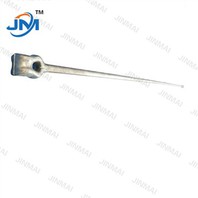
Hey there! As a supplier of steel angle cross arms, I've gotten tons of questions about the corrosion resistance of these bad boys. So, I thought I'd sit down and write this blog to share everything I know.
Let's start with the basics. A steel angle cross arm is a crucial component in overhead power lines. It's used to support the conductors and insulators, keeping the whole electrical system up and running. But being out in the open, exposed to all kinds of weather conditions, it's bound to face corrosion.
Corrosion is basically the deterioration of a material due to chemical reactions with its environment. For steel angle cross arms, the main culprits are moisture, oxygen, and various pollutants in the air. When steel comes into contact with water and oxygen, it forms iron oxide, which we commonly know as rust. Rust weakens the steel, reducing its strength and lifespan.
Now, the big question is, how do we make steel angle cross arms corrosion - resistant? Well, there are a few methods, and one of the most popular ones is galvanization. Galvanizing is the process of applying a protective zinc coating to the steel. This zinc layer acts as a barrier between the steel and the corrosive environment.
When the zinc coating is intact, it prevents oxygen and moisture from reaching the steel. But even if the coating gets scratched or damaged in some areas, the zinc still offers protection. Zinc is more reactive than steel, so it corrodes first in a process called sacrificial protection. The zinc gives up electrons to the steel, preventing the steel from corroding.
We offer Galvanized Cross Arm which are hot - dip galvanized. Hot - dip galvanizing involves dipping the steel angle cross arms into a bath of molten zinc at a temperature of around 450°C. This creates a thick, durable zinc coating that adheres well to the steel. The coating is typically made up of several layers of zinc - iron alloys, which provide excellent long - term corrosion protection.
Another factor that affects the corrosion resistance of steel angle cross arms is the environment in which they are installed. For example, in coastal areas, the air contains a high concentration of salt. Salt is highly corrosive, and it can accelerate the corrosion process. In such environments, we might need to take extra precautions. One option is to use a thicker zinc coating or apply an additional protective coating on top of the galvanized layer.
Industrial areas also pose a challenge. The air in these areas can be polluted with chemicals such as sulfur dioxide and nitrogen oxides. These pollutants can react with moisture in the air to form acids, which can eat away at the steel and the zinc coating. Again, a more robust corrosion protection system might be required.
The quality of the steel itself also plays a role. High - quality steel with low levels of impurities is less likely to corrode. We source our steel from reliable suppliers to ensure that our steel angle cross arms are made from the best materials.
We also offer Hot Dip Galvanized Secondary Clevis which are often used in conjunction with steel angle cross arms. These clevises are also hot - dip galvanized, providing the same level of corrosion resistance. They are designed to be strong and durable, and the galvanized coating helps them withstand the harsh outdoor conditions.
In addition to galvanization, we also provide Hot Dip Galvanized Overhead Line Hardware. This includes various components like bolts, nuts, and washers. All of these parts are hot - dip galvanized to ensure they have good corrosion resistance. When all the components in an overhead line system are corrosion - resistant, it helps to extend the overall lifespan of the system.
To test the corrosion resistance of our steel angle cross arms, we conduct various tests. One common test is the salt spray test. In this test, the cross arms are placed in a chamber where they are exposed to a fine mist of saltwater. The test runs for a certain period, and we then examine the cross arms for signs of corrosion. If the cross arms pass the test, it means they have good corrosion resistance and can withstand harsh environmental conditions.
We also monitor the performance of our products in real - world applications. We have a team that collects data from different installation sites. This data helps us understand how our steel angle cross arms are performing over time and if there are any areas where we need to improve.
So, if you're in the market for steel angle cross arms, corrosion resistance should be one of your top considerations. You want a product that will last for a long time without needing frequent replacements. Our galvanized steel angle cross arms are designed to do just that. They offer excellent corrosion resistance, which means you can have peace of mind knowing that your overhead line system is well - protected.


If you're interested in learning more about our steel angle cross arms or any of our other products, feel free to reach out. We're always happy to have a chat about your specific needs and how we can help you find the right solution. Whether you're working on a small - scale project or a large - scale infrastructure development, we've got the products and the expertise to support you.
References
- "Corrosion of Metals" by Uhlig, H. H.
- "Galvanizing Handbook" by American Galvanizers Association