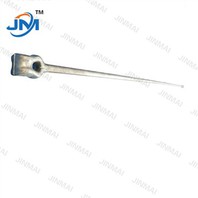
In the field of electrical engineering and power distribution, clamps play a crucial role in ensuring the stability and safety of electrical connections. As a reputable supplier of Parallel Groove Clamps, I often encounter inquiries about the differences between Parallel Groove Clamps and other types of clamps. In this blog post, I will delve into the unique features of Parallel Groove Clamps and compare them with some common alternatives.
Understanding Parallel Groove Clamps
Parallel Groove Clamps are designed to provide a reliable and low - resistance connection between two or more electrical conductors. They are typically made of high - quality materials such as aluminum alloy or copper, which offer excellent electrical conductivity and corrosion resistance. The key feature of a Parallel Groove Clamp is its parallel grooves, which allow for a large contact area between the clamp and the conductors. This large contact area reduces the contact resistance, minimizing power losses and heat generation during the operation of the electrical system.
One of the main advantages of Parallel Groove Clamps is their ease of installation. They can be quickly and easily installed on the conductors without the need for special tools or complex procedures. This makes them a popular choice for both professional electricians and DIY enthusiasts. Additionally, Parallel Groove Clamps are suitable for a wide range of conductor sizes and types, including solid and stranded conductors.
Comparison with Electric Hook - type Wire Clamp/Splint
The Electric Hook - type Wire Clamp/Splint is another type of clamp commonly used in electrical installations. Unlike Parallel Groove Clamps, Electric Hook - type Wire Clamps rely on a hook - like structure to hold the conductors. This design is mainly used for suspending or supporting electrical wires, especially in overhead power lines.
In terms of electrical connection, Electric Hook - type Wire Clamps may not provide as low a contact resistance as Parallel Groove Clamps. The contact area between the hook and the conductor is relatively small, which can lead to higher power losses and more heat generation. Moreover, the installation of Electric Hook - type Wire Clamps may require more skill and care to ensure a secure connection, as the hook needs to be properly engaged with the conductor.
Parallel Groove Clamps, on the other hand, are more focused on providing a stable and low - resistance electrical connection. They are better suited for applications where minimizing power losses and ensuring reliable electrical transmission are critical, such as in distribution substations and industrial electrical systems.
Comparison with Embrace Hoop Retractor
The Embrace Hoop Retractor is a type of clamp that uses a hoop - like structure to embrace the conductors. This design is often used in applications where a strong mechanical grip is required, such as in cable management and support systems.
While Embrace Hoop Retractors can provide a firm hold on the conductors, they may not be as effective in terms of electrical conductivity as Parallel Groove Clamps. The hoop structure may not allow for a large enough contact area between the clamp and the conductor, resulting in higher contact resistance.
Parallel Groove Clamps, with their parallel grooves and large contact area, are more efficient in conducting electricity. They are ideal for applications where electrical performance is of primary importance, such as in high - voltage transmission lines and electrical equipment connections.
Comparison with Pole Top Bracket
The Pole Top Bracket is mainly used for mounting electrical equipment on utility poles. It is a structural component rather than an electrical connection device.
Although Pole Top Brackets are essential for the proper installation and support of electrical systems, they do not have the same function as Parallel Groove Clamps. Parallel Groove Clamps are specifically designed to connect electrical conductors and ensure the smooth flow of electricity.
In contrast, Pole Top Brackets are focused on providing mechanical support and stability. They are made of materials that can withstand the mechanical stresses and environmental conditions on utility poles, such as galvanized steel.
Advantages of Parallel Groove Clamps in Different Applications
In power distribution systems, Parallel Groove Clamps are widely used to connect busbars, cables, and other electrical components. Their low contact resistance helps to reduce power losses, which is crucial for improving the efficiency of the power grid. In addition, the ease of installation of Parallel Groove Clamps allows for quick repairs and maintenance, minimizing downtime in the event of a fault.
In industrial electrical systems, Parallel Groove Clamps are used to connect motors, generators, and other heavy - duty electrical equipment. The reliable electrical connection provided by these clamps ensures the stable operation of the equipment and reduces the risk of electrical failures.
Why Choose Our Parallel Groove Clamps
As a supplier of Parallel Groove Clamps, we are committed to providing high - quality products. Our clamps are manufactured using advanced production techniques and strict quality control measures. We offer a wide range of Parallel Groove Clamps to meet the diverse needs of our customers, including different sizes, materials, and configurations.
Our technical support team is always ready to assist you in selecting the right clamp for your specific application. Whether you are working on a small - scale electrical project or a large - scale power distribution system, we can provide you with the best solutions.


If you are interested in our Parallel Groove Clamps or have any questions about their application, please feel free to contact us for procurement and further discussions. We look forward to establishing a long - term partnership with you.
References
- Electrical Installation Handbook, Schneider Electric
- Power System Engineering Textbooks, Various Authors