The installation process of ADSS (All-Dielectric Self-Supporting) cable end fittings is a crucial aspect of setting up an efficient and reliable optical fiber communication network. As a seasoned ADSS Cable Fittings supplier, I am well - versed in the steps involved in this process. In this blog, I will take you through the entire installation procedure, highlighting key points and the importance of each step.
Step 1: Preparation
Before starting the installation of ADSS cable end fittings, thorough preparation is essential. First, you need to conduct a detailed site survey. This involves checking the route where the ADSS cable will be installed, including the terrain, height of poles or towers, and any potential obstacles such as trees, buildings, or power lines. Ensure that the installation environment meets the technical requirements of the ADSS cable, such as proper clearance from high - voltage power lines to prevent electrical interference.
Next, gather all the necessary tools and materials. This includes the ADSS cable end fittings themselves, cable cutters, crimping tools, measuring tapes, and safety equipment like gloves and safety glasses. Make sure that all the tools are in good working condition and that the end fittings are of the correct type and size for the specific ADSS cable being used.


Step 2: Cable Preparation
Once the site and tools are ready, it's time to prepare the ADSS cable. Start by measuring and marking the cable at the appropriate length for the end - fitting installation. Use a cable cutter to carefully cut the cable to the required length, ensuring a clean and straight cut.
After cutting, remove the outer protective layer of the cable. This layer is usually made of a durable polymer material and can be peeled off using a sharp knife or a specialized cable stripping tool. Be careful not to damage the inner fiber optic bundles during this process.
Next, clean the exposed fiber optic bundles. You can use a lint - free cloth and a suitable cleaning solution to remove any dirt, dust, or debris. This step is crucial as any contaminants on the fiber optic surface can significantly affect the performance of the cable.
Step 3: Installation of Inner Components
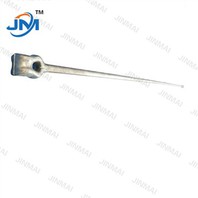
The first inner component to install is often the Bow type anchor rod. The Bow type anchor rod is designed to provide a secure attachment point for the ADSS cable. You can find more information about Bow type anchor rods on our website Bow type anchor rod.
To install the Bow type anchor rod, insert it into the cable end according to the manufacturer's instructions. Usually, it needs to be inserted into the center of the cable and then tightened using a suitable tool. Make sure that the anchor rod is firmly in place and that it is properly aligned with the cable axis.
After installing the anchor rod, you may need to install other inner components such as strength members and support structures. These components help to distribute the mechanical stress along the cable and protect the fiber optic bundles from excessive tension.
Step 4: Wrapping with Stainless Steel Strip
Once the inner components are in place, it's time to wrap the cable with a Stainless Steel Strip. The Stainless Steel Strip provides additional mechanical protection and helps to secure the inner components in place. You can learn more about Stainless Steel Strips on our website Stainless Steel Strip.
Start by measuring and cutting the Stainless Steel Strip to the appropriate length. Then, carefully wrap the strip around the cable, starting from the end where the inner components are installed. Make sure that the strip is tightly wrapped and that there are no gaps or overlaps. Use a crimping tool to secure the ends of the strip.
Step 5: Installation of Outer Fittings
After wrapping the cable with the Stainless Steel Strip, it's time to install the outer fittings. These fittings are usually made of a high - strength plastic or metal material and are designed to provide further protection and a secure connection.
One common type of outer fitting is the Electric Hook - type Wire Clamp/Splint. You can find more details about Electric Hook - type Wire Clamp/Splints on our website Electric Hook - type Wire Clamp/Splint.
To install the outer fittings, first, align them with the cable end and the inner components. Then, use the appropriate fasteners, such as screws or bolts, to secure the fittings in place. Make sure that the fittings are tightened evenly to avoid any uneven stress on the cable.
Step 6: Testing and Final Checks
Once the ADSS cable end fittings are installed, it's crucial to conduct a series of tests to ensure that everything is working correctly. The first test is a visual inspection. Check for any signs of damage, loose connections, or improper installation. Make sure that all the components are firmly in place and that there are no visible defects.
Next, perform a continuity test on the fiber optic bundles. This test checks if the light signal can pass through the cable without significant loss. You can use a specialized fiber optic tester to perform this test. If the test results show a high level of signal loss, it may indicate a problem with the installation, such as a damaged fiber or a loose connection.
Finally, conduct a mechanical stress test. This test simulates the real - world conditions that the cable will be exposed to, such as wind, ice, and tension. Check if the end fittings can withstand the expected mechanical stress without any signs of failure.
Importance of Professional Installation
The installation of ADSS cable end fittings is a complex process that requires a high level of skill and expertise. Professional installation ensures that the cable operates at its optimal performance and has a long service life. Improper installation can lead to a variety of problems, such as signal loss, mechanical failure, and even safety hazards.
As a reliable ADSS Cable Fittings supplier, we not only provide high - quality end fittings but also offer technical support and installation guidance. Our team of experts can assist you in every step of the installation process, from site survey to final testing.
Conclusion
The installation process of ADSS cable end fittings is a multi - step process that requires careful planning, preparation, and execution. By following the steps outlined in this blog, you can ensure a successful installation of your ADSS cable end fittings.
If you are in the market for high - quality ADSS Cable Fittings or need further advice on the installation process, please feel free to contact us. We are committed to providing you with the best products and services to meet your specific needs.
References
- "Optical Fiber Communication Technology" by John M. Senior
- "ADSS Cable Installation Manual" by leading ADSS cable manufacturers