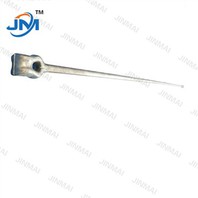
As a supplier of NXJG Wire Clamps, I am often asked about the magnetic properties of our products. In this blog post, I will delve into the details of the magnetic characteristics of NXJG Wire Clamps, exploring the factors that influence them and their implications in various applications.
Understanding the Basics of Magnetic Properties
Before we discuss the magnetic properties of NXJG Wire Clamps, it's essential to understand the basic concepts of magnetism. Magnetism is a fundamental force of nature that causes certain materials to attract or repel each other. Materials can be classified into three main categories based on their magnetic behavior: ferromagnetic, paramagnetic, and diamagnetic.
- Ferromagnetic materials: These materials, such as iron, nickel, and cobalt, have strong magnetic properties and can be magnetized easily. They are attracted to magnets and can retain their magnetization even after the external magnetic field is removed.
- Paramagnetic materials: Paramagnetic materials have weak magnetic properties and are only slightly attracted to magnets. They do not retain their magnetization once the external magnetic field is removed. Examples of paramagnetic materials include aluminum, platinum, and oxygen.
- Diamagnetic materials: Diamagnetic materials are weakly repelled by magnets. They have no permanent magnetic moments and develop an induced magnetic moment in the opposite direction of the applied magnetic field. Common diamagnetic materials include copper, silver, and gold.
Magnetic Properties of NXJG Wire Clamps
The magnetic properties of NXJG Wire Clamps depend primarily on the materials used in their construction. Most NXJG Wire Clamps are made from non - ferromagnetic materials, such as aluminum or copper alloys. These materials are diamagnetic or paramagnetic, which means they have very weak magnetic interactions with external magnetic fields.
Aluminum - Based NXJG Wire Clamps
Aluminum is a paramagnetic material. It has a small positive magnetic susceptibility, which means it is slightly attracted to magnetic fields. However, this attraction is extremely weak compared to ferromagnetic materials. In practical applications, the magnetic properties of aluminum - based NXJG Wire Clamps are often negligible.
The use of aluminum in NXJG Wire Clamps offers several advantages. Aluminum is lightweight, corrosion - resistant, and has good electrical conductivity. These properties make it an ideal choice for electrical power transmission and distribution systems, where minimizing weight and ensuring long - term reliability are crucial.
Copper - Based NXJG Wire Clamps
Copper is a diamagnetic material. It is weakly repelled by magnetic fields due to its negative magnetic susceptibility. Similar to aluminum, the magnetic properties of copper - based NXJG Wire Clamps are not significant in most applications.
Copper is known for its excellent electrical conductivity, which is higher than that of aluminum. Copper - based NXJG Wire Clamps are often used in high - current applications where low resistance and efficient power transfer are required. The diamagnetic nature of copper also helps in reducing electromagnetic interference in electrical circuits.
Implications of Magnetic Properties in Applications
The magnetic properties of NXJG Wire Clamps have several implications in different applications:
Electrical Power Systems
In electrical power systems, the weak magnetic properties of NXJG Wire Clamps are beneficial. They prevent unwanted magnetic interactions that could cause power losses or interference in the electrical circuits. For example, in high - voltage transmission lines, the use of non - ferromagnetic wire clamps reduces the risk of eddy current losses, which can occur when ferromagnetic materials are exposed to alternating magnetic fields.
Electronic Devices
In electronic devices, the non - magnetic nature of NXJG Wire Clamps is essential. Electronic components are sensitive to magnetic fields, and any magnetic interference can disrupt their normal operation. By using wire clamps with weak magnetic properties, we can ensure the reliable performance of electronic devices.
Telecommunications
In telecommunications systems, NXJG Wire Clamps with low magnetic properties help in maintaining signal integrity. Magnetic fields can induce noise in communication lines, and the use of non - ferromagnetic wire clamps minimizes this risk.


Related Products and Their Magnetic Properties
In addition to NXJG Wire Clamps, we also supply other electrical power fittings, such as Stainless Steel Clevis Pin, Embrace Hoop Retractor, and Copper - aluminum Transition Equipment Clamp.
- Stainless Steel Clevis Pin: The magnetic properties of stainless steel clevis pins depend on the type of stainless steel used. Austenitic stainless steels are generally non - magnetic, while ferritic and martensitic stainless steels are magnetic. We carefully select the appropriate stainless steel grade to ensure that the clevis pins meet the specific magnetic requirements of different applications.
- Embrace Hoop Retractor: Similar to NXJG Wire Clamps, embrace hoop retractors are often made from non - ferromagnetic materials, such as aluminum or copper alloys. Their weak magnetic properties make them suitable for use in electrical and electronic systems where magnetic interference must be minimized.
- Copper - aluminum Transition Equipment Clamp: This clamp combines the properties of copper and aluminum. The copper part is diamagnetic, and the aluminum part is paramagnetic. The overall magnetic properties of the clamp are weak, which is advantageous in electrical power applications.
Contact for Purchase and Negotiation
If you are interested in purchasing NXJG Wire Clamps or any of our other electrical power fittings, please feel free to contact us. We are committed to providing high - quality products and excellent customer service. Our team of experts can assist you in selecting the right products for your specific needs and offer competitive pricing. We look forward to the opportunity to work with you and contribute to the success of your projects.
References
- "Introduction to Magnetism and Magnetic Materials" by David Jiles
- "Electrical Power Systems: Design and Analysis" by Turan Gonen
- "Materials Science and Engineering: An Introduction" by William D. Callister Jr. and David G. Rethwisch