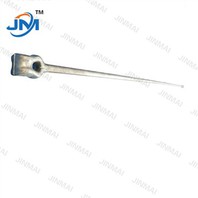
As a reliable supplier of Insulated Wedge Clamps, I often receive inquiries from customers about the maximum temperature these clamps can withstand. This is a crucial question, as the performance and longevity of electrical components are significantly affected by temperature. In this blog post, I'll delve into the factors that determine the maximum temperature tolerance of Insulated Wedge Clamps and provide you with a comprehensive understanding of this important topic.
Understanding Insulated Wedge Clamps
Before we discuss the temperature tolerance, let's briefly understand what Insulated Wedge Clamps are. These clamps are essential components in electrical systems, especially in high - voltage applications. They are designed to securely hold cables in place, providing insulation and mechanical support. Their unique wedge - shaped design ensures a tight grip on the cable, reducing the risk of slippage and electrical faults. You can find more details about our Insulated Wedge Clamp on our website.

Factors Affecting Temperature Tolerance
Material Composition
The materials used in the construction of Insulated Wedge Clamps play a vital role in determining their temperature resistance. Most high - quality Insulated Wedge Clamps are made from a combination of insulating materials such as high - performance polymers and metals with good heat - dissipation properties.

High - performance polymers, like certain types of thermosetting plastics, have excellent insulation properties and can withstand relatively high temperatures. These polymers are often selected for their ability to maintain their mechanical and electrical properties over a wide temperature range. For example, some polymers can resist softening or degrading up to 150°C or even higher, depending on their chemical composition.
Metals used in the clamps, such as aluminum or copper alloys, are chosen for their conductivity and mechanical strength. Aluminum, in particular, has a relatively high melting point (around 660°C) and good heat - transfer capabilities. This allows the clamp to dissipate heat effectively, preventing overheating.
Design and Construction
The design of the Insulated Wedge Clamp also affects its temperature tolerance. A well - designed clamp will have proper ventilation channels or heat - sinking features. These design elements help to dissipate heat generated during normal operation or under fault conditions.
For instance, some Insulated Wedge Clamps are designed with fins or ridges on the outer surface. These features increase the surface area of the clamp, allowing for more efficient heat transfer to the surrounding environment. Additionally, the internal structure of the clamp, such as the way the wedge and cable are in contact, can impact heat generation. A tight but not overly constrictive fit ensures that there is minimal resistance and thus less heat produced.
Operating Conditions
The operating environment of the Insulated Wedge Clamp is another significant factor. In a well - ventilated area with low ambient temperatures, the clamp can operate at a higher load without reaching its maximum temperature limit. Conversely, in a confined space with high ambient temperatures, the clamp's temperature tolerance will be more restricted.

For example, if the Insulated Wedge Clamp is installed in an underground cable duct where air circulation is poor, the heat generated by the cable and the clamp itself will accumulate more easily. This can lead to a higher operating temperature and potentially reduce the lifespan of the clamp.
Determining the Maximum Temperature
The maximum temperature an Insulated Wedge Clamp can withstand is typically specified by the manufacturer. This specification is based on a series of rigorous tests that simulate different operating conditions.
Laboratory Testing
Manufacturers conduct laboratory tests to determine the temperature performance of Insulated Wedge Clamps. These tests involve subjecting the clamps to increasing temperatures while monitoring their electrical and mechanical properties. For example, the electrical resistance of the clamp is measured at different temperatures to ensure that it remains within acceptable limits.
The clamps are also tested for their mechanical integrity at high temperatures. This includes checking for any signs of deformation, cracking, or loss of grip strength. Based on the results of these tests, the manufacturer can establish the maximum temperature at which the clamp can operate safely and effectively.

Industry Standards
In addition to in - house testing, Insulated Wedge Clamps must comply with various industry standards. These standards, such as those set by the International Electrotechnical Commission (IEC) or the Institute of Electrical and Electronics Engineers (IEEE), provide guidelines on the temperature ratings of electrical components.
For example, an IEC standard might specify the maximum continuous operating temperature for an Insulated Wedge Clamp used in a particular voltage class. By adhering to these standards, manufacturers can ensure that their products are reliable and safe for use in a wide range of applications.
Typical Temperature Ratings
The maximum temperature an Insulated Wedge Clamp can withstand can vary depending on the specific model and application. However, in general, most Insulated Wedge Clamps have a maximum continuous operating temperature in the range of 70°C to 120°C.
For low - voltage applications, where the current and heat generation are relatively low, the maximum temperature might be around 70°C. In high - voltage applications, where there is more heat generated due to higher currents, the clamps are often designed to withstand temperatures up to 120°C or even higher.
It's important to note that these are just general guidelines, and the actual temperature rating of a specific Insulated Wedge Clamp should be obtained from the manufacturer's documentation.
Importance of Staying Within Temperature Limits
Exceeding the maximum temperature limit of an Insulated Wedge Clamp can have serious consequences. At high temperatures, the insulating materials can start to degrade, leading to a loss of insulation properties. This can increase the risk of electrical breakdown, short circuits, and even fires.
The mechanical properties of the clamp can also be affected. The metal components may expand and contract more rapidly, causing the clamp to lose its grip on the cable. This can result in loose connections, which can further increase the resistance and heat generation, creating a vicious cycle.
Related Products and Their Temperature Considerations
In addition to Insulated Wedge Clamps, we also supply other related products such as High Voltage Line Insulator and Pole Line Hardware Forged Thimble Eye. These products also have their own temperature tolerances, which are determined by similar factors such as material composition, design, and operating conditions.
High Voltage Line Insulators are designed to withstand high electrical stresses and temperatures. They are often made from materials like porcelain or composite polymers, which have good insulation and heat - resistance properties. The maximum temperature they can withstand is typically in the range of 100°C to 150°C, depending on the type and application.
Pole Line Hardware Forged Thimble Eyes are used for cable termination and support. They are usually made from metals such as steel or aluminum. The temperature tolerance of these thimble eyes depends on the material and the design. Steel thimble eyes can generally withstand higher temperatures than aluminum ones, but both need to be designed to dissipate heat effectively to prevent overheating.
Conclusion
In conclusion, the maximum temperature an Insulated Wedge Clamp can withstand is determined by a combination of factors, including material composition, design, and operating conditions. As a supplier, we ensure that our Insulated Wedge Clamps are designed and tested to meet the highest standards of quality and performance.
If you are in the market for high - quality Insulated Wedge Clamps or other related products, we invite you to contact us for more information. Our team of experts is ready to assist you in selecting the right products for your specific needs. Whether you are working on a small - scale electrical project or a large - scale power distribution system, we have the solutions you need. Reach out to us to start a procurement discussion and find out how our products can meet your requirements.
References
- International Electrotechnical Commission (IEC) standards related to electrical components.
- Institute of Electrical and Electronics Engineers (IEEE) guidelines on temperature ratings of electrical equipment.
- Manufacturer's technical documentation for Insulated Wedge Clamps, High Voltage Line Insulators, and Pole Line Hardware Forged Thimble Eyes.