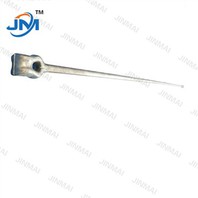
Are pigtail eye bolts magnetic? This is a question that often comes up in the world of hardware and industrial components. As a supplier of Pigtail Eye Bolts, I've encountered this query numerous times from customers, engineers, and DIY enthusiasts alike. In this blog post, I'll delve into the science behind the magnetism of pigtail eye bolts, exploring the factors that determine whether they are magnetic or not, and the implications of their magnetic properties in various applications.


Understanding Pigtail Eye Bolts
Before we dive into the topic of magnetism, let's first understand what pigtail eye bolts are. Pigtail eye bolts are a type of fastener that consists of a threaded shank with a loop or "eye" at one end and a short, curved "pigtail" at the other. They are commonly used in a variety of applications, including cable management, electrical installations, and rigging. The eye allows for easy attachment of cables, ropes, or other components, while the pigtail provides a convenient way to secure the bolt in place.
The Science of Magnetism
To understand whether pigtail eye bolts are magnetic, we need to first understand the basics of magnetism. Magnetism is a property of certain materials that allows them to attract or repel other materials. It is caused by the alignment of electrons within the atoms of the material. When the electrons in a material are aligned in a particular way, they create a magnetic field.
Materials can be classified into three categories based on their magnetic properties: ferromagnetic, paramagnetic, and diamagnetic. Ferromagnetic materials, such as iron, nickel, and cobalt, are strongly attracted to magnets and can be magnetized themselves. Paramagnetic materials, such as aluminum and platinum, are weakly attracted to magnets. Diamagnetic materials, such as copper and gold, are repelled by magnets.
Factors Affecting the Magnetism of Pigtail Eye Bolts
The magnetism of pigtail eye bolts depends on several factors, including the material they are made of, the manufacturing process, and the presence of any magnetic contaminants.
Material
The most common materials used to make pigtail eye bolts are steel and stainless steel. Steel is a ferromagnetic material, which means it is strongly attracted to magnets and can be magnetized. Stainless steel, on the other hand, can be either ferromagnetic or non-magnetic, depending on its composition. Austenitic stainless steels, which are the most common type of stainless steel used in pigtail eye bolts, are generally non-magnetic. However, some austenitic stainless steels can become slightly magnetic due to cold working or welding.
Manufacturing Process
The manufacturing process can also affect the magnetism of pigtail eye bolts. For example, if the bolts are cold worked during the manufacturing process, they may become slightly magnetic. Cold working involves deforming the metal at room temperature, which can cause the alignment of the electrons in the material to change, resulting in a magnetic field.
Magnetic Contaminants
The presence of magnetic contaminants, such as iron particles or magnetic dust, can also make pigtail eye bolts magnetic. These contaminants can be introduced during the manufacturing process or during handling and storage.
Applications of Magnetic and Non-Magnetic Pigtail Eye Bolts
The magnetic properties of pigtail eye bolts can have important implications in various applications.
Magnetic Pigtail Eye Bolts
Magnetic pigtail eye bolts are commonly used in applications where a strong magnetic field is required. For example, they can be used in magnetic separators to separate ferromagnetic materials from non-ferromagnetic materials. They can also be used in electrical applications, such as motors and generators, where a magnetic field is needed to generate electricity.
Non-Magnetic Pigtail Eye Bolts
Non-magnetic pigtail eye bolts are preferred in applications where a magnetic field could interfere with the operation of the equipment. For example, they are commonly used in electronic devices, such as computers and medical equipment, where a magnetic field could cause interference or damage to the sensitive components. They are also used in applications where corrosion resistance is important, such as in marine environments.
Testing the Magnetism of Pigtail Eye Bolts
If you need to determine whether a pigtail eye bolt is magnetic or not, you can use a simple magnet test. Simply hold a magnet near the bolt and see if it is attracted to the magnet. If the bolt is attracted to the magnet, it is magnetic. If it is not attracted to the magnet, it is non-magnetic.
It's important to note that the magnet test only provides a rough indication of the magnetism of the bolt. If you need a more accurate measurement, you can use a magnetic field meter or a gaussmeter.
Conclusion
In conclusion, the magnetism of pigtail eye bolts depends on several factors, including the material they are made of, the manufacturing process, and the presence of any magnetic contaminants. Steel pigtail eye bolts are generally magnetic, while stainless steel pigtail eye bolts can be either magnetic or non-magnetic, depending on their composition. The magnetic properties of pigtail eye bolts can have important implications in various applications, and it's important to choose the right type of bolt for your specific needs.
As a supplier of Pigtail Eye Bolts, I offer a wide range of options to meet the diverse needs of my customers. Whether you need magnetic or non-magnetic pigtail eye bolts, I can provide you with high-quality products at competitive prices. In addition to pigtail eye bolts, I also offer a variety of other cable components, such as Cable Pole Hook, Hardware Pole Line Hook, and Pigtail Hook Bolts.
If you're interested in learning more about our products or have any questions about the magnetism of pigtail eye bolts, please don't hesitate to contact me. I'd be happy to assist you with your procurement needs and provide you with the information you need to make an informed decision.
References
- "Magnetism and Magnetic Materials" by David Jiles
- "Stainless Steel: A Practical Guide" by John R. Davis
- "Handbook of Fasteners and Their Applications" by H. Arthur Rothbart