Hey there! As a supplier of metal stamping parts, I've dealt with all kinds of challenges in this field. One of the most common issues we face is controlling the flatness of metal stamping parts. In this blog, I'm gonna share some tips and tricks on how to achieve that.
Understanding the Importance of Flatness
First off, let's talk about why flatness is such a big deal. In many applications, metal stamping parts need to fit precisely into other components. If a part isn't flat, it can cause problems like poor assembly, reduced performance, and even safety issues. For example, in the automotive industry, a non - flat stamping part could lead to vibrations or misalignments in the vehicle's structure. So, getting that flatness right is crucial for the overall quality of the final product.
Factors Affecting Flatness
There are several factors that can affect the flatness of metal stamping parts.
Material Properties
The type of metal we use plays a huge role. Different metals have different mechanical properties, such as elasticity and ductility. For instance, some metals are more prone to spring - back after stamping. Spring - back is when the metal tries to return to its original shape after the stamping process. This can result in warping and affect the flatness of the part. We need to carefully select the right material based on the requirements of the part and the stamping process.
Stamping Process
The stamping process itself can also impact flatness. Things like the stamping force, die design, and the speed of the stamping press all matter. If the stamping force is too high or too low, it can cause uneven deformation of the metal. A poorly designed die may not distribute the force evenly across the part, leading to non - flat areas. And if the press speed is too fast, it can cause the metal to deform in an uncontrolled way.
Heat Treatment
Heat treatment is often used to improve the mechanical properties of metal stamping parts. However, if not done correctly, it can also affect flatness. For example, rapid cooling during quenching can cause internal stresses in the metal, which may lead to warping. We need to carefully control the heat treatment parameters to minimize these effects.
Techniques to Control Flatness
Material Selection and Preparation
As I mentioned earlier, choosing the right material is key. We also need to prepare the material properly before stamping. This may involve annealing the metal to relieve internal stresses. Annealing is a heat treatment process where the metal is heated to a specific temperature and then slowly cooled. This makes the metal more malleable and reduces the chances of spring - back during stamping.
Die Design and Maintenance
A well - designed die is essential for achieving good flatness. The die should be designed to distribute the stamping force evenly across the part. We use advanced CAD/CAM technology to design dies that are optimized for flatness. Regular die maintenance is also important. Over time, the die can wear out, and this can affect the quality of the stamped parts. We need to regularly check and repair the die to ensure it's in good condition.
Process Optimization
We constantly optimize the stamping process to improve flatness. This includes adjusting the stamping force, press speed, and other process parameters. We use sensors and monitoring systems to collect data during the stamping process. This data helps us identify any issues early on and make adjustments to the process. For example, if we notice that a particular area of the part is not flat, we can adjust the stamping force in that area.
Quality Control
Quality control is an ongoing process when it comes to controlling the flatness of metal stamping parts.

Inspection Methods
We use a variety of inspection methods to check the flatness of the parts. One common method is using a flatness gauge. This is a simple tool that measures the deviation of the part's surface from a perfectly flat plane. We also use optical inspection systems, which can provide more detailed and accurate measurements. These systems use cameras and lasers to scan the surface of the part and detect any irregularities.
Statistical Process Control (SPC)
SPC is a powerful tool for quality control. We collect data on the flatness of the parts over time and use statistical analysis to monitor the process. This helps us identify any trends or patterns in the data. For example, if we notice a gradual increase in the number of non - flat parts, it could indicate a problem with the stamping process or the die. We can then take corrective actions before the situation gets worse.
Real - World Examples
Let me give you a couple of real - world examples of how we've controlled the flatness of metal stamping parts.
We once had a customer who needed a large number of Hot Dip Galvanized Wire Rope Thimbles. These thimbles needed to be very flat to ensure a proper fit with the wire ropes. We started by carefully selecting a high - quality galvanized steel with low spring - back characteristics. We designed a custom die that evenly distributed the stamping force across the thimble. During the stamping process, we used sensors to monitor the force and speed. After stamping, we inspected each thimble using a flatness gauge and an optical inspection system. By following these steps, we were able to meet the customer's strict flatness requirements.
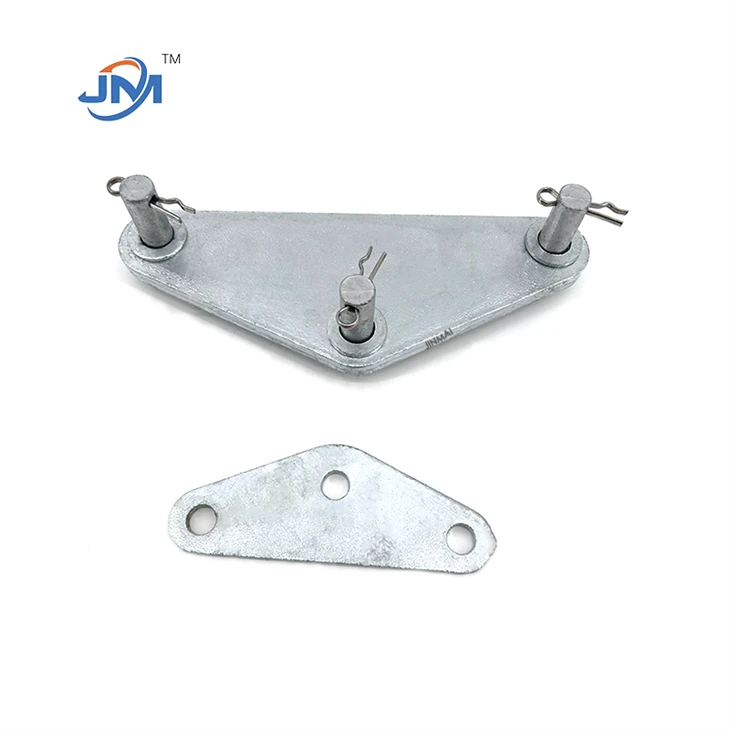
Another example is when we produced Hot Dip Galvanized Triangle Connecting Plate. These plates were used in a structural application, so flatness was crucial for proper assembly. We optimized the heat treatment process to minimize internal stresses. We also adjusted the stamping process parameters based on the results of our SPC analysis. Through these efforts, we were able to achieve excellent flatness and deliver high - quality parts to the customer.
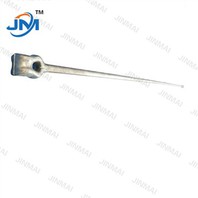
And for Hot Dip Galvanized Cable Span Clamp, we faced similar challenges. By focusing on material selection, die design, and process optimization, we were able to control the flatness and ensure that the clamps worked perfectly in the cable installation.
Conclusion
Controlling the flatness of metal stamping parts is a complex but achievable task. By understanding the factors that affect flatness, using the right techniques, and implementing a strict quality control system, we can produce high - quality parts that meet the most demanding requirements.
If you're in the market for metal stamping parts and need parts with excellent flatness, we'd love to hear from you. We have the expertise and experience to provide you with top - notch products. Feel free to reach out to us to discuss your specific needs and start a procurement negotiation.
References
- "Metal Forming Handbook: Processes and Applications"
- "Stamping Die Design and Manufacturing"
- Industry research reports on metal stamping technology