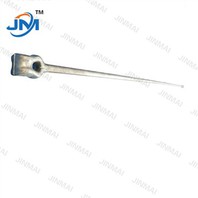
Hey there! As a supplier of Pigtail Hook Bolts, I often get asked whether these bolts are corrosion-resistant. It's a super important question, especially when you're thinking about using them in various environments. So, let's dive right in and explore this topic.
First off, what are Pigtail Hook Bolts? Well, they're a type of fastener that has a unique hook shape at one end and a threaded section at the other. They're commonly used in cable and wire applications, like in Pigtail Hook Bolts for securing cables to poles or other structures. You might also come across related components like the Pig tail ball head, which is used in similar setups. And then there's the Cable Pole Hook, which works hand in hand with Pigtail Hook Bolts in cable management systems.
Now, back to the main question: Are Pigtail Hook Bolts corrosion-resistant? The answer isn't a simple yes or no. It depends on a few factors, like the material they're made of and the environment they're used in.
Materials Matter
Pigtail Hook Bolts can be made from different materials, and each has its own level of corrosion resistance.
Stainless Steel
Stainless steel is a popular choice for Pigtail Hook Bolts because it's known for its excellent corrosion resistance. It contains chromium, which forms a thin, protective oxide layer on the surface of the metal. This layer acts as a barrier, preventing oxygen and moisture from reaching the underlying metal and causing corrosion.
In most outdoor and indoor environments, stainless steel Pigtail Hook Bolts can last for a long time without showing signs of rust or corrosion. They're great for applications where the bolts will be exposed to water, humidity, or even mild chemicals. However, it's important to note that not all stainless steels are created equal. There are different grades, and some are more resistant to corrosion than others. For example, 316 stainless steel is more corrosion-resistant than 304 stainless steel, especially in marine or high-salt environments.
Galvanized Steel
Galvanized steel is another common material for Pigtail Hook Bolts. Galvanization is a process where a layer of zinc is applied to the surface of the steel. Zinc is more reactive than steel, so when it comes into contact with oxygen and moisture, it corrodes first, protecting the underlying steel.
Galvanized Pigtail Hook Bolts are a cost-effective option for many applications. They can withstand moderate levels of corrosion in outdoor environments, but they're not as corrosion-resistant as stainless steel in harsh conditions. Over time, the zinc coating can wear off, especially if the bolts are exposed to abrasion or certain chemicals. Once the zinc coating is compromised, the steel underneath can start to rust.
Carbon Steel
Carbon steel is the least corrosion-resistant option for Pigtail Hook Bolts. It's made mainly of iron and carbon, and without any protective coating, it will rust quickly when exposed to moisture and oxygen. However, carbon steel can be coated or treated to improve its corrosion resistance. For example, it can be painted or coated with a corrosion-resistant primer. But these coatings may not be as durable as stainless steel or galvanized steel, and they may need to be reapplied periodically.
Environmental Factors
The environment where Pigtail Hook Bolts are used plays a big role in their corrosion resistance.
Outdoor Environments
In outdoor environments, Pigtail Hook Bolts are exposed to a variety of elements, including rain, snow, sunlight, and pollutants. The level of humidity, temperature, and the presence of salt or chemicals can all affect the corrosion rate.
In coastal areas, where the air contains a high concentration of salt, corrosion can be a major issue. Even stainless steel Pigtail Hook Bolts may show signs of corrosion over time if they're not properly maintained. In these environments, it's important to choose the right material and take steps to protect the bolts, such as applying a protective coating or using corrosion inhibitors.
In industrial areas, Pigtail Hook Bolts may be exposed to chemicals, fumes, and pollutants. These substances can accelerate the corrosion process, especially if they're acidic or alkaline. Again, choosing a corrosion-resistant material and implementing proper maintenance procedures is crucial.
Indoor Environments
Indoor environments are generally less harsh than outdoor environments, but they can still pose a risk of corrosion. For example, in humid areas like basements or bathrooms, Pigtail Hook Bolts may be exposed to moisture, which can lead to rust. In industrial or manufacturing facilities, the bolts may be exposed to chemicals or oils, which can also cause corrosion.
Even in dry indoor environments, dust and dirt can accumulate on the surface of the bolts, trapping moisture and promoting corrosion. Regular cleaning and inspection can help prevent this from happening.
Maintaining Corrosion Resistance
Regardless of the material and environment, proper maintenance is essential to ensure the long-term corrosion resistance of Pigtail Hook Bolts.
Inspection
Regular inspection is the first step in maintaining corrosion resistance. Check the bolts for any signs of rust, corrosion, or damage. If you notice any issues, take action immediately to prevent further damage.
Cleaning
Cleaning the Pigtail Hook Bolts regularly can help remove dirt, dust, and other contaminants that can promote corrosion. Use a mild detergent and water to clean the bolts, and dry them thoroughly afterward. Avoid using abrasive cleaners or tools that can scratch the surface of the bolts, as this can damage the protective coating and increase the risk of corrosion.
Coating and Treatment
If the Pigtail Hook Bolts are made of carbon steel or if the existing coating is starting to wear off, consider applying a new coating or treatment. This can help restore the corrosion resistance of the bolts and extend their lifespan. There are many different types of coatings and treatments available, so choose one that's suitable for the material and environment of the bolts.
Conclusion
So, are Pigtail Hook Bolts corrosion-resistant? It depends on the material they're made of and the environment they're used in. Stainless steel is the most corrosion-resistant option, followed by galvanized steel. Carbon steel is the least corrosion-resistant, but it can be coated or treated to improve its performance.
As a supplier of Pigtail Hook Bolts, I can help you choose the right material and product for your specific application. Whether you need bolts for a coastal project, an industrial facility, or a simple indoor installation, I've got you covered.
If you're interested in purchasing Pigtail Hook Bolts or have any questions about their corrosion resistance, don't hesitate to get in touch. I'm here to help you make the right choice and ensure that your project is a success.


References
- ASM Handbook, Volume 13A: Corrosion: Fundamentals, Testing, and Protection
- Corrosion Basics: An Introduction by National Association of Corrosion Engineers (NACE)
- Material Selection for Corrosion Control by NACE International