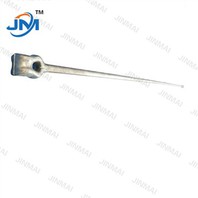
In the realm of industrial hardware, galvanized pole hooks stand as indispensable tools, widely utilized in various sectors such as construction, telecommunications, and electrical power distribution. As a trusted supplier of galvanized pole hooks, I am often asked about the security features of these products. In this blog post, I will delve into the question: Are there any anti - theft features in some galvanized pole hooks?
The Importance of Galvanized Pole Hooks
Galvanized pole hooks are crafted from high - quality steel that undergoes a galvanization process. This process involves coating the steel with a layer of zinc, which provides excellent corrosion resistance. These hooks are designed to be strong, durable, and able to withstand harsh environmental conditions. They are used for a multitude of purposes, including hanging equipment, supporting cables, and securing structures on poles.
In the construction industry, galvanized pole hooks are used to hang scaffolding components, tools, and safety equipment. In the telecommunications field, they play a crucial role in supporting fiber optic cables and antennas. In electrical power distribution, they are used to secure transformers and other electrical equipment on utility poles. Given their wide range of applications and the value of the equipment they support, the issue of theft becomes a significant concern.
Anti - Theft Features in Galvanized Pole Hooks
While traditional galvanized pole hooks may not come with built - in anti - theft features, some modern designs incorporate elements that deter theft.
Unique Locking Mechanisms
One of the most effective anti - theft features is the use of unique locking mechanisms. Some galvanized pole hooks are equipped with special locks that require a specific key or combination to open. These locks can prevent unauthorized removal of the hook and the equipment attached to it. For example, a hook with a pin - tumbler lock can only be opened by someone with the correct key. This adds an extra layer of security, especially in areas where theft is a common problem.


Tamper - Evident Design
Another anti - theft feature is the tamper - evident design. Some galvanized pole hooks are designed in such a way that any attempt to tamper with them will leave visible marks. For instance, a hook may have a sealed housing that, if opened, will break a seal or leave scratches. This makes it easy to detect if someone has tried to steal the hook or access the equipment it holds.
Identification Markings
Many galvanized pole hooks now come with unique identification markings. These markings can include serial numbers, barcodes, or logos. By registering these markings with a central database, it becomes easier to track the hooks in case of theft. Law enforcement agencies can use this information to identify and recover stolen hooks. Additionally, the presence of identification markings can act as a deterrent to thieves, as they know that the hooks can be easily traced.
Complementary Anti - Theft Solutions
In addition to the anti - theft features built into the galvanized pole hooks themselves, there are other complementary solutions that can enhance security.
Monitoring Systems
Installing monitoring systems can provide real - time information about the status of the galvanized pole hooks. For example, a wireless sensor can be attached to the hook to detect any movement or tampering. If the sensor detects an unauthorized action, it can send an alert to a security system or a mobile device. This allows for immediate response in case of theft or attempted theft.
Physical Barriers
Using physical barriers such as cages or enclosures around the poles can also prevent access to the galvanized pole hooks. These barriers can be made of metal or other strong materials and can be locked to restrict entry. For example, a cage around a utility pole can prevent unauthorized individuals from reaching the hooks and the equipment they support.
Related Products and Their Role in Security
As a supplier of galvanized pole hooks, I also offer a range of related products that can contribute to overall security.
The Stay Rod Stay Plate is an important accessory that can be used in conjunction with galvanized pole hooks. It provides additional support and stability to the pole, making it more difficult for thieves to remove the equipment. The stay rod stay plate is made of high - strength materials and is also galvanized for corrosion resistance.
The High Voltage Line Insulator is another crucial product. It ensures the safety and proper functioning of electrical systems. By preventing electrical leakage and short - circuits, it reduces the risk of damage to the equipment attached to the galvanized pole hooks. A well - functioning insulator also makes the overall system less attractive to thieves, as they are less likely to target a complex and potentially dangerous electrical setup.
The Hot Dip Galvanized Strand Ground Clamps are used to connect grounding wires to the poles. Proper grounding is essential for the safety of the electrical system and can also act as a deterrent to theft. Thieves are less likely to target a system that is properly grounded, as it reduces the risk of electrical shock.
Encouraging Contact for Procurement
If you are in need of high - quality galvanized pole hooks with anti - theft features or any of the related products mentioned above, I invite you to reach out. Our team of experts can provide you with detailed information about our products, including their features, specifications, and pricing. We can also offer customized solutions based on your specific requirements. Whether you are a small construction company or a large telecommunications provider, we have the products and expertise to meet your needs. Contact us today to start the procurement process and enhance the security of your projects.
References
- "Industrial Hardware Handbook", Third Edition, published by Industrial Press Inc.
- "Security Measures for Utility Infrastructure", a report by the National Institute of Standards and Technology.
- "Galvanized Steel: Properties and Applications", an article in the Journal of Materials Science.