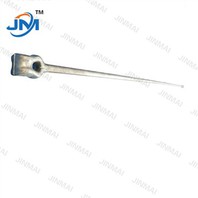
In the field of overhead power line construction, the cross arm plays a crucial role in supporting insulators and conductors, ensuring the stable operation of the power grid. Among various types of cross arms, the galvanized cross arm stands out for its excellent corrosion resistance and durability. As a leading supplier of Galvanized Cross Arm, one question I'm frequently asked is: Can a galvanized cross arm be customized in terms of size? The answer is a resounding yes, and in this blog, I'll delve into the details of this customization process.


Why Customize Galvanized Cross Arms?
The need for customized galvanized cross arms arises from the diverse requirements of different power projects. Power transmission and distribution systems vary greatly in terms of voltage levels, conductor types, span lengths, and environmental conditions. For instance, a high - voltage transmission line in a coastal area with high humidity and salt spray will have different cross - arm requirements compared to a low - voltage distribution line in an inland area.
Customization allows us to precisely meet these unique needs. By adjusting the size of the cross arm, we can optimize its load - bearing capacity, which is essential for safely supporting the weight of conductors, insulators, and other accessories. Additionally, customized sizes can ensure better compatibility with other components of the overhead line system, such as poles and insulators, leading to a more efficient and reliable power grid.
Factors Affecting Size Customization
1. Load Requirements
The primary factor influencing the size of a galvanized cross arm is the load it needs to bear. This includes the weight of the conductors, the force exerted by wind and ice, and any additional loads from maintenance equipment or accidental impacts. For high - voltage transmission lines with large - diameter conductors, a larger and more robust cross arm is required to handle the heavier loads. Engineers calculate these loads based on industry standards and local environmental conditions to determine the appropriate cross - arm size.
2. Pole Configuration
The type and size of the pole used in the overhead line system also play a significant role in cross - arm size customization. Different poles, such as wooden poles, concrete poles, or steel poles, have different mounting capabilities and structural characteristics. The cross arm must be sized to fit the pole properly and ensure a secure connection. For example, a cross arm for a large - diameter steel pole may need to have wider mounting holes and a stronger structure compared to one for a smaller wooden pole.
3. Conductor Arrangement
The number and arrangement of conductors on the cross arm are important considerations. In some power systems, multiple conductors may be arranged in a specific pattern, such as a triangular or horizontal formation. The cross arm size must be designed to accommodate these arrangements while maintaining the required spacing between conductors to prevent electrical interference and short - circuits.
4. Environmental Conditions
Environmental factors like wind, ice, and temperature can have a significant impact on the performance of the cross arm. In areas with high wind speeds, the cross arm may need to be larger and more aerodynamic to reduce wind resistance. In regions prone to heavy ice accumulation, a stronger and more rigid cross arm is required to withstand the additional weight of the ice.
The Customization Process
As a supplier of Galvanized Cross Arm, we follow a systematic process to customize cross arms according to our customers' needs.
1. Requirement Gathering
The first step is to have in - depth discussions with the customer to understand their specific requirements. We collect information about the power system, including voltage level, conductor type and size, pole type, and environmental conditions. Our experienced sales team and engineers work closely with the customer to ensure that all details are accurately captured.
2. Design and Engineering
Once we have all the necessary information, our engineering team starts the design process. Using advanced computer - aided design (CAD) software, we create detailed 3D models of the customized cross arm. These models are analyzed using finite element analysis (FEA) to simulate the performance of the cross arm under different load conditions. This helps us optimize the design and ensure that it meets all the required standards and specifications.
3. Material Selection
After the design is finalized, we carefully select the appropriate materials for the cross arm. Galvanized steel is our primary choice due to its excellent corrosion resistance. We source high - quality steel from reliable suppliers and ensure that it meets the relevant industry standards. The steel is then hot - dip galvanized to provide a protective coating that can withstand harsh environmental conditions.
4. Manufacturing
The manufacturing process of the customized cross arm is carried out in our state - of - the - art production facility. We use advanced manufacturing techniques and equipment to ensure high precision and quality. The steel is cut, bent, and welded according to the design specifications. After the fabrication, the cross arm undergoes a rigorous quality control process to check for any defects or deviations from the design.
5. Testing and Certification
Before the customized cross arm is delivered to the customer, it undergoes a series of tests to ensure its performance and safety. These tests include load - testing, corrosion - resistance testing, and dimensional inspection. We also obtain relevant certifications to guarantee that the cross arm meets all the national and international standards.
Advantages of Our Customized Galvanized Cross Arms
1. High Quality
As a professional supplier of Hot Dip Galvanized Overhead Line Hardware, we are committed to providing high - quality products. Our customized galvanized cross arms are made from high - grade steel and undergo strict quality control processes. The hot - dip galvanizing process provides a thick and uniform coating that protects the cross arm from corrosion, ensuring a long service life.
2. Cost - Effectiveness
Customizing the cross arm according to the specific requirements of the project can lead to cost savings. By optimizing the size and design, we can reduce the amount of material used without compromising on the performance. This not only lowers the production cost but also reduces the transportation and installation costs.
3. Technical Support
Our team of experienced engineers and technicians provides comprehensive technical support throughout the project. From the initial design stage to the installation and maintenance, we are always available to answer any questions and provide solutions to any problems that may arise.
4. Timely Delivery
We understand the importance of timely delivery in power projects. With our efficient production process and well - organized supply chain, we can ensure that the customized galvanized cross arms are delivered to the customer on time.
Conclusion
In conclusion, a galvanized cross arm can definitely be customized in terms of size to meet the diverse needs of different power projects. As a supplier of Overhead Pole Line Hardware, we have the expertise, experience, and facilities to provide high - quality customized cross arms. Whether you are involved in a small - scale distribution project or a large - scale transmission project, we can work with you to design and manufacture the perfect cross arm for your needs.
If you are interested in our customized galvanized cross arms or have any questions about our products, please feel free to contact us. We look forward to discussing your project requirements and providing you with the best solutions.
References
- Electrical Power Systems Engineering, Second Edition, by Turan Gonen
- Overhead Transmission Line Engineering: Planning, Design, and Construction, by George W. Trowbridge
- National Electrical Safety Code (NESC)