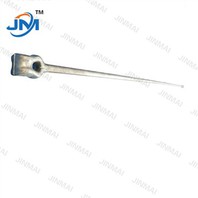
As a leading supplier of ADSS cable fittings, I often receive inquiries about the suitability of our products in various environmental conditions. One question that comes up frequently is whether ADSS cable fittings can be used in low - temperature environments. In this blog post, I will share the scientific facts and insights based on our industry expertise and experience.
Understanding ADSS Cable Fittings
ADSS (All - Dielectric Self - Supporting) cable fittings are crucial components in fiber optic communication systems. They are designed to support, secure, and protect ADSS cables, which are used for long - distance telecommunications, power line communication, and other applications. These fittings need to maintain their structural integrity and functionality under different environmental stressors.
Technical Considerations for Low - Temperature Use
Material Properties
The materials used in ADSS cable fittings are a key determinant of their performance in low - temperature environments. Most high - quality fittings are made from materials such as stainless steel, aluminum alloys, and engineering plastics. Stainless steel is known for its corrosion resistance and strength, even at low temperatures. Aluminum alloys have a good strength - to - weight ratio and also maintain their mechanical properties in cold conditions. Engineering plastics, on the other hand, need to be carefully selected. Some plastics can become brittle at low temperatures, which may lead to cracking or failure.
Our company ensures that the plastics used in our ADSS cable fittings are specifically formulated to resist cold - brittleness. They have a low glass - transition temperature, which means they remain flexible and tough even in freezing conditions. For example, the certain elastomeric parts in our fittings are made from cold - resistant polymers that can withstand temperatures as low as - 40°C without significant loss of elasticity.
Mechanical Performance
Low temperatures can affect the mechanical performance of ADSS cable fittings in several ways. The coefficient of thermal expansion is an important factor. All materials expand and contract with temperature changes. If the different components of the fitting have mismatched coefficients of thermal expansion, it can lead to stress concentrations, which may cause the fitting to loosen or become damaged over time.
We design our ADSS cable fittings with precision, taking into account the thermal expansion characteristics of each material. During the manufacturing process, we use advanced techniques to ensure proper assembly and alignment of components, minimizing the risk of thermal - stress - induced failures. For example, our clamps and fasteners are engineered to maintain a consistent grip on the cable even as the temperature fluctuates.
Electrical Performance
Although ADSS cables are dielectric (non - conductive), some of the fittings may have electrical grounding functions. In low - temperature environments, the electrical conductivity of the grounding components can be affected. The resistance of metals generally increases as the temperature decreases, but in the case of our grounding fittings made from high - quality Steel Hot Dip Galvanized Ground Stay Rod, the effect is minimized. The hot - dip galvanized coating not only provides corrosion protection but also helps to maintain stable electrical conductivity within a wide temperature range.
Real - World Performance and Case Studies
We have conducted extensive field tests and have real - world case studies to prove the reliability of our ADSS cable fittings in low - temperature environments. In regions with cold climates, such as the northern parts of Europe and North America, our fittings have been installed in power line communication networks and have been operating successfully for many years.
In one case, a telecommunications company in Canada installed our ADSS cable fittings in an area where the winter temperatures can drop to - 30°C. After several years of operation, an inspection revealed that the fittings were in good condition. They had maintained their structural integrity, and the cable connections remained secure, ensuring uninterrupted communication.
Complementary Products for Low - Temperature Applications
In addition to our ADSS cable fittings, we also offer a range of complementary products that are suitable for low - temperature environments. For example, our Square Steel Cross Arm is a robust component used for supporting cables on poles. It is made from high - strength steel and is hot - dip galvanized for corrosion resistance, making it ideal for use in cold and harsh climates.
Our Pole Top Bracket is another product that can be used in conjunction with ADSS cable fittings. The galvanized finish provides protection against rust and cold - induced degradation, ensuring long - term performance.
Conclusion and Call for Contact
In conclusion, ADSS cable fittings from our company can indeed be used in low - temperature environments. Our commitment to using high - quality materials, advanced manufacturing techniques, and comprehensive testing ensures that our products meet the highest standards of performance and reliability, even in the coldest conditions.
If you are in the market for ADSS cable fittings or related products for low - temperature applications, we invite you to contact us for a detailed discussion. Our team of experts can provide you with customized solutions based on your specific requirements. Whether you are involved in a new project or need to upgrade an existing system, we are here to assist you.


References
- "Handbook of Fiber Optic Communication Systems" - John Wiley & Sons
- "Thermal Properties of Materials in Engineering Applications" - Cambridge University Press
- Industry research reports on ADSS cable fitting performance in extreme environments