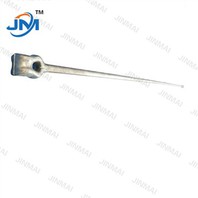
Can ADSS cable fittings be used in underground applications?
Hey there! I'm a supplier of ADSS cable fittings, and I often get asked this question: Can ADSS cable fittings be used in underground applications? Well, let's dive right into it and explore this topic in detail.
First off, let's quickly understand what ADSS cable fittings are. ADSS stands for All - Dielectric Self - Supporting. These fittings are designed to support and secure ADSS cables, which are commonly used in overhead power line communication systems. They're made to withstand various environmental conditions like wind, ice, and UV radiation when installed above the ground.
Now, when it comes to underground applications, things get a bit tricky. ADSS cable fittings are primarily engineered for overhead use. One of the main reasons is the environmental factors. Underground, the conditions are quite different from those above the ground. For example, the soil can be moist, and there might be chemical substances present in it. Moisture can cause corrosion to the fittings over time, especially if they're not properly protected.
The physical stress on the fittings also varies. In an overhead installation, the main forces acting on the ADSS cable fittings are tension due to the cable's weight and wind loads. But underground, the fittings may face compression forces from the surrounding soil. ADSS cable fittings may not be designed to handle these compression forces effectively.
However, that doesn't mean it's completely impossible to use ADSS cable fittings underground. In some cases, with the right modifications and additional protection, it can be done. For instance, if the underground area is relatively dry and the soil doesn't contain any aggressive chemicals, and we can provide proper waterproofing and corrosion - resistant coatings to the fittings, they might work.
Let's talk about some of the specific types of ADSS cable fittings and how they might fare underground. Take the Hook for Power Fittings. These hooks are usually used to hang the ADSS cables in overhead installations. Underground, the hook design might not be as useful as there's no need for hanging. But if we can adapt the hook to a different function, like providing a secure connection point within a conduit or a cable trench, it could potentially be used.
Another important aspect is the Electric Pole Cross Arm. In an overhead setup, the cross - arm is used to support multiple cables at different heights on an electric pole. Underground, the concept of a cross - arm doesn't really fit the traditional sense. But we could potentially use the materials and design principles of the cross - arm to create a support structure for ADSS cables in an underground cable tray or duct system.
Now, let's consider the Power Supply Fittings. These fittings are crucial for ensuring a stable power supply to the ADSS cables. Underground, we need to make sure that these fittings are protected from moisture and physical damage. If we can enclose them in a waterproof and shock - resistant housing, they might be able to function properly in an underground environment.


When thinking about using ADSS cable fittings underground, cost is also a factor. Modifying the fittings to make them suitable for underground use can add to the overall cost. There'll be expenses for the additional coatings, enclosures, and any design changes. So, it's important to weigh the cost - benefit ratio. If the cost of using modified ADSS cable fittings underground is significantly lower than using specialized underground cable fittings, then it might be a viable option.
In terms of installation, underground installations require a different set of skills and equipment compared to overhead installations. Workers need to be trained to handle the unique challenges of underground work, such as working in confined spaces and dealing with soil conditions. And the installation process might be more time - consuming as well.
So, in conclusion, while ADSS cable fittings are mainly designed for overhead applications, with the right modifications, protection, and careful consideration of the underground environment, they can potentially be used underground. But it's not a straightforward decision. It requires a detailed assessment of the specific site conditions, the type of ADSS cable fittings, and the overall cost.
If you're considering using ADSS cable fittings for your underground project, I'd love to have a chat with you. We can discuss your specific requirements, evaluate the feasibility, and come up with the best solution. Whether it's modifying our existing ADSS cable fittings or providing you with other suitable options, we're here to help. So, don't hesitate to reach out and start a conversation about your project.
References
- Industry standards for ADSS cable fittings
- Technical manuals on cable installation in underground environments