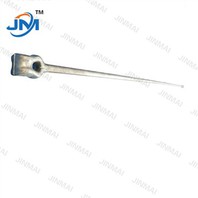
ADSS (All-Dielectric Self-Supporting) cable hardware is crucial in the installation and maintenance of fiber optic networks, especially in overhead power line environments. One of the most common concerns among potential users is whether ADSS cable hardware can be used in areas with high humidity and significant temperature variations. As a leading supplier of ADSS cable hardware, I am well - versed in these aspects and would like to share some insights.
Impact of High Humidity on ADSS Cable Hardware
High humidity can pose several challenges to ADSS cable hardware. Moisture is a well - known enemy of many materials. When it comes to the metal components of ADSS cable hardware, such as Pole Line Hardware Forged Thimble Eye, high humidity can lead to corrosion. Corrosion not only weakens the structural integrity of the hardware but also can affect its electrical conductivity in some cases.
For example, in coastal areas where the humidity is often high due to the proximity to the ocean, the salt in the air can accelerate the corrosion process. The metal parts of the hardware can start to rust, which over time may cause them to break or lose their functionality. Even non - metal components are not immune. High humidity can cause the degradation of insulating materials, reducing their dielectric strength. This is a serious concern, especially for High Voltage Line Insulator, as a decrease in dielectric strength can lead to electrical failures and safety hazards.
However, at our company, we have taken extensive measures to address these issues. For metal components, we use high - quality materials with excellent corrosion resistance. Many of our products are coated with special anti - corrosion layers, such as galvanized coatings. Galvanization creates a protective zinc layer on the metal surface, which sacrificially corrodes instead of the base metal. This significantly extends the lifespan of the hardware in high - humidity environments. For non - metal insulating materials, we select materials with high moisture resistance and conduct strict quality control during the manufacturing process to ensure their long - term performance.
Effects of Temperature Variations
Temperature variations can also have a profound impact on ADSS cable hardware. When the temperature changes, materials expand and contract. This thermal expansion and contraction can cause mechanical stress on the hardware. For instance, if the temperature rises, the cable may expand, putting additional tension on the hardware that holds it in place. Conversely, when the temperature drops, the cable contracts, which can also create stress on the connections.
In areas with large temperature differences between day and night or between seasons, these cyclic stresses can lead to fatigue failure. The repeated expansion and contraction can cause cracks to form in the hardware, especially in areas with sharp corners or stress concentrations. This is particularly relevant for Galvanized Pole Hook, which is responsible for supporting the cable. A failure in the pole hook can lead to the cable sagging or even falling, disrupting the network.
To mitigate the effects of temperature variations, our products are designed with flexibility in mind. We use materials with appropriate coefficients of thermal expansion to ensure that they can withstand the expected temperature changes without excessive stress. Additionally, our hardware is engineered with features that can accommodate some degree of movement. For example, we use adjustable fasteners and connectors that can adapt to the changing dimensions of the cable and the hardware itself.
Case Studies
Let's take a look at some real - world examples. There was a project in a tropical region where the humidity was consistently high, and the temperature varied significantly between the wet and dry seasons. The initial installation used standard hardware, and within a few months, signs of corrosion were evident on the metal parts. The non - metal insulators also started to show signs of degradation, leading to intermittent electrical problems.
When the project team switched to our ADSS cable hardware, the situation improved dramatically. Our corrosion - resistant metal components and high - performance insulating materials withstood the harsh environmental conditions. After several years of operation, there were no signs of significant corrosion or degradation. The network has been running smoothly, with minimal maintenance requirements.


Another case was in a mountainous area with large temperature differences between the valley and the peaks. The original hardware suffered from fatigue failures due to the thermal cycling. After replacing it with our specially designed hardware, which was able to accommodate the temperature - induced expansion and contraction, the reliability of the network increased significantly.
Testing and Certification
We understand the importance of ensuring the quality and performance of our ADSS cable hardware in high - humidity and high - temperature - variation environments. That's why we conduct rigorous testing on all our products. Our testing facilities simulate a wide range of environmental conditions, including high humidity, extreme temperatures, and cyclic temperature changes.
We also adhere to international standards and obtain relevant certifications. These certifications are a testament to the quality and reliability of our products. For example, our products meet the requirements of standards related to corrosion resistance, electrical performance, and mechanical strength. This gives our customers the confidence that our hardware can perform well in challenging environments.
Conclusion
In conclusion, ADSS cable hardware can indeed be used in areas with high humidity and temperature variations. With the right design, materials, and manufacturing processes, our ADSS cable hardware can withstand these harsh environmental conditions. Our company is committed to providing high - quality products that meet the needs of our customers in even the most challenging environments.
If you are looking for reliable ADSS cable hardware for your project in areas with high humidity and temperature variations, we are here to help. Our team of experts can provide you with detailed technical advice and customized solutions. We invite you to contact us for further discussions and to start the procurement process. We are confident that our products will meet your expectations and ensure the long - term success of your fiber optic network.
References
- ASTM International. Standards related to corrosion resistance and mechanical properties of metals.
- IEEE Standards Association. Standards for electrical performance of high - voltage insulators.
- Industry reports on the impact of environmental factors on fiber optic network hardware.