Can cable components be used in extreme temperatures?
As a supplier of cable components, I often get asked whether our products can withstand extreme temperatures. This is a crucial question, especially for industries that operate in harsh environmental conditions, such as aerospace, automotive, and energy. In this blog post, I'll delve into the science behind cable component performance in extreme temperatures and share insights on how our products are designed to meet these challenges.


Understanding the Impact of Extreme Temperatures on Cable Components
Extreme temperatures, whether extremely high or low, can have a significant impact on the performance and lifespan of cable components. At high temperatures, materials can expand, leading to mechanical stress on the cables. This expansion can cause insulation to crack, exposing the conductors and increasing the risk of short - circuits. Additionally, high temperatures can accelerate the aging process of the insulation materials, reducing their dielectric strength and overall performance.
On the other hand, low temperatures make materials more brittle. The insulation and sheathing of cables can become stiff and prone to cracking when bent or flexed. This not only compromises the electrical integrity of the cable but also exposes it to environmental factors such as moisture and dust, which can further degrade its performance.
Material Selection for Extreme Temperature Applications
One of the key factors in ensuring that cable components can be used in extreme temperatures is the selection of appropriate materials. For high - temperature applications, we use materials with high melting points and excellent thermal stability. For example, some of our cables are insulated with fluoropolymers like PTFE (Polytetrafluoroethylene). PTFE has a very high melting point (around 327°C) and can maintain its electrical and mechanical properties at elevated temperatures. It also has good chemical resistance, which is an added advantage in harsh industrial environments.
In low - temperature applications, we opt for materials that remain flexible even at extremely cold temperatures. Elastomers such as silicone rubber are commonly used. Silicone rubber can maintain its flexibility down to - 60°C or even lower, making it ideal for applications in cold climates or cryogenic environments.
Design Considerations for Extreme Temperature Resistance
In addition to material selection, the design of cable components also plays a vital role in their ability to withstand extreme temperatures. Our engineers pay close attention to factors such as conductor size, insulation thickness, and cable construction.
For high - temperature applications, we may use larger - gauge conductors to reduce resistance and heat generation. Thicker insulation is also applied to provide better thermal protection. We also use special cable constructions, such as multi - layer insulation, to enhance the cable's ability to dissipate heat and prevent overheating.
In low - temperature applications, we design cables with a looser construction to allow for some movement and flexibility. This helps to prevent the insulation from cracking due to the brittleness caused by cold temperatures. We also add additional protective layers to shield the cable from environmental factors that could exacerbate the effects of low temperatures.
Our Product Range for Extreme Temperature Applications
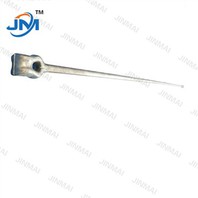
We offer a wide range of cable components that are specifically designed for extreme temperature applications. For example, our Pig tail ball head is made from high - quality materials that can withstand both high and low temperatures. It is commonly used in electrical connections where reliability is crucial, even in harsh environmental conditions.
Our Pigtail Hook Bolts are another product that is well - suited for extreme temperature applications. These bolts are designed to provide a secure connection in various industries, including those that operate in extreme heat or cold.
The Hardware Pole Line Hook is also engineered to perform in extreme temperatures. It is used in power distribution systems, where it needs to withstand the elements and maintain its structural integrity over time.
Testing and Quality Assurance
To ensure the reliability of our cable components in extreme temperatures, we conduct rigorous testing. Our testing facilities are equipped with state - of - the - art equipment that can simulate a wide range of temperature conditions. We test our products for electrical performance, mechanical integrity, and insulation resistance at both high and low temperatures.
We also follow strict quality control procedures throughout the manufacturing process. From raw material inspection to final product testing, every step is carefully monitored to ensure that our cable components meet the highest standards of quality and performance.
Case Studies: Real - World Applications
Let's take a look at some real - world applications where our cable components have been used in extreme temperatures. In the aerospace industry, our cables are used in aircraft engines, where temperatures can reach several hundred degrees Celsius. Our high - temperature - resistant cables have proven to be reliable in these demanding applications, ensuring the safe and efficient operation of the aircraft.
In the automotive industry, our low - temperature - resistant cables are used in electric vehicles that operate in cold climates. These cables maintain their flexibility and electrical performance even in sub - zero temperatures, contributing to the overall reliability of the vehicle.
Conclusion
In conclusion, cable components can indeed be used in extreme temperatures, provided that they are designed and manufactured with the right materials and construction. As a supplier of cable components, we are committed to providing our customers with products that can withstand the most challenging environmental conditions.
If you are in need of cable components for extreme temperature applications, we would love to have a discussion with you. Our team of experts can help you select the right products for your specific needs. Contact us today to start the procurement process and find out how our cable components can enhance the performance and reliability of your systems.
References
- "Handbook of Electrical and Electronic Insulating Materials" by S. K. Bhattacharya
- "Polymer Science and Technology" by Charles A. Daniels
- Industry standards and guidelines related to cable performance in extreme temperatures.