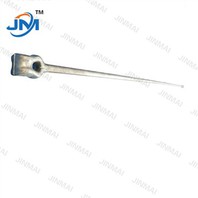
Hey there! As a supplier of steel angle cross arms, I've seen firsthand how crucial it is to keep these components in top - notch condition. Steel angle cross arms play a vital role in supporting overhead power lines, so detecting any damage early on is super important. In this blog, I'll share some tips on how to detect the damage of a steel angle cross arm.
Visual Inspection
The first and easiest way to check for damage is through a visual inspection. You don't need any fancy equipment for this; just your eyes and a good look around.
Start by looking for any signs of corrosion. Corrosion is a big enemy of steel angle cross arms. Over time, exposure to the elements can cause the steel to rust. Look for patches of rust on the surface of the cross arm. Rust can weaken the structure of the steel, making it more prone to failure. If you see small spots of rust, it might be an early sign of damage. But if you notice large areas of rust, or if the rust has eaten through the steel in some places, that's a serious issue.
Next, check for any cracks or fractures. Cracks can occur due to a variety of reasons, such as excessive stress, impact, or even metal fatigue over time. Look along the edges and corners of the cross arm, as these are the areas where stress is often concentrated. A small crack might not seem like a big deal at first, but it can quickly grow and lead to the failure of the cross arm.
Also, look for any signs of deformation. The cross arm should have a straight and uniform shape. If you notice that it's bent, twisted, or warped, that's a clear indication of damage. Deformation can affect the ability of the cross arm to support the power lines properly, and it needs to be addressed right away.
Non - Destructive Testing (NDT)
If a visual inspection doesn't give you a clear picture, or if you suspect there might be internal damage, non - destructive testing methods can be really helpful.
One common NDT method is ultrasonic testing. Ultrasonic testing uses high - frequency sound waves to detect internal flaws in the steel. A technician will use a transducer to send ultrasonic waves into the cross arm. If there are any internal cracks or defects, the sound waves will bounce back differently, and this can be detected by the equipment. Ultrasonic testing is a great way to find hidden damage that you can't see with the naked eye.
Another method is magnetic particle testing. This method is used to detect surface and near - surface defects in ferromagnetic materials, like steel. The technician will apply a magnetic field to the cross arm and then sprinkle magnetic particles on the surface. If there are any cracks or defects, the magnetic particles will be attracted to the area, making the defect visible. Magnetic particle testing is relatively quick and easy to perform, and it can be very effective in detecting surface - level damage.
Load Testing
Load testing is another important way to detect damage in a steel angle cross arm. This involves applying a known load to the cross arm and measuring its response.
There are two main types of load testing: static load testing and dynamic load testing. Static load testing involves applying a constant load to the cross arm for a certain period of time and measuring the deflection. If the cross arm deflects more than it should under the load, it could be a sign of damage.
Dynamic load testing, on the other hand, involves applying a varying load to the cross arm to simulate real - world conditions. This can help to detect any issues that might only occur under dynamic forces, such as wind or vibration.
Load testing can be a bit more complex and expensive than visual inspection or NDT, but it provides a more accurate picture of the cross arm's structural integrity.
Monitoring and Maintenance
Regular monitoring and maintenance are key to detecting damage early. Set up a schedule for visual inspections and NDT tests. This will help you catch any damage before it becomes a major problem.
Keep records of all inspections and tests. This will allow you to track the condition of the cross arms over time and identify any trends. For example, if you notice that the amount of corrosion is increasing steadily, you can take proactive measures to address it.
Also, make sure to perform any necessary maintenance tasks, such as cleaning, painting, and tightening bolts. These simple tasks can go a long way in preventing damage and extending the lifespan of the cross arms.
Why It Matters
Detecting damage in steel angle cross arms is not just about keeping the equipment in good condition. It's also about ensuring the safety and reliability of the power grid. A damaged cross arm can lead to power outages, which can have a significant impact on homes, businesses, and industries. By detecting and fixing damage early, we can prevent these problems and keep the power flowing smoothly.
Related Products
If you're in the market for high - quality cross arms or related products, we've got you covered. Check out our Cable Accessories Iron Cross Arm, Galvanized Cross Arm, and Electric Power Stringing products. These are all essential components for a reliable overhead power line system.
Get in Touch
If you have any questions about detecting damage in steel angle cross arms, or if you're interested in purchasing our products, don't hesitate to reach out. We're here to help you make the right decisions for your power infrastructure needs.


References
- ASCE (American Society of Civil Engineers). "Structural Design and Evaluation of Transmission Line Structures."
- IEEE (Institute of Electrical and Electronics Engineers). "Standards for Overhead Transmission Line Design and Installation."
Remember, taking care of your steel angle cross arms is an investment in the future of your power system. So, stay vigilant and keep those cross arms in great shape!