Hey there! As a supplier of Pin Type Insulator, I often get asked some interesting questions from my customers. One question that pops up quite a bit is, "Do pin type insulators have any magnetic properties?" Well, let's dig into this topic and find out.

First off, let's understand what pin type insulators are. Pin type insulators are widely used in electrical power systems, especially in High Voltage Line Insulator applications. They're designed to support and insulate electrical conductors from the poles or towers, preventing the current from flowing into the ground or other unintended paths.
Now, when it comes to magnetic properties, we need to look at the materials these insulators are made of. Most pin type insulators are made from materials like porcelain or glass. Porcelain is a ceramic material, and glass is well, glass! These materials are generally non - magnetic.
The reason is in their atomic structure. Magnetic materials usually have unpaired electrons in their atoms. These unpaired electrons can align themselves in a magnetic field, creating a magnetic moment. In porcelain and glass, the electrons are paired up, and there's no net magnetic moment. So, under normal circumstances, they don't interact with magnetic fields in a significant way.
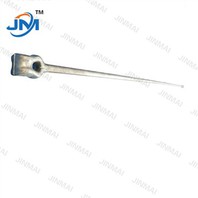
But, hold on a second! Sometimes, there are small components associated with pin type insulators that might have magnetic properties. For example, the Hot - dip Galvanizing Bolt used to attach the insulator to the pole or tower is typically made of steel. Steel is a ferromagnetic material, which means it can be magnetized and is attracted to magnets.
However, these bolts are just a small part of the overall pin type insulator setup. And their magnetic properties don't really affect the main function of the insulator, which is to provide electrical insulation. The magnetic field generated by these bolts is also quite weak and doesn't interfere with the electrical performance of the system.
Let's think about the real - world implications of magnetic properties in electrical systems. In a power grid, magnetic fields can cause all sorts of problems. For instance, they can induce currents in nearby conductors, which can lead to power losses and interference. But since the pin type insulators themselves are non - magnetic, they don't contribute to these issues.
If you're working on a project that's sensitive to magnetic fields, like some high - precision electronic equipment or a magnetic resonance imaging (MRI) facility, you don't have to worry about the pin type insulators creating any magnetic interference. They'll do their job of insulating the electrical conductors without adding any unwanted magnetic effects.
Another aspect to consider is the environment. Pin type insulators are often exposed to all sorts of weather conditions. They need to be resistant to moisture, heat, and cold. And the fact that they're non - magnetic also means they're not affected by the Earth's magnetic field or any other external magnetic fields that might be present in the environment.

Now, I know some of you might be thinking, "What if there's a flaw in the manufacturing process? Could that introduce magnetic properties?" Well, it's highly unlikely. The manufacturing processes for porcelain and glass insulators are well - controlled. Quality control measures are in place to ensure that the insulators meet the required electrical and physical standards. And any deviation from the norm would be detected long before the insulators leave the factory.
In the rare case where there might be a small amount of magnetic impurity in the insulator material, it would be so minuscule that it wouldn't have any practical impact on the performance of the insulator or the electrical system.
So, to sum it up, in general, pin type insulators themselves do not have significant magnetic properties. The small components like the hot - dip galvanizing bolts might have magnetic properties, but they're just a minor part of the setup and don't affect the insulator's main function.
If you're in the market for high - quality pin type insulators for your electrical project, whether it's a small - scale installation or a large - scale power grid upgrade, I'm here to help. I've got a wide range of pin type insulators that meet industry standards and can be customized to fit your specific needs. Don't hesitate to reach out if you want to discuss your requirements and get a quote. We can have a chat about how these insulators can work best for you.
References
- Electrical Insulator Handbook: This handbook provides in - depth knowledge about different types of insulators, including pin type insulators, and their properties.
- Materials Science textbooks: They offer detailed information about the atomic structure of materials and how it relates to their magnetic and electrical properties.