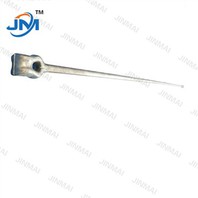
Overhead power lines are a common sight in both urban and rural landscapes, serving as the arteries of electrical power distribution. These lines are equipped with various overhead line fittings, which play a crucial role not only in the mechanical support and connection of the conductors but also in influencing the electromagnetic field around the overhead lines. As a reliable overhead line fitting supplier, we understand the significance of these components and their impact on the electromagnetic environment. In this blog, we will explore how overhead line fittings affect the electromagnetic field around overhead lines.
Understanding the Basics of Electromagnetic Fields around Overhead Lines
Before delving into the impact of overhead line fittings, it is essential to understand the basic principles of electromagnetic fields generated by overhead lines. When an alternating current (AC) flows through an overhead line, it creates both an electric field and a magnetic field around the conductor. The electric field is produced by the voltage difference between the conductor and the ground or other conductors, while the magnetic field is generated by the current flowing through the conductor.
The strength of the electric field is proportional to the voltage of the line, and it is measured in volts per meter (V/m). The magnetic field strength is proportional to the current in the conductor and is measured in amperes per meter (A/m). These electromagnetic fields extend into the surrounding space and can have various effects on the environment and nearby objects.
The Role of Overhead Line Fittings
Overhead line fittings are a diverse group of components used for different purposes in overhead power transmission and distribution systems. They include insulators, clamps, connectors, tension devices, and cross - arms, among others. Overhead Pole Line Hardware is an important category of these fittings, which helps in the proper installation and support of the power lines.
Insulators are designed to isolate the conductors from the poles or towers, preventing electrical current from flowing into the supporting structures. They are typically made of materials such as porcelain, glass, or composite polymers. The shape and material of insulators can affect the distribution of the electric field around the conductors. For example, insulators with a complex shape may cause local distortions in the electric field, which can lead to corona discharge under certain high - voltage conditions.
Clamps and connectors are used to join different sections of conductors or to connect conductors to other components. They ensure a secure and low - resistance electrical connection. Poorly designed or installed clamps can cause uneven current distribution in the conductors, which in turn can affect the magnetic field pattern around the lines. Uneven current distribution can result in hot spots in the conductors and may also produce additional electromagnetic interference.
Cross - arms, like the Cable Accessories Iron Cross Arm, are used to support the conductors at a certain height and spacing. The material and geometry of cross - arms can influence the electromagnetic field. For instance, metal cross - arms can act as conductors to some extent, and they may interact with the magnetic field of the power lines, causing eddy currents to be induced in them. These eddy currents can create additional magnetic fields that can interfere with the original magnetic field of the lines.
Effects of Overhead Line Fittings on the Electric Field
Distortion of Electric Field
The presence of overhead line fittings can cause local distortions in the electric field around the overhead lines. Insulators, for example, have a different dielectric constant compared to air. When an electric field passes through an insulator, the field lines are refracted according to the principles of electrostatics. This can lead to regions of high and low electric field intensity around the insulator. In extreme cases, if the electric field intensity exceeds the breakdown strength of the air, corona discharge can occur. Corona discharge is the ionization of the air around the conductor, which can cause power loss, radio interference, and audible noise.
Shielding Effect
Some overhead line fittings can act as shields for the electric field. Metal components such as clamps and cross - arms can redirect the electric field lines. If a metal component is properly grounded, it can effectively reduce the electric field strength in the vicinity of the fitting. However, if the grounding is inadequate, the metal component may accumulate electrical charges, which can cause unexpected electric field distribution and potential safety hazards.
Effects of Overhead Line Fittings on the Magnetic Field
Eddy Currents
As mentioned earlier, metal overhead line fittings such as cross - arms and certain types of clamps can experience eddy currents when they are exposed to the changing magnetic field of the overhead lines. Eddy currents are circular electric currents induced within conductors by a changing magnetic field. These eddy currents generate their own magnetic fields, which oppose the original magnetic field, in accordance with Lenz's law. This interaction can cause power losses in the form of heat dissipation in the fittings. Additionally, the additional magnetic fields created by the eddy currents can distort the overall magnetic field pattern around the overhead lines.
Magnetic Coupling
Overhead line fittings can also be magnetically coupled to the conductors. When the current in the conductors changes, the magnetic field around them also changes. This changing magnetic field can induce voltages in nearby metal fittings, creating a magnetic coupling effect. If the induced voltages are significant, they can cause electrical interference in nearby sensitive equipment, such as communication devices or electrical measuring instruments.


Mitigation of Electromagnetic Field Effects
As an overhead line fitting supplier, we are aware of the importance of minimizing the negative effects of overhead line fittings on the electromagnetic field. One way to reduce the distortion of the electric field is to use well - designed insulators with smooth surfaces and appropriate shapes. Advanced insulator materials can also help to improve the dielectric performance and reduce the likelihood of corona discharge.
To minimize the eddy currents and magnetic coupling effects, we can choose non - magnetic or low - magnetic materials for the overhead line fittings. For example, instead of using traditional iron cross - arms, we can offer Hot Dip Galvanized Secondary Clevis or other fittings made of non - ferromagnetic materials. These materials are less likely to be affected by the magnetic field of the overhead lines, reducing power losses and electromagnetic interference.
Importance for Power Utilities and End - Users
For power utilities, understanding the impact of overhead line fittings on the electromagnetic field is crucial for ensuring the reliable operation of the power grid and complying with electromagnetic field safety standards. By using high - quality overhead line fittings, power utilities can reduce power losses, improve the efficiency of power transmission, and minimize the risk of equipment failure due to electromagnetic interference.
For end - users, especially those living or working near overhead lines, the electromagnetic field generated by the lines and fittings can be a concern. Excessive exposure to electromagnetic fields may have potential health effects, although the scientific evidence on this issue is still being debated. By using overhead line fittings that minimize the electromagnetic field impact, power utilities can help to address these concerns and provide a safer environment for the public.
Conclusion
In conclusion, overhead line fittings have a significant impact on the electromagnetic field around overhead lines. They can cause local distortions in the electric field, lead to the generation of eddy currents and magnetic coupling, and affect the overall electromagnetic environment. As an established overhead line fitting supplier, we are committed to providing high - quality fittings that can minimize these negative effects. Our products, such as Overhead Pole Line Hardware, Cable Accessories Iron Cross Arm, and Hot Dip Galvanized Secondary Clevis, are designed to meet the highest standards of safety, efficiency, and electromagnetic compatibility.
If you are a power utility or other customer in need of overhead line fittings, we encourage you to contact us for a detailed discussion on your requirements. Our experienced team can assist you in selecting the most suitable fittings to ensure the reliable operation of your power system and minimize the impact on the electromagnetic environment.
References
- Grover, F. W. (1946). Inductance Calculations: Working Formulas and Tables. Dover Publications.
- Nilsson, J. W., & Riedel, S. A. (2015). Electric Circuits. Pearson.
- IEEE Standards Association. (2019). IEEE Recommended Practice for Measurements of Power - Frequency Electric and Magnetic Fields from AC Power Lines.