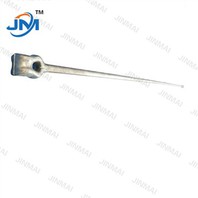
As an overhead line fitting supplier, I've seen firsthand how these components can make or break the performance of overhead lines. In this blog, I'll dive into the nitty - gritty of how overhead line fittings affect the performance of overhead lines, and why choosing the right ones is crucial.
Electrical Conductivity and Resistance
One of the most fundamental aspects of overhead line performance is electrical conductivity. Overhead line fittings need to have low resistance to ensure that electricity can flow smoothly through the lines. When the resistance is high, it leads to power losses in the form of heat. For example, connectors, which are a type of overhead line fitting, need to provide a solid and low - resistance connection between conductors. A poor - quality connector can increase the resistance at the connection point, causing local heating. This not only wastes energy but can also damage the conductors over time.
Let's say you're using Overhead Pole Line Hardware. These include things like clamps and insulators. Clamps are used to hold conductors in place. If a clamp doesn't make a good electrical connection, it can lead to increased resistance. And as we know, increased resistance means more power loss. So, when you're looking at overhead pole line hardware, make sure it's designed to have low resistance and good conductivity.

Mechanical Strength and Stability
Overhead lines are constantly exposed to various mechanical forces. Wind, ice, and even the weight of the conductors themselves can put a lot of stress on the lines. Overhead line fittings play a key role in providing mechanical strength and stability.
Insulators, for instance, are designed to support the conductors while keeping them electrically isolated from the poles. They need to be strong enough to withstand the mechanical loads. A weak insulator can break under stress, leading to a short - circuit or even a power outage. Similarly, cross - arms are used to support the insulators and conductors. Galvanized Cross Arm is a popular choice because of its corrosion resistance and high strength. A well - designed cross - arm can distribute the weight of the conductors evenly, reducing the stress on individual components and ensuring the overall stability of the overhead line.

Another aspect of mechanical stability is the ability to withstand vibrations. Overhead lines can vibrate due to wind or electrical currents. Fittings like dampers are used to reduce these vibrations. If vibrations are not controlled, they can cause fatigue in the conductors and fittings, leading to premature failure.
Corrosion Resistance
Overhead lines are often installed in outdoor environments, where they are exposed to moisture, chemicals, and other corrosive agents. Corrosion can weaken the fittings and conductors, reducing their performance and lifespan.
That's why corrosion resistance is so important in overhead line fittings. Galvanization is a common method used to protect fittings from corrosion. Galvanized fittings have a zinc coating that acts as a barrier between the metal and the environment. This coating corrodes first, protecting the underlying metal. For example, many of the components in Electric Power Stringing are galvanized to ensure long - term durability.

If you don't use corrosion - resistant fittings, you'll find that they start to deteriorate quickly. Rust can form on the surface, which not only looks bad but also weakens the structure. In extreme cases, corroded fittings can break, causing power outages and safety hazards.
Insulation Properties
Insulation is a critical factor in the performance of overhead lines. Insulators are used to prevent electrical current from flowing into the poles or other non - conductive parts of the system. They need to have high insulation resistance to ensure electrical safety.
The quality of the insulation material used in fittings can have a big impact on performance. For example, porcelain insulators are known for their good insulation properties and mechanical strength. However, they can be brittle and prone to cracking. Composite insulators, on the other hand, are lighter and more flexible, making them less likely to break. But they need to be carefully designed to maintain their insulation properties over time.

A faulty insulator can lead to electrical leakage, which not only wastes power but can also pose a safety risk. It can cause electrical shocks to people or animals and can damage other equipment in the system.
Compatibility and Ease of Installation
Overhead line fittings need to be compatible with each other and with the conductors they are used with. If the fittings are not compatible, it can lead to installation problems and poor performance.
For example, the size and shape of a connector need to match the conductor it's supposed to connect. If the connector is too small, it won't make a proper connection, and if it's too large, it may not hold the conductor securely. Similarly, insulators need to be compatible with the type of voltage and environment they are used in.
Ease of installation is also important. Fittings that are difficult to install can increase the installation time and cost. They may also lead to installation errors, which can affect the performance of the overhead line. As a supplier, we focus on providing fittings that are easy to install, with clear instructions and all the necessary components included.
Impact on Maintenance and Reliability
The right overhead line fittings can significantly reduce the maintenance requirements of overhead lines. Fittings that are durable, corrosion - resistant, and well - designed are less likely to fail, which means fewer maintenance visits.
For example, if you use high - quality insulators, you won't have to replace them as often. This not only saves money but also reduces the downtime of the overhead line. Similarly, corrosion - resistant fittings don't require frequent painting or coating to prevent rust.
Reliability is also closely related to maintenance. A reliable overhead line system is one that can operate continuously without frequent breakdowns. By choosing the right fittings, you can improve the reliability of your overhead lines, ensuring a stable power supply.
Why Choose Our Overhead Line Fittings
As an overhead line fitting supplier, we understand the importance of all these factors. Our products are designed to have low resistance, high mechanical strength, excellent corrosion resistance, and good insulation properties. We offer a wide range of Overhead Pole Line Hardware, Electric Power Stringing components, and Galvanized Cross Arm to meet your specific needs.
We also focus on compatibility and ease of installation. Our team is always available to provide technical support and help you choose the right fittings for your project. Whether you're building a new overhead line or upgrading an existing one, we can offer you the best solutions.
If you're in the market for overhead line fittings, I encourage you to get in touch with us. We can have a detailed discussion about your requirements and provide you with a quote. Choosing the right overhead line fittings is an investment in the performance and reliability of your overhead lines. So, don't hesitate to reach out and start the conversation.
References
- Electrical Power Systems: A Conceptual Introduction by Daniel A. Becker
- Overhead Transmission Line Engineering by John P. Bentley
- Insulators for High - Voltage Systems by E. Kuffel, W. S. Zaengl, and J. Kuffel