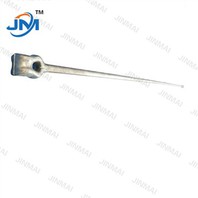
Hey there! As a supplier of overhead line fittings, I've seen firsthand how these little pieces of hardware play a huge role in keeping our power lines up and running. One of the most critical aspects of their job is handling mechanical stress. So, let's dive into how overhead line fittings deal with this challenge.
Understanding Mechanical Stress in Overhead Lines
Before we talk about how the fittings handle stress, we need to understand what kind of stress we're dealing with. Overhead lines are exposed to all sorts of mechanical forces. Wind is a big one. Strong gusts can push and pull on the lines, creating tension and compression. Ice and snow can also add a significant amount of weight, increasing the stress on the fittings. And then there's the normal wear and tear from the movement of the lines themselves, like when they sway in the breeze.
How Fittings are Designed to Handle Stress
Material Selection
The first line of defense in handling mechanical stress is the choice of materials. We use high - strength metals like steel and aluminum. Steel is known for its incredible strength and durability. It can withstand high levels of tension and compression without deforming. For example, our Cable Accessories Iron Cross Arm is made from high - quality iron, which gives it the ability to support heavy cables and resist the forces of nature.


Aluminum, on the other hand, is lightweight but still has good strength - to - weight ratio. It's resistant to corrosion, which is important because overhead lines are often exposed to the elements. Many of our fittings, especially those used in areas with high humidity or near the coast, are made from aluminum to ensure long - term performance.
Structural Design
The design of the fittings is also crucial. Take the Steel Angle Cross Arm as an example. Its angular shape provides stability and distributes the load evenly across the structure. This helps to prevent any one point from bearing too much stress, which could lead to failure.
Some fittings are designed with flexible joints. These joints allow for a certain amount of movement, which helps to absorb the shock and vibration caused by mechanical stress. For instance, the Hot Dip Galvanized Secondary Clevis has a hinge - like design that allows it to pivot slightly. This flexibility can prevent the fitting from breaking under sudden loads.
Testing and Quality Control
We don't just rely on the design and materials to ensure that our fittings can handle mechanical stress. We also put them through rigorous testing. Tensile tests are used to measure the maximum amount of pulling force a fitting can withstand before it breaks. Compression tests are done to check how well the fitting can handle squeezing forces.
We also conduct fatigue tests. These tests simulate the repeated loading and unloading that the fittings will experience over their lifespan. By subjecting the fittings to thousands or even millions of cycles of stress, we can identify any potential weaknesses and make improvements to the design or manufacturing process.
Real - World Applications
In real - world scenarios, overhead line fittings have to perform under a wide range of conditions. In mountainous regions, where the terrain is uneven and the wind can be extremely strong, our fittings need to be able to adapt. They have to support the weight of the cables while also withstanding the lateral forces caused by the wind.
In urban areas, where space is limited and the lines are often close to buildings and other structures, the fittings need to be compact and reliable. They have to be able to handle the stress without interfering with the surrounding environment.
Maintenance and Inspection
Even the best - designed and tested fittings need regular maintenance and inspection. Over time, the mechanical stress can cause wear and tear on the fittings. Cracks, corrosion, and loosening of bolts can all compromise the performance of the fittings.
We recommend regular visual inspections to check for any signs of damage. If any issues are found, the fittings should be repaired or replaced immediately. This proactive approach can prevent costly failures and ensure the safety and reliability of the overhead lines.
Conclusion
So, as you can see, overhead line fittings are designed and engineered to handle mechanical stress in a variety of ways. From the selection of high - quality materials to the careful design and rigorous testing, every step is taken to ensure that these fittings can withstand the forces of nature and the normal wear and tear of everyday use.
If you're in the market for high - quality overhead line fittings that can handle mechanical stress with ease, look no further. We're here to provide you with the best products and services. Whether you're working on a small - scale project or a large - scale power transmission system, we have the right fittings for you. Contact us today to start a conversation about your specific needs and let's work together to find the perfect solutions for your overhead line projects.
References
- Electrical Transmission and Distribution Reference Book, General Electric Company
- Overhead Transmission Line Engineering Handbook, McGraw - Hill Professional