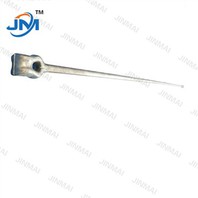
In the realm of electrical and construction industries, the performance of components under various environmental conditions is of utmost importance. One such component that often operates in challenging scenarios is the pigtail hook bolt. As a supplier of Pigtail Hook Bolts, I have witnessed firsthand the significance of understanding how these bolts perform in a vibration environment.
Understanding Pigtail Hook Bolts
Pigtail hook bolts are specialized fasteners that are commonly used in overhead power lines, telecommunications networks, and other applications where a secure connection is required. They are designed with a hook at one end and a threaded portion at the other, allowing them to be easily attached to various structures. The pigtail design provides flexibility and helps to accommodate movement and tension in the system.
The Impact of Vibration on Pigtail Hook Bolts
Vibration is a common phenomenon in many industrial and outdoor settings. It can be caused by a variety of factors, such as wind, machinery operation, or seismic activity. When pigtail hook bolts are exposed to vibration, several issues can arise:
Loosening of Fasteners
One of the primary concerns in a vibration environment is the loosening of fasteners. As the bolts vibrate, the threads can gradually unwind, leading to a loss of pre - load. This can compromise the integrity of the connection and potentially cause the bolt to come loose completely. In overhead power lines, for example, a loose pigtail hook bolt can result in the disconnection of cables, leading to power outages and safety hazards.
Fatigue Failure
Continuous vibration can also cause fatigue failure in pigtail hook bolts. The cyclic loading generated by the vibration can lead to the initiation and propagation of cracks in the bolt material. Over time, these cracks can grow and eventually cause the bolt to break. Fatigue failure is particularly dangerous because it can occur suddenly and without warning, posing a significant risk to the overall system.
Wear and Tear
Vibration can cause increased wear and tear on the pigtail hook bolts. The constant movement and friction between the bolt and the mating surfaces can lead to the erosion of the bolt material, reducing its strength and durability. Additionally, the hook portion of the bolt may experience bending and deformation due to the vibration, further affecting its performance.
Factors Affecting the Performance of Pigtail Hook Bolts in Vibration
Several factors can influence how pigtail hook bolts perform in a vibration environment:
Material Properties
The material of the pigtail hook bolt plays a crucial role in its vibration resistance. High - strength materials, such as alloy steels, are generally more resistant to fatigue and loosening compared to lower - strength materials. The material's hardness, toughness, and corrosion resistance also affect its performance over time. For example, a bolt made from a corrosion - resistant material will be less likely to degrade due to environmental factors, maintaining its integrity in a vibration environment.
Design Features
The design of the pigtail hook bolt can impact its performance in vibration. A well - designed bolt will have features that help to prevent loosening, such as locking mechanisms or a proper thread profile. The shape and size of the hook can also affect its ability to withstand vibration. For instance, a hook with a larger radius of curvature may be more resistant to bending and deformation under vibration.
Installation Methods
Proper installation is essential for ensuring the performance of pigtail hook bolts in a vibration environment. The correct torque should be applied during installation to achieve the desired pre - load. If the bolt is under - tightened, it will be more prone to loosening, while over - tightening can cause damage to the bolt or the mating surfaces. Additionally, the use of washers and other locking devices can help to prevent loosening and improve the overall stability of the connection.
Testing and Evaluation
To ensure the reliability of pigtail hook bolts in a vibration environment, extensive testing and evaluation are necessary. There are several standard tests that can be used to assess the performance of these bolts:


Vibration Testing
Vibration testing involves subjecting the pigtail hook bolts to controlled levels of vibration for a specified period. During the test, the bolts are monitored for signs of loosening, fatigue, or other forms of damage. The test can be conducted using different frequencies and amplitudes of vibration to simulate real - world conditions.
Fatigue Testing
Fatigue testing is used to determine the fatigue life of the pigtail hook bolts. The bolts are subjected to cyclic loading until failure occurs. The test results can be used to estimate the number of cycles the bolts can withstand under a given load, which is important for predicting their long - term performance in a vibration environment.
Corrosion Testing
Since corrosion can also affect the performance of pigtail hook bolts in a vibration environment, corrosion testing is often conducted. The bolts are exposed to a corrosive environment for a certain period, and their corrosion resistance is evaluated. This helps to ensure that the bolts will maintain their strength and integrity over time, even in harsh outdoor conditions.
Our Solutions as a Supplier
As a supplier of Pigtail Hook Bolts, we are committed to providing high - quality products that can perform well in a vibration environment. We use advanced materials and manufacturing processes to ensure the strength and durability of our bolts. Our bolts are designed with features that enhance their vibration resistance, such as locking mechanisms and optimized thread profiles.
We also offer comprehensive testing and certification services to ensure that our products meet the highest standards. Before shipping, each batch of pigtail hook bolts undergoes rigorous testing to ensure its performance in vibration and other environmental conditions. We can also provide technical support and advice to our customers on the proper selection, installation, and maintenance of our products.
In addition to pigtail hook bolts, we also supply related products such as Hardware Pole Line Hook and Pig tail ball head, which can be used in conjunction with our pigtail hook bolts to create a more robust and reliable system.
Conclusion
In conclusion, the performance of pigtail hook bolts in a vibration environment is a critical factor in ensuring the safety and reliability of various electrical and construction systems. Understanding the impact of vibration on these bolts, as well as the factors that affect their performance, is essential for selecting the right products and ensuring proper installation and maintenance.
As a supplier, we are dedicated to providing high - quality pigtail hook bolts and related products that can withstand the challenges of a vibration environment. If you are in need of pigtail hook bolts or other cable components, we invite you to contact us for a detailed discussion on your specific requirements. We look forward to the opportunity to work with you and provide you with the best solutions for your projects.
References
- "Mechanical Fasteners Handbook" by John H. Bickford
- "Fatigue of Materials" by Steven S. Manson
- Industry standards related to electrical and construction fasteners