Hey there! As a supplier of Pin Type Insulators, I've been getting a lot of questions lately about how these insulators perform in areas with high humidity and high temperature. So, I thought I'd write this blog to share my insights and experiences on this topic.
First off, let's talk about what pin type insulators are. Pin type insulators are one of the most commonly used insulators in overhead power lines. They're designed to support the conductors and prevent electrical current from flowing into the supporting structure. They're usually made of materials like porcelain or composite polymers, which have good insulating properties.
Now, when it comes to high humidity and high temperature areas, these conditions can really put a strain on pin type insulators. High humidity means there's a lot of moisture in the air, and this moisture can condense on the surface of the insulators. When that happens, it can create a conductive path for electricity, which is a big no - no. High temperature, on the other hand, can cause the materials of the insulator to expand and contract. Over time, this can lead to cracks and other forms of damage, reducing the insulator's effectiveness.
Let's start with the impact of high humidity. Moisture on the surface of the insulator can lead to a phenomenon called surface leakage current. This is when a small amount of electrical current flows along the surface of the insulator instead of staying within the conductor. Surface leakage current can cause the insulator to heat up, and if it gets too hot, it can damage the insulator. In some cases, it can even lead to flashovers, which are sudden electrical discharges that can disrupt the power supply.
But don't worry! There are ways to deal with high humidity. One of the most effective ways is to use insulators with hydrophobic surfaces. Hydrophobic materials repel water, so the moisture doesn't stick to the surface of the insulator. This reduces the risk of surface leakage current and flashovers. For example, some of our composite pin type insulators are made with hydrophobic polymers that can withstand high humidity conditions.
Another thing we can do is to increase the creepage distance of the insulator. Creepage distance is the shortest distance along the surface of the insulator between two conductive parts. By increasing this distance, we can reduce the likelihood of surface leakage current. Our engineers design our insulators with long and complex shapes to maximize the creepage distance, especially for areas with high humidity.
Now, let's move on to high temperature. High temperatures can have a significant impact on the mechanical and electrical properties of the insulator. For porcelain insulators, high temperatures can cause the porcelain to become brittle. This makes it more likely to crack under mechanical stress, such as wind or ice loading. For composite insulators, high temperatures can cause the polymer materials to degrade. This can reduce the insulator's hydrophobicity and mechanical strength.
To deal with high temperature, we use materials that have high thermal stability. For our composite insulators, we use special polymers that can withstand high temperatures without significant degradation. We also conduct extensive testing on our insulators in high - temperature environments to ensure they meet the required standards.
In addition to the material selection, proper installation and maintenance are also crucial in high - humidity and high - temperature areas. During installation, it's important to make sure the insulators are properly tightened and aligned. Loose insulators can vibrate, which can lead to damage over time. Regular maintenance, such as cleaning the insulators, can also help remove any dirt or contaminants that might increase the risk of surface leakage current.
Now, I want to mention some of the other products we offer that can work in conjunction with our pin type insulators. We have Hot Dip Galvanized Strand Ground Clamps. These ground clamps are used to connect the grounding strand to the power line components. They're made with hot - dip galvanized steel, which provides excellent corrosion resistance, making them suitable for high - humidity and high - temperature areas.
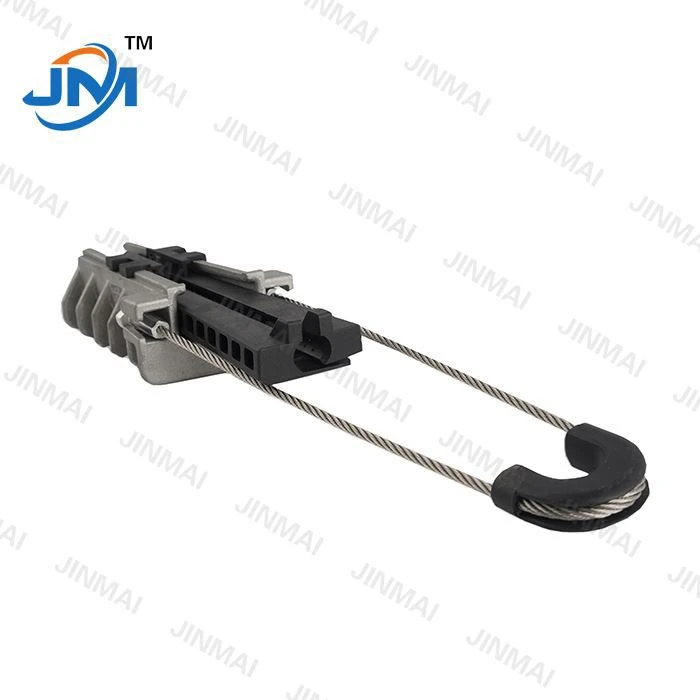
We also offer Insulated Wedge Clamps. These clamps are used to secure the conductors to the insulators. They have good insulation properties and can withstand the environmental conditions in areas with high humidity and high temperature.
And for pole - related applications, we have Galvanized Pole Hook. These hooks are made of galvanized steel, which is resistant to rust and corrosion, making them ideal for outdoor use in harsh environments.

If you're in an area with high humidity and high temperature and you're looking for reliable pin type insulators and related products, we're here to help. Our products are designed and tested to meet the toughest conditions. Whether you're a utility company, an electrical contractor, or involved in any other power - related project, we can provide you with the right solutions.
So, if you're interested in learning more about our products or want to discuss your specific requirements, don't hesitate to reach out. We're always happy to have a chat and help you find the best products for your needs.
References
- Electrical Insulation Handbook, McGraw - Hill
- IEEE Standards for Insulators in Power Systems