Twisted - pair cables are a fundamental part of modern communication and electrical systems. As a dedicated cable components supplier, I have witnessed firsthand the diverse and critical uses of various twisted - pair cable components. In this blog, I will delve into the different applications of these components, highlighting their significance in multiple industries.
1. Telecommunication Networks
One of the most well - known uses of twisted - pair cable components is in telecommunication networks. Twisted - pair cables are the backbone of many local area networks (LANs), including Ethernet networks. The components such as connectors and jacks play a vital role in ensuring reliable data transmission.


Connectors are used to terminate the twisted - pair cables, allowing them to be easily connected to devices like computers, routers, and switches. For example, the RJ - 45 connector is extremely common in Ethernet networks. It provides a secure and standardized connection, enabling high - speed data transfer. The quality of the connector is crucial, as a poor - quality connector can lead to signal loss, interference, and ultimately, reduced network performance.
Jacks, on the other hand, are installed on devices or wall plates. They provide a receptacle for the connectors, facilitating the connection between the cable and the device. A well - designed jack ensures proper alignment and contact with the connector, which is essential for maintaining signal integrity.
In addition to LANs, twisted - pair cables are also used in telephone networks. The components used in telephone networks are often different from those in Ethernet networks. For instance, the RJ - 11 connector is commonly used for telephone connections. It is smaller than the RJ - 45 and is designed to handle voice signals. The twisted - pair cables in telephone networks help to reduce electromagnetic interference, ensuring clear and crisp voice communication.
2. Security Systems
Twisted - pair cable components are also widely used in security systems. Surveillance cameras, access control systems, and alarm systems all rely on these cables for data and power transmission.
In surveillance systems, twisted - pair cables are used to connect cameras to the recording devices or monitors. Components such as baluns are often used to convert the coaxial signals used by some cameras into a format suitable for twisted - pair cables. Baluns help to extend the transmission distance and improve the signal quality.
Access control systems, which manage who can enter a building or a specific area, also use twisted - pair cables. The components in these systems, such as door sensors and card readers, are connected using these cables. The twisted - pair cables ensure that the signals from these devices are accurately transmitted to the control panel, allowing for proper access management.
Alarm systems, whether for intrusion detection or fire detection, rely on twisted - pair cables to transmit signals from sensors to the alarm control unit. The components in these systems, such as sensors and relays, are connected using high - quality cables and connectors. This ensures that the alarm system functions reliably and can quickly alert the appropriate authorities in case of an emergency.
3. Audio and Video Systems
Another important application of twisted - pair cable components is in audio and video systems. Twisted - pair cables can be used to transmit both audio and video signals over relatively long distances.
In audio systems, twisted - pair cables are used to connect speakers, amplifiers, and audio mixers. Components such as XLR connectors are commonly used in professional audio setups. XLR connectors provide a balanced connection, which helps to reduce noise and interference. This is particularly important in live sound environments, where high - quality audio is essential.
For video systems, twisted - pair cables can be used to transmit high - definition video signals. Components such as HDMI extenders based on twisted - pair technology are becoming increasingly popular. These extenders allow for the transmission of HDMI signals over longer distances than traditional HDMI cables. This is useful in applications such as large - scale video installations, where the display devices may be located far from the video source.
4. Industrial Automation
In the field of industrial automation, twisted - pair cable components are essential for communication between various devices. Programmable logic controllers (PLCs), sensors, and actuators are all connected using twisted - pair cables.
PLCs are used to control industrial processes, and they need to communicate with sensors and actuators to perform their functions. Twisted - pair cables provide a reliable means of communication between these devices. Components such as M12 connectors are commonly used in industrial environments. M12 connectors are designed to be robust and resistant to environmental factors such as dust, moisture, and vibration.
Sensors in industrial automation, such as temperature sensors, pressure sensors, and proximity sensors, use twisted - pair cables to transmit data to the control system. The components in these sensor systems ensure accurate and timely data transmission, which is crucial for process control and monitoring.
Actuators, such as motors and valves, are also connected using twisted - pair cables. The components in these actuator systems help to control the movement and operation of the actuators, ensuring that the industrial processes run smoothly.
5. Power Distribution
Twisted - pair cables can also be used for power distribution in some applications. While they are not as commonly used as traditional power cables, they have some advantages in certain situations.
In low - voltage power distribution systems, twisted - pair cables can be used to supply power to small devices. Components such as power connectors are used to connect the cables to the devices. The twisted - pair configuration helps to reduce electromagnetic interference, which is beneficial for sensitive electronic devices.
For example, in some smart home systems, twisted - pair cables can be used to distribute power to sensors and other low - power devices. The components in these systems are designed to be energy - efficient and reliable, ensuring that the devices receive the necessary power to function properly.
Specific Twisted - Pair Cable Components and Their Uses
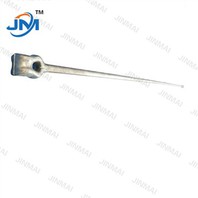
- Pigtail Hook Bolts: Pigtail Hook Bolts are useful in situations where a cable needs to be securely attached to a structure. They can be used in outdoor installations, such as attaching twisted - pair cables to poles or fences. The hook design allows for easy installation and removal, while the bolt ensures a tight and stable connection.
- Pig tail ball head: Pig tail ball head is often used in applications where a flexible connection is required. It can be used to connect cables to devices or structures in a way that allows for some movement. This is useful in situations where there may be vibrations or where the cable needs to be adjusted.
- Cable Pole Hook: Cable Pole Hook is specifically designed for attaching cables to poles. It provides a convenient and secure way to mount twisted - pair cables on poles, which is common in telecommunication and power distribution networks.
Conclusion
As a cable components supplier, I understand the importance of providing high - quality twisted - pair cable components. These components are used in a wide range of industries, from telecommunication and security to audio and video systems, industrial automation, and power distribution. Each application has its own specific requirements, and it is essential to choose the right components to ensure reliable and efficient operation.
If you are in need of twisted - pair cable components for your project, I encourage you to reach out to me for a detailed discussion. I can provide you with the expertise and products you need to make your project a success. Whether you are working on a small - scale home installation or a large - scale industrial project, I am here to assist you.
References
- "Telecommunication Cabling Systems for Commercial Buildings" by the Telecommunications Industry Association (TIA).
- "Industrial Ethernet: Technology, Standards, and Applications" by Michael J. Schulz.
- "Audio Engineering Handbook" by Richard Bass, Tim eargle, and others.