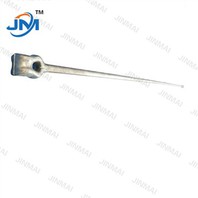
Galvanized cross arms are essential components in overhead power transmission and distribution systems. They are used to support the conductors and insulators, ensuring the stability and safety of the entire line. As a leading Galvanized Cross Arm supplier, we understand the significance of the shape of these cross arms in determining their performance. In this blog, we will explore how different shapes of galvanized cross arms can affect their performance.
1. Basic Shapes of Galvanized Cross Arms
Galvanized cross arms come in various shapes, each designed to meet specific requirements in different scenarios. The most common shapes include the straight - shaped cross arm, the L - shaped cross arm, and the V - shaped cross arm.
The straight - shaped cross arm is the simplest and most widely used. It provides a horizontal platform for mounting insulators and conductors. This shape is suitable for situations where the conductors are arranged in a relatively simple and parallel manner. For example, in rural areas with low - voltage distribution lines, straight - shaped cross arms are often sufficient to support the power lines.
The L - shaped cross arm, also known as the Steel Angle Cross Arm, has a 90 - degree bend. It is useful when the conductors need to be arranged at a right - angle, such as at the corners of a power line network. This shape allows for a more flexible layout of the conductors, adapting to the geographical constraints of the installation site.
The V - shaped cross arm consists of two arms that form a V - like structure. It is designed to provide better support for heavy conductors or in areas with high wind loads. The V - shape distributes the weight of the conductors more evenly and enhances the stability of the cross arm against external forces.
2. Impact on Structural Strength
The shape of a galvanized cross arm significantly influences its structural strength. A well - designed shape can ensure that the cross arm can withstand the various loads it is subjected to during its service life.
The straight - shaped cross arm has a relatively simple load - bearing mechanism. The weight of the conductors and insulators is evenly distributed along the length of the arm. However, it may be more vulnerable to bending moments, especially when the conductors are unevenly loaded or when there are strong lateral forces such as wind. To enhance its strength, additional reinforcement may be required, such as using thicker galvanized steel or adding stiffeners.
The L - shaped cross arm has a more complex load - distribution pattern. At the bend, there are higher stress concentrations compared to the straight sections. Therefore, the design of the L - shaped cross arm needs to take into account these stress concentrations to prevent failure. Special manufacturing processes, such as proper welding or bending techniques, are crucial to ensure the integrity of the structure at the bend.
The V - shaped cross arm, on the other hand, is more efficient in distributing loads. The V - shape allows the cross arm to better resist vertical and horizontal forces. The two arms of the V - shape work together to counteract the bending and torsional moments, providing a more stable support for the conductors. This makes the V - shaped cross arm a preferred choice in areas with harsh environmental conditions, such as coastal regions with strong winds or mountainous areas with heavy snowfall.

3. Influence on Conductor Arrangement
The shape of the galvanized cross arm also affects the arrangement of the conductors. Different shapes offer different possibilities for conductor placement, which in turn can impact the overall performance of the power line.
With a straight - shaped cross arm, conductors are typically arranged in a parallel manner. This is a straightforward and common arrangement, suitable for most standard power distribution systems. However, it may have limitations in terms of flexibility, especially when dealing with complex line layouts or when there is a need to increase the number of conductors in a limited space.
The Steel Angle Cross Arm allows for a more diverse conductor arrangement. The 90 - degree bend enables the conductors to be placed at a right - angle, which can be useful for creating branches or changing the direction of the power line. This shape can also be used to separate different voltage levels of conductors, reducing the risk of interference between them.
The V - shaped cross arm can accommodate a greater number of conductors in a more compact space. The V - shape provides a wider support base, allowing for a more efficient use of the available space. This is particularly beneficial in urban areas where space is limited and there is a high demand for power transmission.
4. Effects on Corrosion Resistance
Galvanization is a process that coats the cross arm with a layer of zinc to protect it from corrosion. The shape of the cross arm can affect the quality of the galvanized coating and, consequently, its corrosion resistance.
In a straight - shaped cross arm, the galvanizing process is relatively straightforward. The uniform shape allows for an even distribution of the zinc coating, ensuring consistent corrosion protection along the entire length of the arm. However, if there are any sharp edges or corners, the zinc coating may be thinner in these areas, increasing the risk of corrosion.
The L - shaped cross arm has more complex geometry, which can pose challenges in the galvanizing process. At the bend, the zinc coating may be less uniform due to the difficulty in ensuring proper coverage. Special attention needs to be paid during the galvanizing process to ensure that the coating thickness at the bend meets the required standards. Otherwise, the cross arm may be more prone to corrosion at this critical point.
The V - shaped cross arm also has a complex shape, but its design can be optimized to improve the galvanizing process. By carefully designing the angle and curvature of the V - shape, it is possible to ensure a more even distribution of the zinc coating. Additionally, the V - shape can help to drain any accumulated water, reducing the risk of corrosion caused by moisture retention.
5. Compatibility with Other Fittings
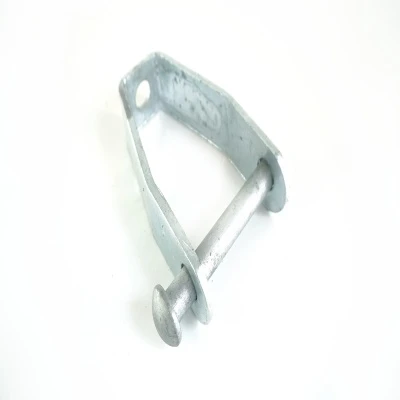
Galvanized cross arms need to be compatible with other fittings in the power line system, such as insulators and Hot Dip Galvanized Secondary Clevis. The shape of the cross arm can affect its compatibility with these fittings.
The straight - shaped cross arm is highly compatible with standard - type insulators and fittings. Its simple shape allows for easy installation and connection with other components. Most off - the - shelf insulators and fittings are designed to be used with straight - shaped cross arms, making it a convenient choice for many power line installations.
The L - shaped cross arm may require special - designed insulators and fittings to ensure a proper fit. Due to its 90 - degree bend, the connection points and angles need to be carefully considered to ensure a secure and reliable installation. However, with the right selection of compatible fittings, the L - shaped cross arm can be effectively integrated into the power line system.
The V - shaped cross arm also requires specific fittings to match its unique shape. The V - shape may require custom - made insulators or brackets to ensure that the conductors are properly supported and connected. This may increase the cost and complexity of the installation, but it can also provide a more optimized solution for specific applications.
6. Cost - effectiveness
The shape of a galvanized cross arm also has an impact on its cost - effectiveness. Different shapes have different manufacturing costs, installation requirements, and maintenance needs.
The straight - shaped cross arm is generally the most cost - effective option. Its simple design and manufacturing process result in lower production costs. Additionally, its ease of installation and compatibility with standard fittings reduce the overall installation cost. Maintenance is also relatively straightforward, as there are fewer complex components to inspect and repair.
The L - shaped cross arm may be more expensive due to its more complex manufacturing process. The additional steps required to form the 90 - degree bend and ensure proper galvanizing at the bend increase the production cost. Installation may also be more labor - intensive, as it requires more precise alignment and connection. However, its ability to adapt to specific installation requirements can justify the higher cost in certain situations.
The V - shaped cross arm is usually the most expensive option. Its complex design and manufacturing process, along with the need for custom - made fittings, result in higher costs. However, in areas with high wind loads or heavy conductor weights, the V - shaped cross arm can provide better long - term performance, reducing the risk of failures and maintenance costs over its service life.
7. Conclusion and Call to Action
In conclusion, the shape of a galvanized cross arm plays a crucial role in determining its performance in terms of structural strength, conductor arrangement, corrosion resistance, compatibility with other fittings, and cost - effectiveness. As a Galvanized Cross Arm supplier, we offer a wide range of cross arm shapes to meet the diverse needs of our customers.
Whether you are planning a new power line installation or upgrading an existing one, choosing the right shape of the galvanized cross arm is essential. Our team of experts can provide you with professional advice and guidance to help you select the most suitable cross arm for your specific project.
If you are interested in learning more about our galvanized cross arms or would like to discuss your requirements, please feel free to contact us. We are committed to providing high - quality products and excellent customer service to ensure the success of your power line projects.
References
- Smith, J. (2018). Design and Analysis of Overhead Power Line Cross Arms. Power Engineering Journal, 25(3), 123 - 135.
- Johnson, M. (2019). Galvanization and Corrosion Protection of Steel Structures in Power Transmission Systems. Corrosion Science, 45(2), 89 - 102.
- Brown, A. (2020). Structural Optimization of Galvanized Cross Arms for Overhead Power Lines. Structural Engineering Review, 32(4), 211 - 225.