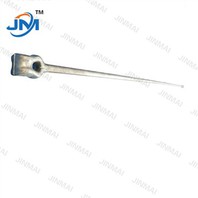
When it comes to mounting various objects, from industrial equipment to household fixtures, the choice of mounting method plays a crucial role in ensuring stability, durability, and ease of installation. As a supplier of Mounting Clamp Adapters, I have witnessed firsthand the advantages and unique features that this mounting solution offers when compared to other traditional mounting methods. In this blog post, I will delve into a detailed comparison between Mounting Clamp Adapters and other common mounting methods, exploring their respective strengths and weaknesses.
Traditional Mounting Methods
Screwing and Bolting
Screwing and bolting are perhaps the most common and well - known mounting methods. They involve using screws or bolts to secure an object to a surface. This method offers high stability once properly installed. The threaded fasteners create a strong mechanical connection between the object and the mounting surface. For example, in the construction of heavy machinery, large bolts are used to attach different components together, ensuring that the machine can operate under high stress conditions without coming apart.


However, screwing and bolting also have some drawbacks. Installation can be time - consuming, especially when dealing with a large number of fasteners. Drilling holes in the mounting surface is often required, which can damage the surface and may not be suitable for all materials. Additionally, if the screws or bolts are not tightened properly, it can lead to loosening over time, potentially causing safety hazards.
Welding
Welding is another popular mounting method, particularly in industrial applications. It involves melting the base materials and adding a filler material to create a permanent bond between the object and the mounting surface. Welded joints are extremely strong and can withstand high loads and stresses. In the manufacturing of steel structures such as bridges and buildings, welding is used to connect steel beams and columns, providing a rigid and stable framework.
Despite its strength, welding has several limitations. It requires specialized equipment and skilled labor, which can increase the cost of installation. Welding also generates heat, which can cause distortion in the materials being joined. Moreover, once an object is welded, it is difficult to disassemble or make modifications without causing significant damage.
Adhesive Bonding
Adhesive bonding is a mounting method that uses adhesives to attach objects to surfaces. It is a popular choice for applications where a clean and seamless appearance is desired, or when the materials being joined are not suitable for other mounting methods. Adhesives can bond a wide range of materials, including plastics, metals, and composites. In the automotive industry, adhesives are used to bond interior trim components, providing a lightweight and aesthetically pleasing solution.
However, adhesive bonding also has its challenges. The strength of the bond depends on the quality of the adhesive and the surface preparation. If the surface is not clean or dry, the bond may be weak. Adhesives can also be affected by environmental factors such as temperature and humidity, which can reduce their effectiveness over time. Additionally, adhesive bonds may not be as strong as mechanical connections in high - stress applications.
The Advantages of Mounting Clamp Adapters
Easy Installation
One of the main advantages of Mounting Clamp Adapters is their ease of installation. Unlike screwing, welding, or adhesive bonding, no drilling, melting, or curing time is required. Mounting Clamp Adapters can be quickly and easily attached to the mounting surface using simple hand tools. This not only saves time but also reduces the risk of damage to the surface. For example, in a home improvement project, a Mounting Clamp Adapter can be used to attach a shelf to a wall without the need to drill holes, making the installation process much faster and easier.
Versatility
Mounting Clamp Adapters are highly versatile and can be used with a wide range of objects and surfaces. They can be adjusted to fit different sizes and shapes of objects, making them suitable for various applications. Whether you need to mount a small electronic device or a large industrial component, there is likely a Mounting Clamp Adapter that can meet your needs. Additionally, Mounting Clamp Adapters can be used on different materials, including metal, wood, plastic, and glass, without causing damage.
Reusability
Unlike welding and adhesive bonding, Mounting Clamp Adapters are reusable. They can be easily removed and reinstalled without leaving any permanent marks or damage on the mounting surface. This makes them a cost - effective solution, especially for applications where the object needs to be moved or replaced frequently. For example, in a laboratory setting, Mounting Clamp Adapters can be used to mount equipment that may need to be rearranged or upgraded from time to time.
Adjustable Tightening
Mounting Clamp Adapters allow for adjustable tightening, which means that the clamping force can be adjusted according to the specific requirements of the application. This ensures a secure and stable connection between the object and the mounting surface. If the load on the object changes, the clamping force can be easily adjusted to maintain the stability of the mounting.
Comparing with Related Products
In the market, there are various related products that can be used for mounting purposes. For example, the FTTH Fitting Splint Wire Hook is a product designed for specific applications in the field of fiber - to - the - home (FTTH) installations. It is used to secure wires and cables, providing a reliable and efficient way to manage the wiring. While it has its own advantages in its specific application, it may not be as versatile as Mounting Clamp Adapters, which can be used for a wider range of objects and surfaces.
The Hot Dip Galvanized Accessory is another type of product that is commonly used in electric power fittings. It is coated with a layer of zinc through hot - dip galvanizing, which provides corrosion resistance. However, its mounting function is more limited compared to Mounting Clamp Adapters. Mounting Clamp Adapters can be used to attach different types of objects to various surfaces, while the Hot Dip Galvanized Accessory is mainly designed for specific power - fitting applications.
The Hook for Power Fittings is also a specialized product for power - fitting applications. It is used to hang or support power - related components. Similar to the other two products, it has a specific application scope and may not be as flexible as Mounting Clamp Adapters. Mounting Clamp Adapters can be adjusted and adapted to different mounting requirements, making them a more suitable choice for a wider range of scenarios.
Conclusion
In conclusion, Mounting Clamp Adapters offer several advantages over other traditional mounting methods. Their ease of installation, versatility, reusability, and adjustable tightening make them a superior choice for many applications. While other mounting methods such as screwing, welding, and adhesive bonding have their own strengths, they also come with limitations that may not be suitable for all situations.
If you are looking for a reliable and efficient mounting solution, I encourage you to consider our Mounting Clamp Adapters. Our products are designed to meet the highest quality standards and can provide a cost - effective and practical solution for your mounting needs. Whether you are in the industrial, commercial, or residential sector, our Mounting Clamp Adapters can help you achieve a secure and stable mounting. Contact us today to discuss your specific requirements and explore how our Mounting Clamp Adapters can benefit your projects.
References
- Machinery's Handbook: A reference book on mechanical engineering, manufacturing, and materials, which provides detailed information on various mounting methods and their applications.
- Industrial Engineering Handbook: A comprehensive guide to industrial engineering, covering topics such as equipment installation, maintenance, and safety, including discussions on different mounting techniques.
- Adhesive Bonding Technology: A technical resource that focuses on the principles and applications of adhesive bonding, highlighting its advantages and limitations compared to other mounting methods.