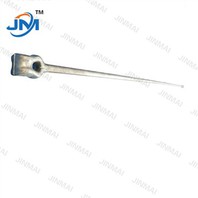
Hey there! As a supplier of Pigtail Eye Bolts, I often get asked if these bolts come in different head styles. Well, the short answer is yes, they do! And in this blog post, I'm gonna dive deep into the various head styles of pigtail eye bolts and why you might choose one over the other.
Let's start with the basics. Pigtail eye bolts are those nifty little pieces of hardware that have a loop or "eye" at one end and a threaded shaft at the other. They're commonly used in all sorts of applications, from securing cables to supporting poles and everything in between. And just like any other type of bolt, the head style can make a big difference in how well the bolt works for your specific needs.
One of the most common head styles for pigtail eye bolts is the standard round head. This is your classic, no-frills option that's simple and straightforward. The round head provides a smooth, even surface that's easy to install and doesn't catch on anything. It's a great choice for general-purpose applications where you don't need anything fancy.
Another popular head style is the hexagonal head. Hex heads are a bit more versatile than round heads because they can be tightened using a wrench. This makes them ideal for applications where you need a more secure fit or where you'll be tightening the bolt frequently. Hex heads also provide a better grip, which can be helpful in high-stress situations.
If you're looking for something a little more specialized, you might consider a pigtail eye bolt with a Pig tail ball head. These bolts have a spherical head that allows for some flexibility and movement. This can be useful in applications where the bolt needs to pivot or adjust to changing conditions. For example, in a suspension system, a ball head bolt can help absorb shock and reduce stress on the bolt and the surrounding components.
In addition to these common head styles, there are also some more specialized options available. For example, some pigtail eye bolts have a flat head, which can be useful in applications where you need a low-profile solution. Flat heads are also less likely to catch on things, making them a good choice for applications where the bolt will be exposed.
So, why does the head style matter? Well, the right head style can make a big difference in how well the bolt performs. For example, if you're using a pigtail eye bolt to secure a cable, a round head might be sufficient. But if you're using the bolt to support a heavy load, a hexagonal head or a ball head might be a better choice. The head style can also affect the ease of installation and maintenance. For example, a hexagonal head can be tightened more easily with a wrench, which can save you time and effort.
Now that you know a little more about the different head styles of pigtail eye bolts, you might be wondering which one is right for your application. The answer depends on a few factors, including the type of load you'll be supporting, the environment in which the bolt will be used, and your personal preferences.


If you're not sure which head style is best for your needs, don't hesitate to reach out to me. As a supplier of pigtail eye bolts, I have a lot of experience working with different types of applications and can help you choose the right bolt for your project. I can also provide you with more information about the different head styles and their pros and cons.
In addition to pigtail eye bolts, I also supply other types of cable components, such as Cable Pole Hook and Hardware Pole Line Hook. These components are designed to work together to provide a complete solution for your cable management needs. Whether you're working on a small DIY project or a large-scale industrial installation, I have the products and expertise to help you get the job done right.
If you're interested in learning more about our products or have any questions about pigtail eye bolts or other cable components, please don't hesitate to contact me. I'm always happy to help and can provide you with a free quote for your project. Let's work together to find the right solutions for your cable management needs!
References
- Engineering Handbook of Fasteners and Joining
- Machinery's Handbook