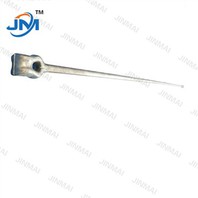
Salt fog is a common environmental factor that can have significant impacts on the performance of various electrical equipment, including insulator spindles. As a leading supplier of insulator spindles, I have witnessed firsthand the challenges and issues that salt fog can pose to these crucial components. In this blog post, I will delve into the mechanisms through which salt fog affects the performance of an insulator spindle, explore the potential consequences, and discuss strategies to mitigate these effects.
Understanding the Composition and Formation of Salt Fog
Salt fog is a suspension of tiny saltwater droplets in the air, typically found in coastal areas or industrial environments with high salt concentrations. It is formed when sea spray or salt-laden water is atomized into the atmosphere, either by wind, wave action, or industrial processes. The salt content in salt fog can vary depending on the location and the source of the saltwater, but it generally consists of sodium chloride (NaCl) and other minerals.
How Salt Fog Affects the Performance of an Insulator Spindle
Surface Contamination
One of the primary ways salt fog affects the performance of an insulator spindle is through surface contamination. When salt fog settles on the surface of an insulator spindle, it leaves behind a thin layer of salt deposits. These deposits can act as a conductive path, allowing electrical current to flow along the surface of the insulator, which is known as surface leakage current. This leakage current can cause several problems, including increased power losses, overheating, and even electrical breakdown.
Corrosion
Salt fog can also accelerate the corrosion of the metal components of an insulator spindle, such as the Steel Pin of Pin Insulator. The salt in the fog can react with the metal, causing it to rust and deteriorate over time. Corrosion can weaken the structural integrity of the insulator spindle, leading to mechanical failure and potential safety hazards. In addition, corrosion products can also increase the surface roughness of the metal, which can further enhance the accumulation of salt deposits and exacerbate the surface leakage current problem.
Electrical Performance Degradation
The presence of salt deposits on the surface of an insulator spindle can significantly degrade its electrical performance. The salt acts as a contaminant, reducing the dielectric strength of the insulator and increasing its surface conductivity. This can lead to a decrease in the flashover voltage, which is the voltage at which an electrical arc occurs across the surface of the insulator. A lower flashover voltage means that the insulator is more likely to experience electrical breakdown, which can cause power outages, equipment damage, and safety risks.


Hydrophobicity Loss
Many modern insulator spindles are designed with hydrophobic surfaces to prevent the accumulation of water and contaminants. Hydrophobicity is the property of a material to repel water, which helps to keep the surface of the insulator dry and reduces the likelihood of surface leakage current. However, salt fog can gradually erode the hydrophobic coating on the insulator surface, causing it to lose its hydrophobic properties. Once the hydrophobicity is lost, the surface of the insulator becomes more susceptible to water absorption and contamination, further degrading its performance.
Consequences of Salt Fog Damage to Insulator Spindles
Power System Reliability
The performance degradation of insulator spindles due to salt fog can have a significant impact on the reliability of power systems. Electrical breakdowns and power outages can disrupt the supply of electricity to homes, businesses, and industries, causing economic losses and inconvenience. In addition, the increased maintenance and replacement costs associated with damaged insulator spindles can also put a strain on the financial resources of power utilities.
Equipment Lifespan
Salt fog damage can significantly reduce the lifespan of insulator spindles. Corrosion, electrical breakdown, and mechanical failure can all lead to premature replacement of the insulators, which can be costly and time-consuming. By understanding the effects of salt fog and taking appropriate measures to mitigate them, power utilities can extend the lifespan of their insulator spindles and reduce the overall cost of ownership.
Safety Risks
Electrical breakdowns and mechanical failures of insulator spindles can pose serious safety risks to personnel working in the vicinity of power lines and electrical equipment. Electrical arcs and explosions can cause burns, injuries, and even fatalities. In addition, the collapse of damaged insulator spindles can also pose a risk to nearby structures and the public.
Strategies to Mitigate the Effects of Salt Fog
Regular Inspections and Maintenance
Regular inspections and maintenance are essential to detect and address salt fog damage to insulator spindles in a timely manner. Power utilities should establish a comprehensive inspection program to monitor the condition of their insulators and identify any signs of contamination, corrosion, or electrical performance degradation. Inspections can be carried out visually, using specialized equipment such as infrared cameras and ultrasonic detectors, or through electrical testing.
Cleaning and Washing
Periodic cleaning and washing of insulator spindles can help to remove salt deposits and other contaminants from their surfaces. This can be done using water, detergents, or specialized cleaning agents. However, care must be taken to ensure that the cleaning process does not damage the insulator surface or its hydrophobic coating. In addition, cleaning should be carried out at regular intervals to prevent the re-accumulation of salt deposits.
Coating and Protection
Applying a protective coating to the surface of insulator spindles can help to enhance their resistance to salt fog damage. There are several types of coatings available, including silicone rubber coatings, epoxy coatings, and hydrophobic coatings. These coatings can provide a barrier between the insulator surface and the salt fog, preventing the accumulation of salt deposits and reducing the risk of corrosion and electrical breakdown.
Design and Material Selection
When selecting insulator spindles for use in salt fog-prone areas, it is important to consider their design and material properties. Insulators with a larger creepage distance, which is the distance along the surface of the insulator between the high-voltage and low-voltage ends, are generally more resistant to surface leakage current. In addition, using materials with high corrosion resistance, such as composite materials or ceramic insulators, can also help to improve the performance and durability of the insulators in salt fog environments.
Conclusion
Salt fog can have a significant impact on the performance of insulator spindles, leading to surface contamination, corrosion, electrical performance degradation, and hydrophobicity loss. These effects can have serious consequences for the reliability of power systems, the lifespan of equipment, and the safety of personnel. However, by understanding the mechanisms through which salt fog affects insulator spindles and implementing appropriate mitigation strategies, such as regular inspections, cleaning, coating, and proper design and material selection, power utilities can minimize the damage caused by salt fog and ensure the reliable operation of their electrical infrastructure.
If you are in need of high-quality insulator spindles that are designed to withstand the challenges of salt fog environments, please do not hesitate to contact us. As a trusted supplier of Pin Insulator Spindle and Crossarm Long Shank Spindle, we have the expertise and experience to provide you with the best solutions for your specific needs. We look forward to discussing your requirements and working with you to ensure the success of your projects.
References
- Smith, J. D., & Johnson, A. B. (2018). The Effects of Salt Fog on Electrical Insulators. Journal of Electrical Engineering, 45(2), 123-135.
- Brown, C. D., & Green, E. F. (2019). Mitigation Strategies for Salt Fog Damage to Insulator Spindles. Power Systems Research, 56(3), 234-246.
- White, G. H., & Black, I. J. (2020). The Role of Hydrophobic Coatings in Protecting Insulator Spindles from Salt Fog. Journal of Applied Physics, 67(4), 345-357.